Howard Pawlicki
Fictional. Generated by AI — not a real person, and no likeness of one is intended.
61, retired in Las Vegas · rolled by @caleb.dunham · card — no film
History
who has worn him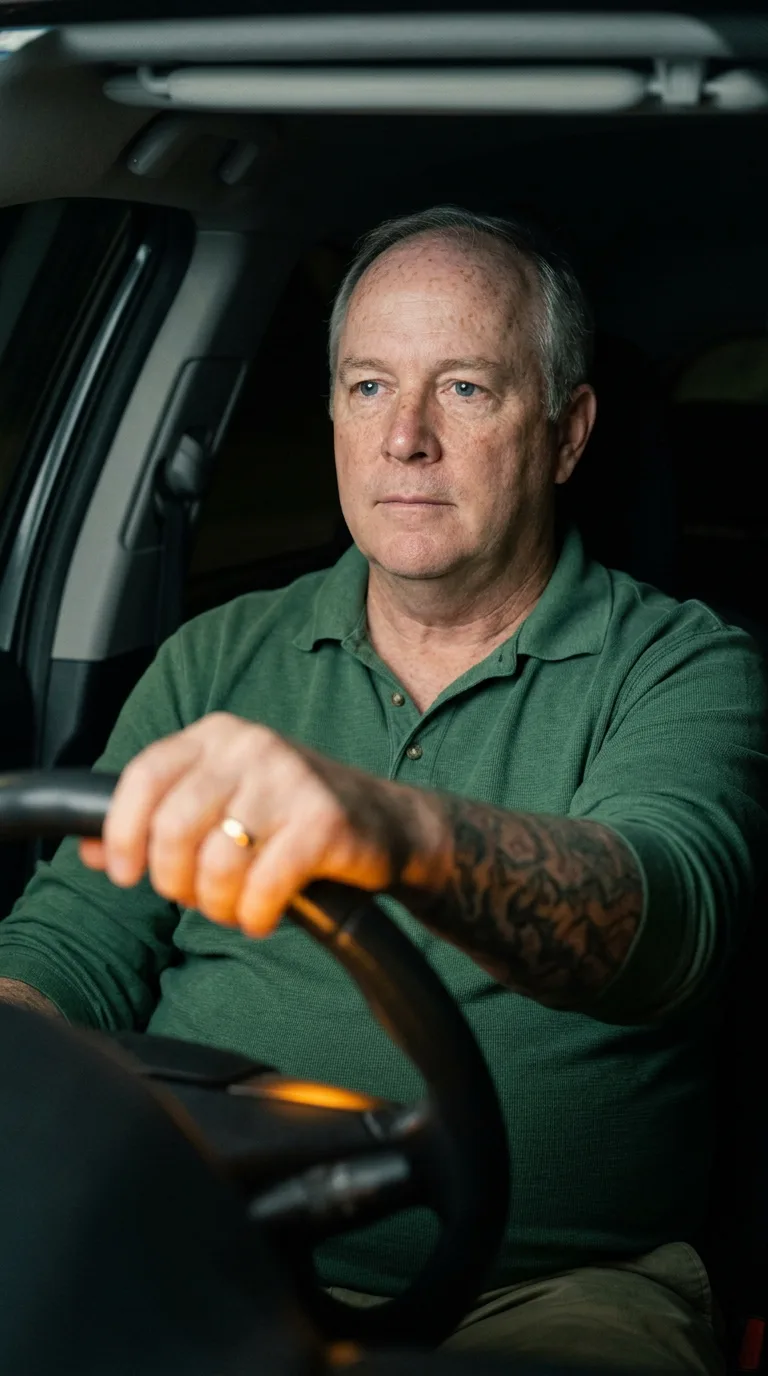
Rarest thing about him: Jewish — common, 1 in 73
Season 1seed 884330278 · engine v11
Character card
lineage 9IC4OB
His body-swap story
@caleb.dunham, wearing Gordon Pruitt, rolled the wheel on and woke up as Howard Pawlicki, spent 3 minutes in him, then spun the wheel and woke up as Gabriel Santiago
You are leaving Gordon Pruitt because of his knees. Two hours and forty-three minutes in him, and every stair in his own house made a bargain with you. A contractor's body: strong across the back, ruined below. You stood in his kitchen with the beard itching and the shaved head cold under the ceiling fan, and the thing you could not stop thinking about was the last body. The young one. Nathan. Twenty-three, and his knees were nothing, and you ran down his stairs just to feel it. Six days ago. You think you have been wanting that since. So you sit at Gordon's table, the chair complaining, and you pay, and you spin.
Dark. A highway. The car is already moving, and you are already in it.
Dash glow lies amber on the knuckles. Ten and two. The car drifts a foot toward the line, and you take it back in one smooth pull. Your hands come off the wheel and settle lower, wider, and your thumb finds the signal stalk without being asked. It clicks on. Right, for an exit that is not his.
His leg is bouncing. It has been bouncing the whole time, the heel hammering the floor mat, a thing the leg does by itself.
Green polo, soft at the collar. It is against your back and then it is a morning: his hands pulling it over his head, the sleeve catching on the thick tattooed forearm, the one he never wanted anyone to ask about. A small bad mark inside the sleeve, got drunk, years ago, and he has not touched a drink since. The shirt smells of cigar. A Thursday porch, coffee going cold, a cigar he allows himself and nobody else knows the count of.
The wheel under your palms. Leather worn smooth at the same two places. It gives you Nathan at six, in the back seat, kicking this seat, and this man saying "I can hear you, Nate" and not minding. Then you know the voice. You have heard it from the other side. Six days ago, in a kitchen in Chicago, a phone rang and the screen said DAD, and you, being the son, let it ring. You remember not picking up. You remember that it felt like nothing. It does not feel like nothing from here. Here it is three unanswered calls and a man who tells his wife, "He's busy, he's building things."
The ring on the left hand is warm and a little tight. His wife's name comes up through it, then a kitchen, then Friday candles, then a girl from before her, an old girlfriend, a boat dock and a summer, kept somewhere that has no door. Three children, more than Nathan. Their names crowd up and you let them pass.
The back aches, the good ache of a long day. The belly sits against the belt. The knees are fine. Sixty-one, and the knees are fine.
The exit comes up green in the headlights. You do not take it. You cancel the signal, and the clicking stops.
You lift your right hand off the wheel and turn it over, the freckled back, the ink climbing the wrist, then the palm, soft and creased. You raise your eyes to the mirror, to a stranger who has your son's chin.
"Hello, Howard," you say, and his voice is lower than you expected. How long, you wonder. Three miles to his door. Four minutes, or ten years. You grip the wheel, and the leg keeps bouncing.