Hector Villagrán
Fictional. Generated by AI — not a real person, and no likeness of one is intended.
62, retired in Pittsburgh · rolled by @colin.hasbrook · card — no film
History
who has worn him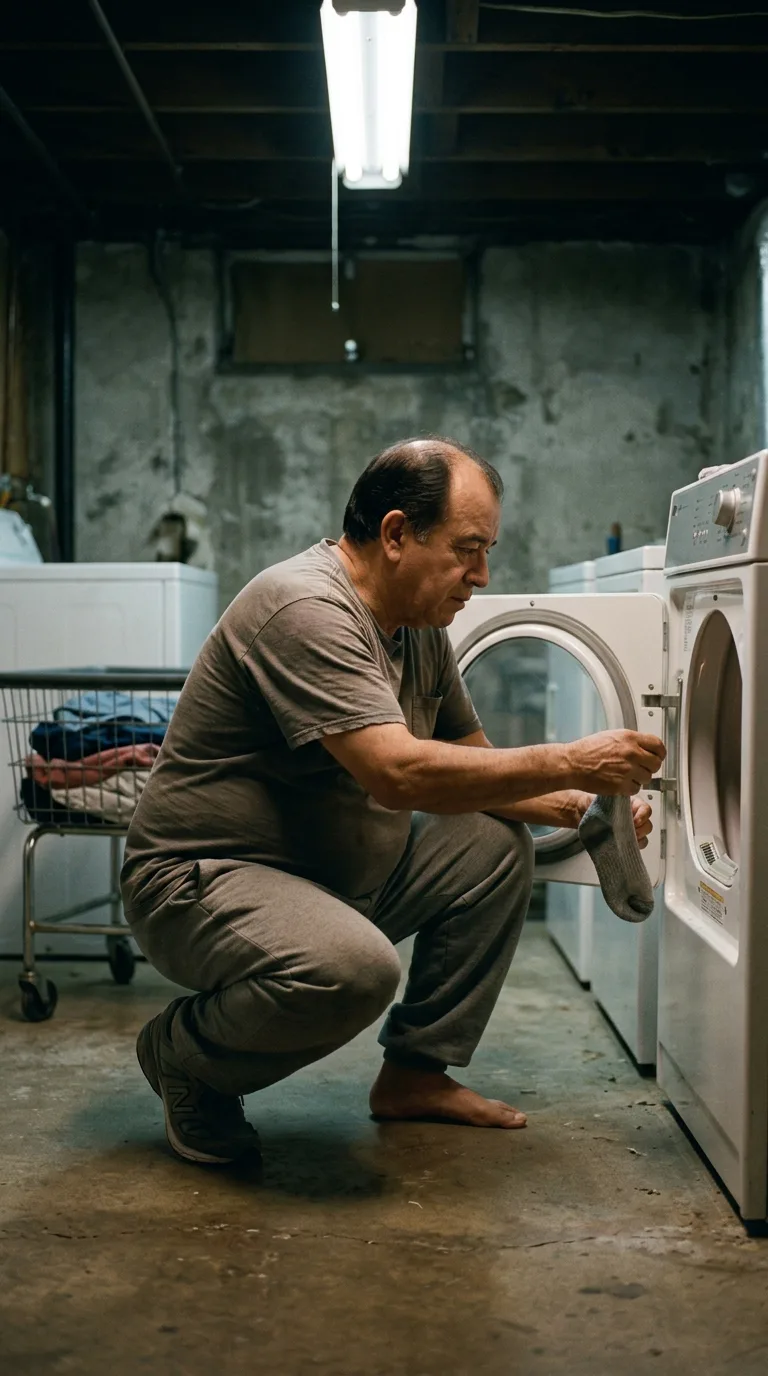
Rarest thing about him: Nicotine pouches — epic, 1 in 119
Season 0seed 1437288954 · engine v10
Character card
lineage 2NZHHJ
His body-swap story
@colin.hasbrook, wearing Roger Kesselman, rolled the wheel on and woke up as Hector Villagrán, spent under a minute in him, then spun the wheel and woke up as Kenji Arakawa
The paint smell never leaves Roger's hands, not even after 419 men. You are standing in his kitchen, the brush still stiff in a mason jar of turpentine on the counter, and his knees ache the specific ache of a fifty-one-year-old who spent Monday on a ladder for a client who will not pay on time. The house is quiet. His girlfriend — no, not his, the girlfriend that comes bundled with him like a coat you didn't buy — is asleep already, and that quiet is the whole problem. You have been him less than a minute and you can already feel the shape of the next forty years of him, gray hair, cleft chin, other people's houses. It is not boredom exactly. It is that you know, standing here, exactly what tomorrow will contain, and the wheel is the only door in the house that doesn't.
You open the laptop already knowing you'll spin.
The light comes up out of Roger's own eyes and mouth for a second that feels much longer, and then it isn't Roger's basement anymore — it's concrete and a hum. You are crouched. Bare feet on cold cement. A sock in your hand, half-turned right-side-out, and a dryer drum still ticking with heat in front of you, door hanging open like a mouth. Your knees are different knees, wider hips beneath them, and there is a heaviness in the belly you didn't have a breath ago. Somewhere above, through a floor, a house settles.
The sock is what does it first. Wool-blend, a hole starting at the heel, and your hand — this hand, thick-knuckled, a callus along the side of the thumb — finishes turning it right-side-out without being told to, muscle memory reaching back through thirty years of Monday nights. Hector. The name arrives with the motion, not before it. Hector Villagrán, and this is his basement, his dryer, the one that takes two cycles to really dry a towel and he's stopped fighting it.
The shirt against your back — his old gray tee, soft from four hundred washes — gives you the morning: pulling it over his head in the bedroom upstairs while Marisol slept on her side of the bed, her breathing even, the blackout curtain letting one blade of light across the floor. He'd dressed quiet, out of habit more than need, laundry day is a solitary sport in this house, always has been. He'd stood a second at the dresser and rubbed his temple where the migraine had been circling since Saturday, not arriving, just circling, the way it does, a low pressure system behind the left eye that some nights it's a beer that starts it and some nights it's nothing at all.
The floor under your bare feet — cold, uneven where the old concrete has settled — gives you the house itself: bought eleven years ago with Marisol, after the divorce, after twenty-two years of being Elena's husband ended in a kitchen much like the one two floors up, ended quietly, the way most true endings do, over a dinner neither of them finished. No kids came out of either marriage. He'd wanted them once, in his thirties, wanted them the way you want a thing you're too polite to fight for, and then didn't, and then it was too late to matter, and he made a kind of peace with that on a fishing trip nobody remembers the details of anymore, including him.
The basket at your hip, plastic handle worn smooth — that gives you retirement itself, eighteen months of it now, the strange guilty pleasure of mornings on the porch with coffee going lukewarm while the street wakes up around him, Pittsburgh stairs and wet leaves and neighbors he waves to but doesn't know the names of anymore, having spent thirty-four years too busy at the plant to learn them. He is spiritual about it in a loose way, thinks something is watching, doesn't go to church, prays sometimes at red lights. A pouch of nicotine sits tucked behind his cheek right now, gone flat and tasteless, one of maybe six he'll get through today, same as most days, same as the drink or two he'll have with Marisol tonight while she tells him about her sister's phone call.
Your hands — his hands — already know this dance without you: pull the load warm, drop it, and the folding starts on its own, corners squared, sleeves crossed flat, a precision that has nothing to do with care and everything to do with forty years of never being taught any other way to do it. Upstairs there is a drawer full of shirts crumpled into it by someone who never learned this, will never learn this, and some replaced part of you notices the difference and files it away as simply the world being uneven, the way it always is.
The migraine pulses once, dull, behind your left eye, and you register it the way he would: annoyed, expecting nothing worse tonight than that.
You stop mid-fold, a shirt half-squared in your grip, and look down at your own hand. It's not yours. Thicker through the palm than Roger's ever was, a thumb calloused from something — brushes, tools, forty years of gripping things — that isn't yours to remember properly, only to feel. You turn it over once, slow, like checking it's real.
"Okay," you say, out loud, to the empty basement, to nobody. "Okay, Hector."