Hector Villagómez
Fictional. Generated by AI — not a real person, and no likeness of one is intended.
64, call center agent in Houston · rolled by @connor.waskiewicz · card — no film
History
who has worn him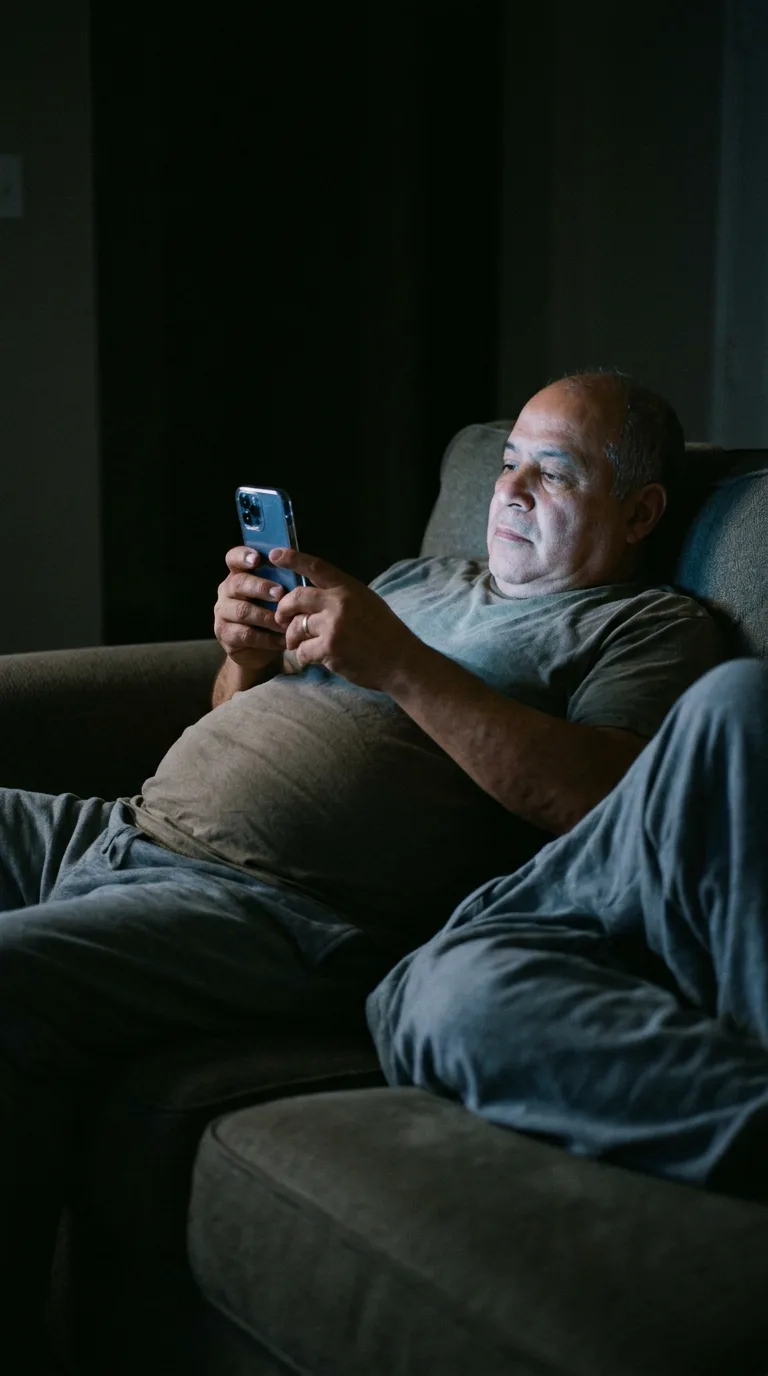
Rarest thing about him: A horseshoe, kept short — common, 1 in 81
Season 1seed 1613929776 · engine v11
Character card
lineage 2NZHHJ
His body-swap story
@connor.waskiewicz, wearing Travis Mabrey, rolled the wheel on and woke up as Hector Villagómez, spent under a minute in him, then spun the wheel and woke up as Kaito Sorensen-Baird
The line at the plant runs the same panel over and over until your shoulders stop being yours, and you have decided, standing at station four with Travis Mabrey's hands slick inside the gloves, that you are done with this one before the shift even started. It is not the work. It is that this body wants to sleep at eight and be up at four and there is no fighting a factory clock with a factory clock, and less than a minute in you already know: young, strong, useless to you tonight. You clock the thirty seconds it takes to fake a bathroom break, prop your phone against the soap dispenser, and open the site with fingers still humming from the line. The wheel loads slow on the shop wifi. You do not think about why, only that the wanting is back, sharp and small and immediate, the way it always is, and you spin.
You arrive mid-scroll.
The room is dark and close and smells like fabric softener and someone else's night sweat, and there is a phone six inches from a face that is not looking through your eyes yet so much as being handed them. The thumb — his thumb, wide, a little swollen at the knuckle — is stopped over a video of a dog doing nothing in particular. You feel the weight of him settle into you all at once, gut and jaw and the tired pull along the shoulders, and you start the thumb moving again, faster now, flicking, because stillness is his and speed is yours.
The shirt is against your back first, and that is where he comes in — not all at once, just the softness of a shirt washed four hundred times, and underneath it a whole year unspools out of nowhere: standing at a machine with a headset clamped over thinning hair, a supervisor named Denise who says *empathy statement, Hector, always the empathy statement first,* and the particular exhaustion of saying "I understand how frustrating that must be" to the four hundredth stranger of the day. You feel his throat remember the shape of the script before you feel anything else, and it is a small, humiliating tenderness, that his body knows how to be kind on command better than it knows almost anything else about itself.
The mattress under you gives him next — a mattress he chose alone, in a store, after the house was sold, a queen because the salesman said queens sell better later and some old married-man logic in him agreed before he caught himself agreeing. Divorce comes in sideways through that, not a fight, just a long slow going-quiet over years, Marisol's voice getting smaller and smaller down a phone line that used to be a kitchen table, and two grown kids who call on Sundays now instead of whenever, and are kind to him in the specific overcareful way of children who have picked their mother's side without saying so. The ring finger of the hand holding the phone is bare, but the tan line is there under your own attention now, a paleness you did not put there, a ghost of twenty-six years wound around one finger and then taken off it three years ago in a bathroom at midnight so nobody would see him do it.
The waistband of his sweatpants against your stomach gives you the body itself, all of it plain and unhidden: soft in the middle in the way of a man who sits nine hours in a headset and eats standing at a counter, a lower back that complains getting out of the desk chair, knees that click on the stairs, nothing broken, nothing dying, just sixty-four and used. Under your jaw is a smoothness his hand remembers shaving that same morning, slow, careful, the razor drawn the same four strokes he has drawn since he was seventeen, because his father taught him that way in Pasadena, Texas, in a bathroom that smelled like Barbasol, and some loyalties outlive the man who gave them to you.
The clothes remember getting put on, too, hours ago now by his clock — a Friday shift on a schedule bent backward against the sun, home only an hour before this, the hoodie pulled over a head already tired, the lanyard still around his neck because he forgot to take it off, his ID face looking up at him crooked against his own chest while he lay down. He does not go to Mass as often as he tells his mother's memory he does, but he crossed himself once in the parking lot tonight anyway, out of habit more than belief, before he ever got in the car.
None of it is dramatic. That is the thing that comes through clearest, truer than any single memory — a whole broke-even life, nothing you would have picked, nothing you would have kept, and exactly why you like it. Nobody underwater is worth chasing. Nobody misses a man like this hard enough to make trouble. His leg is already bouncing against the mattress, an idle motor that was running before you got here and does not know you have arrived.
You stop the thumb. You turn the hand over in the blue light, phone forgotten against the sheet, and look at the fingers — thick, soft-knuckled, a pale stripe where a ring was — like they were dealt to you off a table.
"Okay," you say, to the dark, to nobody, in his voice, thick with a Houston he's lived in for forty years, "let's see what you got."