Héctor Salcido
Fictional. Generated by AI — not a real person, and no likeness of one is intended.
57, commercial diver in Pittsburgh · rolled by @colton.vandermark · card — no film
History
who has worn him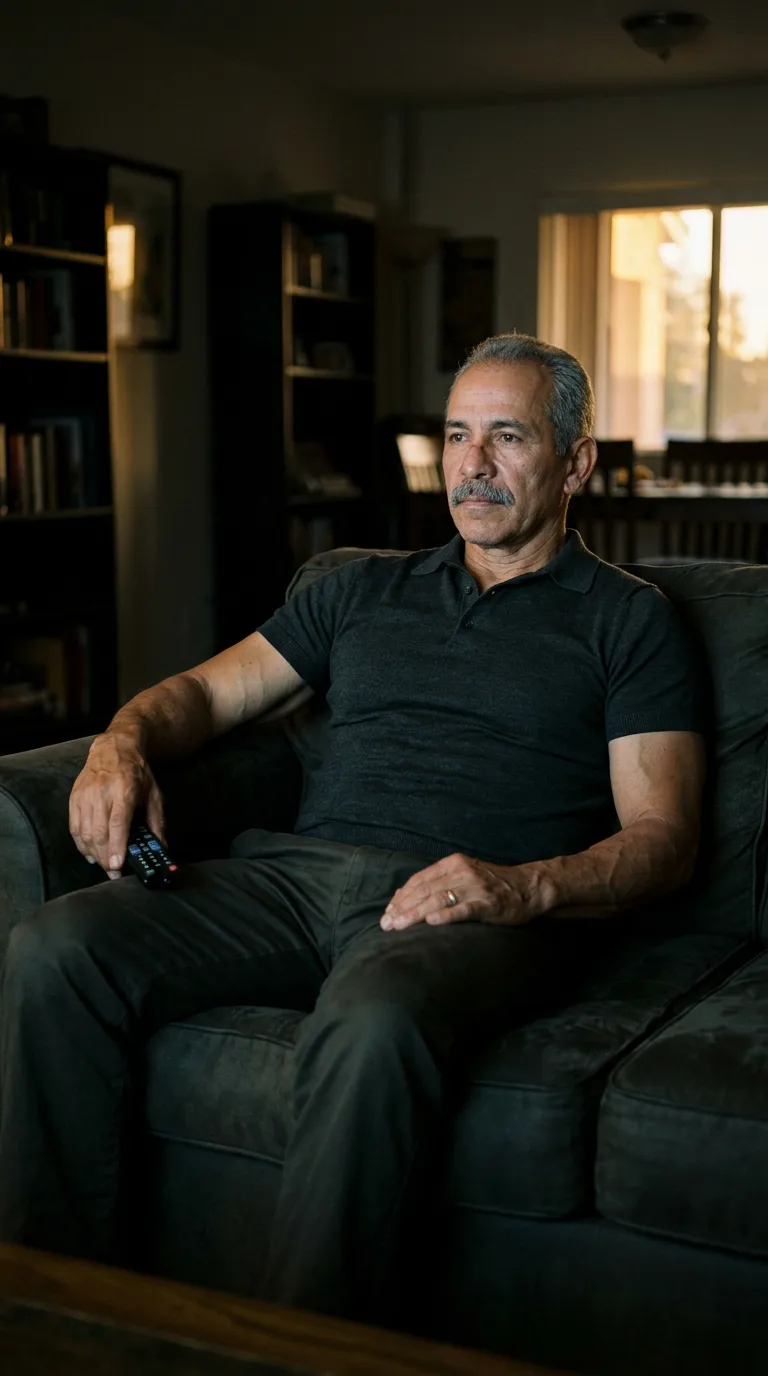
Rarest thing about him: Commercial diver — uncommon, 1 in 2,444
Season 1seed 2037699246 · engine v11
Character card
lineage PYNCV3
His body-swap story
@colton.vandermark (admin), wearing Colton Wiersema, rolled the wheel on and woke up as Héctor Salcido, spent 25 hours in him, then spun the wheel and woke up as Ethan Voss
You have been Colton Wiersema for one minute, and one minute is enough to know.
You are standing in a gravel lot behind a half-framed house in Western Kansas, the sun going down orange and flat over nothing, and your knees ache already, thirty-three years old and they ache like sixty, because this body has been laying block and lifting joists since it was nineteen and it is tired in a way that has nothing to do with today. There is a gap in your front teeth you keep running your tongue over, a habit that isn't yours but is now. A goatee itches in the heat. Somewhere behind you a foreman is saying something about tomorrow's pour, and you understand with total clarity that tomorrow's pour is going to happen to Colton Wiersema and not to you, because you are done with him. Not unhappy — just finished, the way you're finished with a channel before the show's over. Sixty seconds of a body is enough to feel its whole weight, and this one's weight is a life you didn't choose and don't want to keep paying rent on. You want your hands to stop aching. You want, honestly, something a little older, a little steadier, a man who has already decided who he is. You get out your phone, thumb still gray with drywall dust, and you open vessel.cards, and the wheel is already spinning before you've finished deciding, which is how it always goes now. Fifty-three times it's gone this way. You don't feel the pull of guilt so much as the pull of elsewhere.
The screen goes bright. The wheel stops. And you are sitting up straight on a couch in the dark.
The remote is in your hand, but you are already setting it down on the arm of the couch, because some reflex older than you finishes that motion before you catch up to it. The television throws blue-white light across a room you don't recognize — bookshelves, a window with the day's last gold going out of it, a dining table with its chairs pushed in just so. Your back is against cushions worn to the shape of a body that has sat here a thousand evenings. There's a moustache heavy on your lip, a weight of a mostly-bald head, a thickness through the chest and shoulders that isn't Colton's leanness at all — this is a shorter man, denser, built like something made to take pressure. You feel fifty-seven years of gravity settle into your knees, your lower back, one shoulder that clicks faintly when you shift. You do not laugh at whatever the television just said. The man who was here a half-second ago would have. You don't know that yet. You will.
The polo shirt is against your back first, and it comes in like warm water: a Wednesday morning, hours ago by this clock, this same shirt pulled off a hanger in a closet that smells like cedar blocks and neoprene, because the drysuit lives in that closet too, hung dripping after every job to dry. Your hands — his hands — know this shirt. Have known a hundred like it. Sleeve over the left arm first, always the left, an old habit from years of easing a bad shoulder into things gently before asking anything of it. Buttons done from the bottom up. A glance in the mirror that wasn't vanity, just checking the collar sat right, and the crooked line of his own nose looking back at him the way it always does, broken at twenty-two on a rig in the Gulf when a hose fitting kicked loose and caught him, set by a medic who did an honest but not a straight job of it. He never minded. Marta used to say it was the only interesting thing about his face and he'd tell her that was cold for a woman married to it.
Marta. The wedding band is on your left hand and it is warm from his skin, and it opens wider than the shirt did — thirty-one years of her, a courthouse wedding neither set of parents attended because neither side was speaking to the other that year, a rented apartment on the South Side with a radiator that banged all winter, two kids raised on a diver's schedule, home for six weeks and gone for six weeks, birthdays missed and made up for later, badly, with too many presents. Both kids grown now. A daughter in Cleveland who calls on Sundays. A son who works with his hands too, though above water, and is quietly proud of that difference and quietly ashamed of being proud of it.
The couch under you gives up the ordinariness of an ordinary evening: dinner already eaten, dishes already done, Marta upstairs on the phone with her sister, the lights left off in here on purpose because he likes the dark and the blue flicker better than any lamp, likes it the way some men like a fire. He doesn't drink — twenty-two years sober now, no ceremony to it anymore, just a fact of his days, and the tin of dip in his shirt pocket is what he reaches for instead, out of habit, a paper cup somewhere nearby for it. His right hand, when it isn't doing anything, drums four fingers against his thigh, against the couch arm, against the edge of any table it finds, a tic that started on decompression stops years ago, counting minutes that mattered, and never stopped after they quit mattering.
And under all of it, the body: fifty-seven and still hard through the arms and chest in a way that isn't gym-made, it's load-bearing, umbilical-hauling, tool-bag-lifting muscle, laid down over three decades at the bottom of rivers and harbors with a comm cord running to a boat above him and cold pressing on him from every side at once. His knees complain climbing the stairs he climbs every day between his own backyard and the neighbor's, wet leaves on the concrete making it treacherous half the year. His hearing in one ear is a little gone from years near compressors. He is, underneath all that wear, strong the way a bridge cable is strong — not for show, for the job.
You look down. The hand on your thigh has a crooked, thickened wedding band on it and gray hair on the back of the knuckles, and it is not drumming, not yet, just resting there like it's waiting for you to remember how.
You lift your eyes to the dark window, the last light dying orange behind it, and you say, quiet, to no one in the empty room:
"Bueno. Otra noche más."