Harold Lindqvist
Fictional. Generated by AI — not a real person, and no likeness of one is intended.
60, park ranger in Rural Texas · rolled by @marco.villagrana · card — no film
History
who has worn him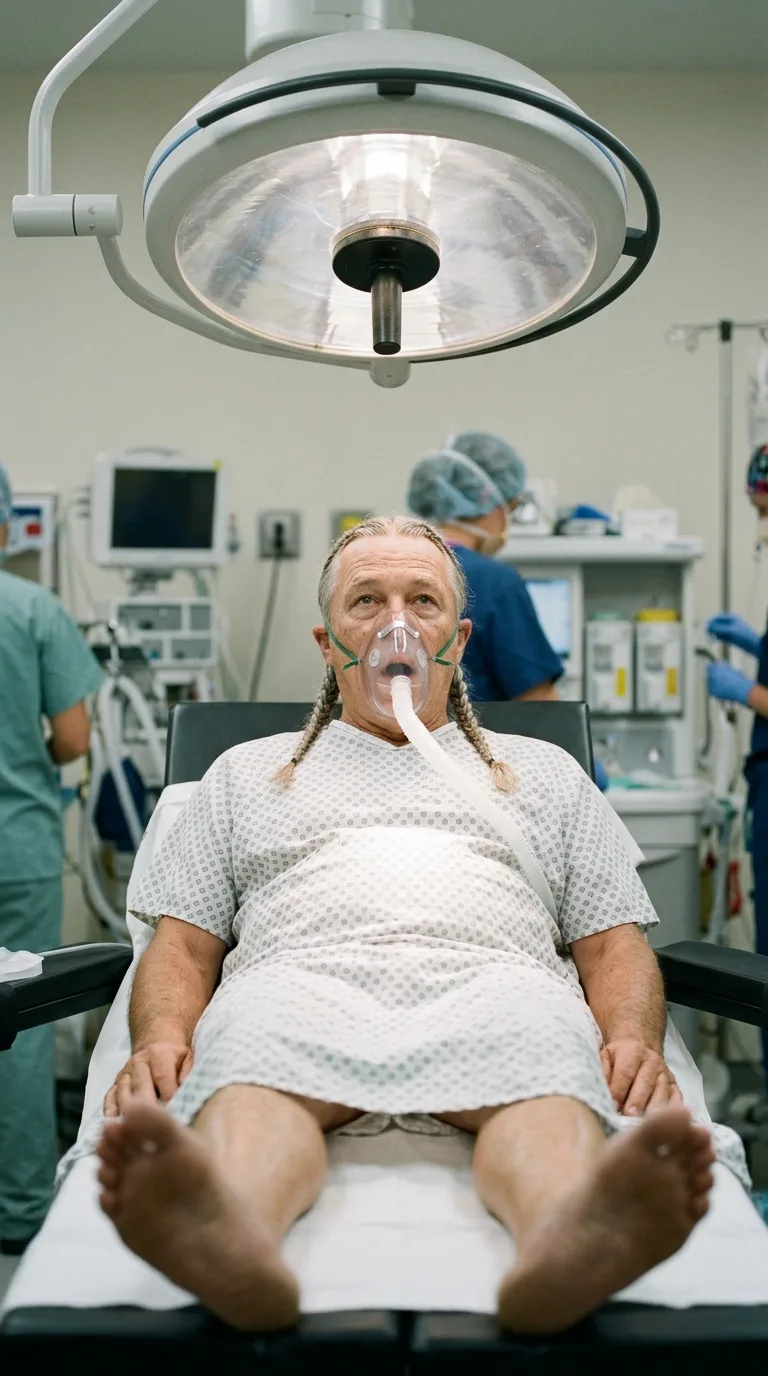
Rarest thing about him: Cornrows — mythic, 1 in 8,536
Season 0seed 577001078 · engine v10
Character card
lineage LJL8SV
His body-swap story
@marco.villagrana, wearing Marcus Ellison, rolled the wheel on and woke up as Harold Lindqvist, spent 3 minutes in him, then spun the wheel and woke up as Corey Vantassel
HIS LAST NAME IS Lindqvist. He is Gerald Lindqvist's brother, and they share it.
HOOK: A man asleep on an operating table stops being the one dreaming.
---
The gold tooth catches light when Marcus Ellison smiles, and Marcus Ellison is smiling now, alone in a kitchen that isn't his kitchen exactly, two minutes into a Sunday he does not intend to keep. The condo is quiet the way money is quiet. You feel the watch on his wrist, the granite cold under his palm where he's leaning, and none of it is worth staying for. Forty spins deep you know the particular flavor of a body that works fine and bores you anyway — an accountant's soft, capable hands, a life with no ache in it. You came back for exactly that: an itch with no name, the memory of a bus driver's stiff knees still fresh from twelve minutes ago, forty other lives sitting behind your eyes like coats on a rack. You want a new one. You always want a new one. You open the laptop already knowing you'll spin.
The wheel turns. It always feels like falling asleep and landing somewhere already awake.
—
The light above you is a flat white sun and it does not move, and that is the first wrong thing, because suns move and lamps don't. There is a mask on a face that used to be Marcus's and is now nobody's, then somebody's again — yours, though you didn't ask for feet this bare or this cold. Under the lids, before you even have a face to command, the eyes drag once, left to right, checking the room without your permission. A hand on a table — his hand, now — opens and closes twice, testing itself, like a man checking he still has fingers after a long fall. The mask fogs and clears. Green scrubs move at the edge of a vision that hasn't decided yet whose vision it is. Somewhere far off a monitor keeps its long, patient rhythm, uninterrupted, because nothing that matters to a machine has happened.
The gown against your skin is thin and printed with small gray diamonds, and it is the first thing that speaks to you. It comes in soft, sideways, the way memory does when it isn't asked politely — a Tuesday, a clinic outside Kerrville, a doctor with cold hands saying *disc*, saying *nothing surgical about this, just management*, and Harold's own voice, wry, saying he'd manage it fine if it would just quit reminding him it existed every time he bent to check a trailhead sign. The leg under the paper sheet twitches once, a small habitual mutiny — it has been bouncing since he was nine years old, since a father who did not believe in stillness, and it does not stop now just because he's under.
Then the mask, its rubber give against the bridge of a nose gone freckled from sixty years of sun nobody warned him about. The strap behind his ears. A memory unspools from the plastic itself: this morning, before the drive to the surgical center in Kerrville, standing in his own bathroom in Real County pressing a thumb into the small of his back and thinking *if this fixes it I'll take the six weeks off gladly.* Rangers don't get six weeks. He'd requested it anyway. His supervisor, a woman half his age who called him Ranger Lindqvist with a straight face every single time, had said take it, Harold, we'll cover the trailhead.
The gown gives you his hands next — spread flat on his own thighs, waiting, the way you hold still for people with needles — and the hands remember other work entirely: a green uniform sleeve going on this morning, buttoned one-handed because the other arm was reaching for the hat; the particular weight of a nine-year-old radio clipped at the chest; the cool brass give of a trailhead sign's edge, its paint worn under his palm from years of leaning there for photographs with tourists who wanted proof a ranger existed. Braiding his own hair before the mirror, tight cornrows running back from a hairline that has gone more silver than gray, a habit from nobody remembers when, maybe his mother, maybe just practicality under a hat that sits eight hours a day. He does it without a mirror half the time now. His fingers know the part.
Under the paper gown, this body: five foot six, unremarkable in a way that has let him disappear into thirty years of quiet work, joints that complain going up ladders now, a low ache riding the base of his spine that surgery is supposed to quiet, not cure. Sixty years old and none of them soft — weather did what weather does to a man who stands outside for a living, and his face shows it the way the land does, freckled, lined, sun-chapped at the mouth. He hasn't had a drink in eleven years and didn't miss it after the first one. He never smoked; his brother Gerald did, for a while, and Harold used to needle him about it on the phone on Sunday nights, the two of them trading complaints about backs and knees and Houston traffic like men comparing scars.
Gerald. The name comes with the particular warmth of an old irritation gone fond — twelve minutes ago you wore that exact worry, drove that exact bus, ached in that exact spine from the other direction. You know something now that Harold, drifting under his mask, could not: that his brother is fine, is driving his route in Houston right now with his hands loose on the wheel the way he always holds it, unaware that anyone borrowed him for three minutes on a Tuesday and gave him back whole. It sits strange in you, knowing both sides of a thing neither man will ever know happened.
There's a daughter somewhere in this body's history too — grown, a voice on Sunday calls that come less often than either of them would say out loud, a birthday card Harold keeps meaning to write and instead phones, every year, because his hands were never good with sentiment on paper. And an ex-girlfriend from a decade back whose name still surfaces when this body is tired or in pain, unbidden, the way old weather does. He is spiritual about it, mostly — thinks she is somewhere doing fine, doesn't need a church to believe that. Single. Comfortable, if nobody asks about the mortgage. A trailhead sign, pines behind it, a life that fits in one photograph and mostly satisfied him.
The oxygen keeps coming, sweet and cold and chemical, seven, and then not eight, because there is no eight — there is only you, arriving instead of the dark he expected.
—
You look at the hand on the table. It is not the hand you left this morning. Freckles run across the back of it the way they run across the nose above the mask, and the leg beneath the thin sheet is already going, bouncing, keeping a rhythm that isn't yours yet and will be by tonight. You lift the hand an inch, turn it, watch the fingers answer.
Around the mask, muffled, you say the only thing there's room for:
"Gerald's gonna ask how the surgery went."
You don't know yet what you'll tell him. You don't know how long you'll be the one answering.