Harjot Nirwan
Fictional. Generated by AI — not a real person, and no likeness of one is intended.
34, tattoo artist in New York · rolled by @colby.nash · card — no film
History
who has worn him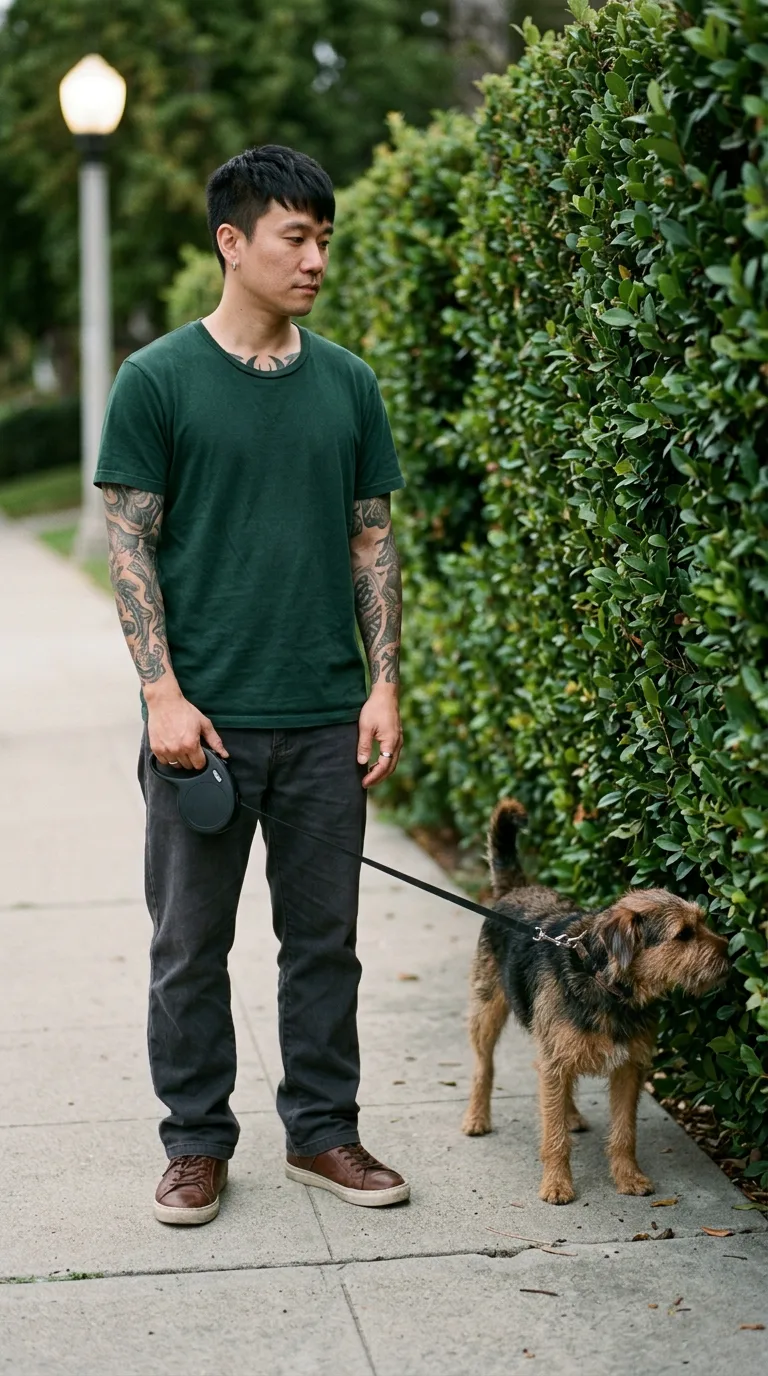
Rarest thing about him: Sikh — epic, 1 in 289
Season 0seed 1472605807 · engine v10
Character card
lineage E1W54H
His body-swap story
@colby.nash, wearing Marco Belletire, rolled the wheel on and woke up as Harjot Nirwan
Three minutes in Marco Belletire's body and already the beauty mark on his jaw is starting to bother you, the way you keep catching it in the hallway mirror on your way to the desk. The apartment smells like someone else's cigarettes even though he quit years ago; you can taste the ghost of it anyway, a phantom itch at the back of a throat that isn't yours. His service pistol sits on the table where he left it, and you know already — from the badge, from the holster's worn leather — that tomorrow there's a shift, a commander who doesn't like him, a wife back home who calls at the wrong hours. It's fine. It's more than fine, actually, as bodies go. But fine was never the itch. The itch is that you paid for the wheel and the wheel owes you nothing in particular, and 45 and hazel-eyed and average is a body you already understand completely, and understanding a thing all the way through is its own kind of restlessness. Three minutes is not long to be bored. It is long enough, on the wheel's clock, at this hour, with everyone in this city and every city asleep. You open the laptop. The page loads slow, the way it always does, like it's making you wait on purpose. You spin.
The leash stops going out.
You feel it before you feel anything else — a small mechanical resistance in your right hand, a plastic housing warm from another man's grip, and then the weight underneath you rearranges itself into someone shorter, lighter, thirty-four years old in every joint at once. The hedge is close and green and smells like something being rained on soon. A dog — brown and black, wiry-coated, ears back — is looking up past the leaf-line, not at the hedge anymore. At you. Dogs always know first.
Your hand — his hand — winds the leash twice without you telling it to, some reflex still finishing its own sentence, and you start walking because the body was already leaning that way, and the dog has to trot to catch the new rhythm of it, confused by a stride it doesn't recognize in a man it's known for six years.
The t-shirt is the first thing that talks to you. Green, worn thin at the collarbone where the collar sits low enough to show the black tribal line of ink underneath — and touching that collar with your own chin, feeling the fabric there, gives you a flash of a mirror in a narrow bathroom, this morning, pulling the shirt down over his head and thinking, the way he thinks most mornings, that the tattoo is the version of himself he liked best at twenty-two and tolerates now, a decision made by someone he used to be. The shirt keeps giving: a hamper in a bedroom with the shade half down, his wife still asleep with one arm thrown over the space where he'd been, the kids' door cracked because the younger one is scared of the dark this month and not the older one anymore. He dressed quiet. He always dresses quiet on the early walk, so nobody wakes.
The leash handle in your palm is worn smooth in one particular groove, and that groove remembers thousands of mornings just like this — the dog is older now, slower at the hedges, and there's a fondness in the muscle memory that has nothing to do with wanting anything, just the plain fact of a routine that has outlasted several harder things. A recent scar of a different kind surfaces without a mark to show it: a woman who is not his wife, a name that used to make his chest do something complicated, gone now except for the specific ache of things ending like they should have started differently. He does not think about her walking the dog. He thinks about her at two in the morning sometimes, which is roughly what time it is here, though his body doesn't know that yet, only knows it's dark and the street's asleep and he is upright and outside for reasons that belong to the dog and not to insomnia.
The wedding band is cold on your left hand, then warm, the way metal does against skin that's alive. Under it: a wedding in Punjab five years back, his mother's hands doing something to his turban that he complained about and secretly loved, his father not there anymore to see it, the gurdwara humming with a language half of which he still keeps in his mouth like a coin he isn't spending. Faith is not a thing this body performs so much as carries — quiet, load-bearing, present in the way he doesn't eat certain things without thinking hard about it and does think hard sometimes at 3 a.m. about whether he's kept enough of it.
The boots are steady under an average build that runs closer to strong than it looks in a shirt — years of leaning over a tattoo chair have put something permanent into his shoulders, a forward set that aches by six most evenings and never quite unaches by morning. His left hand, free of the leash for one second, goes to his own cuticles at the thumb, picks without permission, an old tic from a man who spends his days perfectly still with a needle and can't sit still with nothing in his hand at all. The shop comes back in pieces — the chair reclined, a client's calf under his palm, the particular hush of a good session, the smell of green soap and antiseptic that never fully leaves his hands no matter how he scrubs. Money that came slow at first and comes easy now. A silver hoop in his ear that his daughter likes to touch when he carries her.
Two kids. A wife who is, right now, asleep with her hand where his side of the bed used to be warm. None of it yours. All of it right there, close enough to touch, like a room you're standing in with the lights just switched on.
You look down. The hand holding the leash has ink climbing the forearm in black lines that don't belong to any story you lived, and cuticles picked a little raw at the thumb, and it is, for one full second, the most interesting hand you have held in twenty-two men.
The dog whines, wanting the hedge again.
"Okay," you say, in his voice, testing it like a key in a lock that isn't yours yet, "okay, come on," and you don't know how long you get to keep saying things in it before the wheel starts pulling at you again, quiet, from somewhere very far off and not far off at all.