Gregory Stennis
Fictional. Generated by AI — not a real person, and no likeness of one is intended.
46, aircraft mechanic in Denver · rolled by @colt.behrens · card — no film
History
who has worn him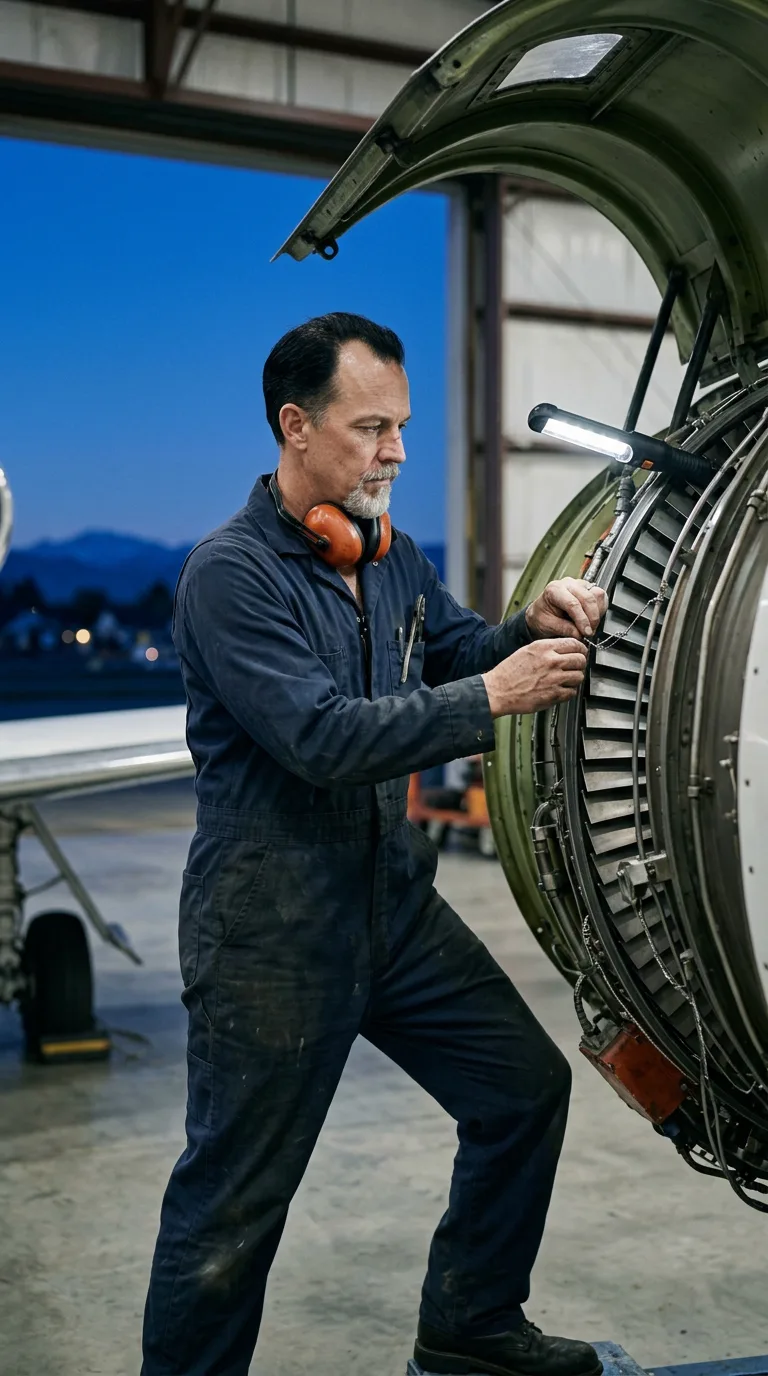
Rarest thing about him: Dyed black — uncommon, 1 in 109
Season 1seed 440952503 · engine v11
Character card
lineage OZ80W3
His body-swap story
@colt.behrens, wearing Connor Vasek, rolled the wheel on and woke up as Gregory Stennis, spent 3 minutes in him, then spun the wheel and woke up as Kevin Shiozaki
Connor Vasek's hands smell like fry oil no matter how many times you scrub them, and that's the first thing you're sick of today — that, and the line manager's voice through the pass window, and the fact that this body is twenty-two and strong and has absolutely nothing you want in it anymore. Three days and twenty-two hours. You know the shape of this kitchen better than you ever wanted to. You know Connor's ex is texting him again, that his knees are good, that his shift doesn't end for six more hours. None of it is yours. You wipe your palms on his apron, pull the phone from the cubby by the lockers, and open the site on a cracked screen in the alley behind the dumpsters, the Seattle evening going gray-gold above the fire escape. You don't even dress it up as a decision. You just spin.
The wheel stops.
Your hand is already moving when you arrive — knuckles deep in the dim, warm dark of an engine cowling, fingers walking a safety wire around a turbine bolt by feel alone, and for half a second you do it wrong, some tension you don't have yet, and the wire kinks. You stop. You back it out. You do it again, slow, correct, and the body under you breathes out through its nose, patient with itself in a way Connor's never was with anything. Ten more bolts come after that one, and you check every single one, fingertip to wire to bolt, a man double-checking work his hands haven't needed checked in a decade. Outside the open hangar door the sky is that particular Denver blue that comes after sunset in summer, mountains cut black along the bottom of it, and somewhere behind you a drop light hums.
The coveralls are the first thing that gives him to you — canvas gone soft at the elbows, grease worked so far into the weave it's not dirt anymore, it's just the fabric's color now. You feel him getting dressed in them this morning, sleep still thick in him, the zipper's particular catch at the sternum that you have to work past with a little jiggle, muscle memory doing it before you even think the thought. Left sleeve first, always left, some twenty-year-old habit from a crew chief who's dead now. The wedding band goes on after, not before — he takes it off to shower and puts it back on dressing, a small ritual he's never told anyone about, not even her. Margaret. Her name arrives with the ring, warm and immediate, the weight of twenty years married to her compressed into the ring's dumb plain gold: her laugh through a screen door, an argument about money they had and resolved and had again, her hand in his hand at his mother's funeral, how she still reaches for his wrist in her sleep.
The earmuffs around his neck give you the engine's scream, hundreds of hours of it, muffled, and under the muffling a hearing that's not what it was at thirty. The pliers in his breast pocket give you his father, who was also a mechanic, who taught him that tools go back in the same pocket every time or you lose the whole day hunting for them. The boots give you standing — twelve hours a day on concrete, the specific ache that lives now permanently in both heels, a body that is still strong, still capable of real work, forty-six years old and not finished yet, but starting, in small unglamorous ways, to keep a ledger of what it's cost him.
And then, because you are still touching the bolt, the wire, the cold curved steel of the cowling — the job itself comes, not as one memory but as thousands laid on top of each other: nights like this one, the hangar lit up against early dark, a love for the work so total and so wordless he's never once called it love, only ever called it the job. Somewhere in that pile is a woman who is not Margaret — younger, a handful of months of something he still doesn't have language for, ended three weeks ago in a parking lot outside this same hangar, the specific guilt of it sitting in his chest like swallowed ice even now, even here, even though his hands never once stopped doing the work in front of them. His daughter's height chart penciled on a doorframe he's not standing near. His son's voice on the phone last Sunday, half a man already. None of it is sequential. All of it is heavy and his and arriving at once through canvas and steel and a ring he didn't take off even once, not even for her, not even for the three weeks he isn't proud of.
The nose: you feel where it bent, decades back, a memory too scattered by touch alone to come clear — just the old ache when weather changes, a crookedness his thumb has traced a thousand times without him noticing he was doing it, the way he's noticing now, your attention snagging it like it snags everything. His cuticles are already torn at both thumbs from a habit neither of you chose.
You look down. The safety wire is still pinched between two fingers, mid-twist, the hangar light throwing your shadow long across the engine's open throat. You turn the hand over once, like checking it's really there, like checking it's really his — his, past tense now, already wrong the second you think it.
"Okay," you say, to no one, to the engine, to the mountains going black behind the hangar door. "Let's see what you've got."
Somewhere in Seattle a line cook's body is standing in an alley with a cracked phone screen and nobody in it at all.