Gregory Novak
Fictional. Generated by AI — not a real person, and no likeness of one is intended.
52, chimney sweep in New York · rolled by @colin.hasbrook · card — no film
History
who has worn him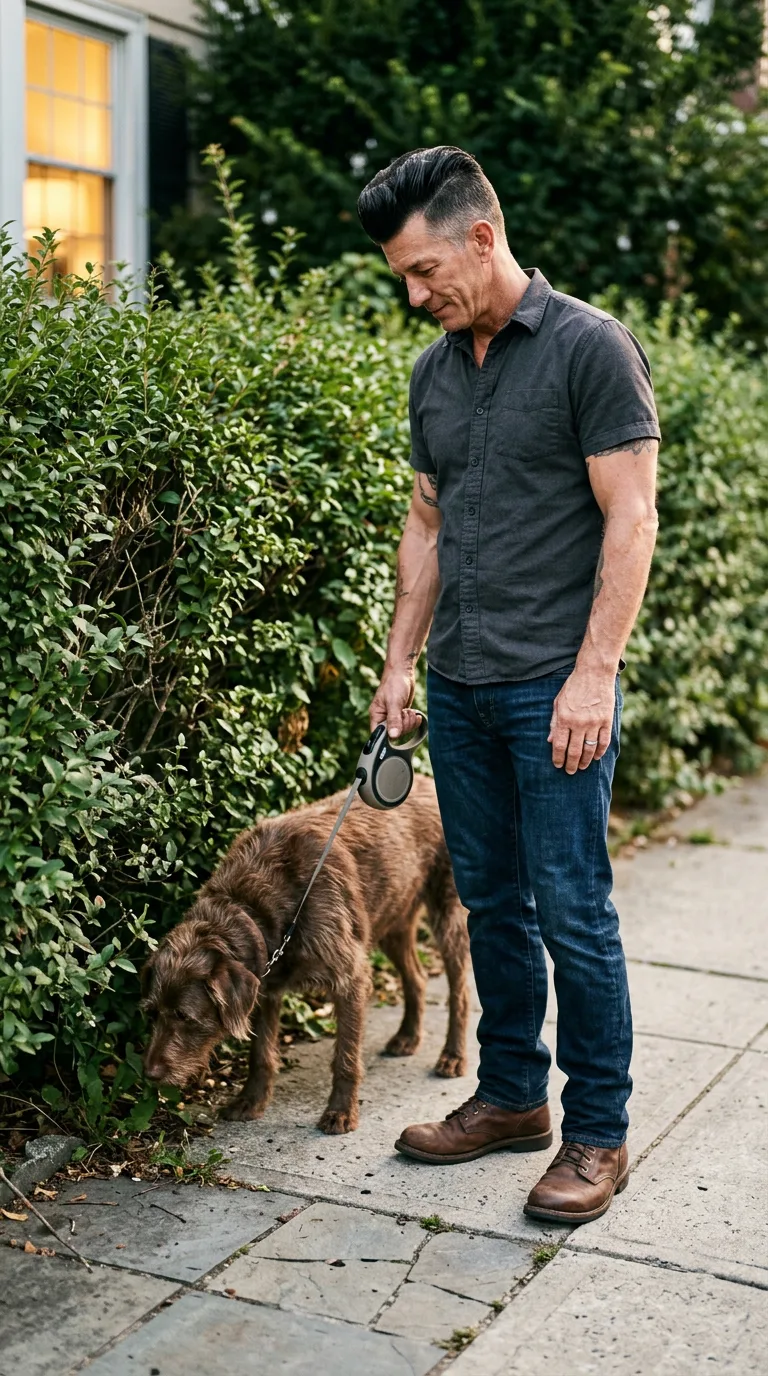
Rarest thing about him: Black — epic, 1 in 78
Season 0seed 591224913 · engine v10
Character card
lineage 2NZHHJ
His body-swap story
@colin.hasbrook, wearing Kevin Otani, rolled the wheel on and woke up as Gregory Novak, spent under a minute in him, then spun the wheel and woke up as Marcus Reyes
You are Marcus Aldridge's leg, bouncing, for about forty more seconds. You know this because you have been Marcus for less than a minute and already the itch is under his sternum like a second heartbeat — the phone in his shirt pocket, the recliner still warm from whoever had it last, the whole retired quiet of a Tuesday evening in a house that smells like decaf and menthol rub. You spun into him five bodies ago and left him, and now the wheel has handed him back to you like a coat you forgot you owned, and it does not fit any better the second time. Nothing is wrong with him. That is the trouble. He is fine, he is safe, his blood pressure is somebody else's problem now that you're only borrowing him for the length of a decision, and being fine for even one minute feels, to whatever in you does the wanting, like being asked to sit still in church. So you go to the site again, the wheel with its soft chime, and you spin before Marcus's leg has finished its first bounce.
The leash goes slack in your hand and then it is not your hand.
You are standing on a wet sidewalk in Brooklyn with a dog's face turned up at you, ears back, and the leash's little brake clicks under your thumb without you asking it to. Sodium light coming down through leaves gone black at the edges. A hedge. A window lit gold behind it, someone's kitchen. Your body — his body — is shorter than the one you just had, tighter through the shoulders, and the air smells like wet stone and somebody's cigarette three houses down, and underneath that, coal soot that never fully leaves a man's sinuses no matter how many showers he takes. You wind the leash twice around your palm before you've decided to, and the dog startles into a trot to keep up, learning a stride it doesn't recognize.
The shirt is what opens first — gray, short-sleeved, a shirt he put on nine hours ago in a bedroom with the blinds already up, sun coming in low and orange through Brooklyn brownstone glass, his wife still asleep with one arm thrown over the empty side of the bed where he'd been. He remembers — no, you remember, wearing him — buttoning it one-handed while balancing a coffee mug on the dresser, the second button always sticking a little on the placket, the fabric gone soft in a way that means it's his favorite even though he'd never say the word favorite out loud about a shirt. Under it his chest still carries yesterday's ache across the collarbone, the specific tired of a man who spent the morning on his knees at a hearth forty blocks from here, rods going up dark one joint at a time, soot in the creases of his knuckles no soap gets all the way out of. His hands know that motion without him — twist, feed, twist, feed — the way they know nothing about small talk with a dog at the end of a leash.
The wedding band is next, cold then warm against your palm where it's wound in the nylon strap. That ring brings the wife whole: her laugh over dinner, the two kids grown enough now to only call on Sundays, and behind all of it, worn thin as a coin from handling, the other woman — the one from a summer job thirty years gone, the one whose name still surfaces uninvited some nights when he can't sleep, harmless now, just a door in the house he doesn't open but hasn't nailed shut either. He never told his wife about the door. He didn't need to. It never opened for anyone but him.
The dog's fur under your other hand, damp with dew off the hedge, brings the whole evening walk routine — the same three blocks, the same hydrant, the same neighbor's cat that makes the dog go rigid and quiet. His knees complain faintly on the third step down from his own stoop every single night and he has stopped noticing that they do. His heart works a little harder than it should at rest; a bottle of something small and white sits in a bathroom cabinet he is faithful about, mostly. He used to smoke on this same stretch of sidewalk, years back, and some nights his fingers still want the shape of it, empty, at his side.
None of it is dramatic. It is just a life, sock drawers and soot and a woman who got away thirty years before she mattered, and a dog he loves without complication, and you are standing in the exact middle of all of it, holding a leash that isn't yours, in a body that carries no scar you get to invent and no feature beyond what you were told — gray eyes, dark hair combed up and back, a leg that would be bouncing if he were sitting down instead of walking.
You look at your hand on the leash — not soot-black the way it was this morning, washed for supper, the ring catching the sodium light — and you turn it once, like it might tell you something it doesn't.
"There you go," you say to the dog, and your voice comes out lower than you expected, and the dog looks back at you, satisfied, tail going, no idea at all.