Grant Pellicane
Fictional. Generated by AI — not a real person, and no likeness of one is intended.
26, house painter in Los Angeles · rolled by @colin.tarwater · card — no film
History
who has worn him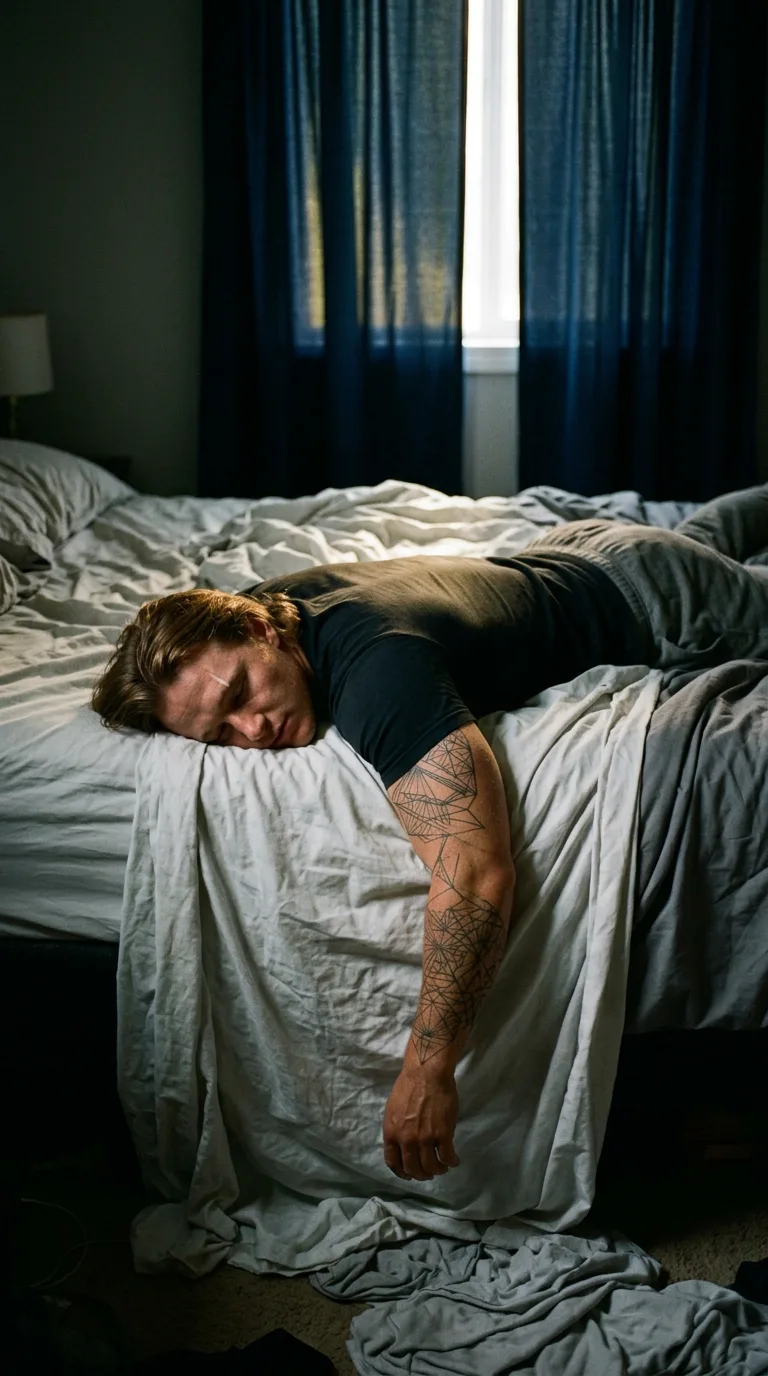
Rarest thing about him: 5'4" — rare, 1 in 55
Season 0seed 1672708858 · engine v10
Character card
lineage COEU7T
His body-swap story
@colin.tarwater, wearing Wesley Begay, rolled the wheel on and woke up as Grant Pellicane, spent 5 minutes in him, then spun the wheel and woke up as Mel Halbrook
You are Wesley Begay for the length of a held breath, standing in a Phoenix locker room that isn't yours, in a body that isn't yours either — eighteen years old, six feet of skinny gray-eyed kid, gun belt hung on the hook, name tape still reading DUSTIN HALBROOK's coworker on a badge you never bothered to memorize. You spun into him a minute ago and you have already done the only thing you came to do, and it worked, and now the wanting starts up again immediately, the way it always does, because a soldier's body was interesting for exactly one spin and a beat cop's was interesting for exactly one minute and this is the whole shape of your life now: everything is a hallway. You don't look back at Wesley's photo in your mind, the fifty faces stacked up like receipts. You open the site again, feel the kid's thumb — not your thumb, his, but you're driving it — tap the wheel, and let go of Phoenix like dropping a coat.
The wheel spins somewhere outside geography.
The breathing changes first. It goes from ragged, mouth-open, face-down-in-the-pillow ragged, to even, deep, deliberate, in the space of one inhale — and the arm that was hanging off the mattress lifts itself, folds up and across, and the whole body rolls onto its back and stills, hands laid flat on the chest like a man arranged for a viewing. Streetlight comes through a gap in the curtain and lies across a jaw that has never once in its life woken up in this position, because Grant Pellicane sleeps like he's been dropped from a height, and something else is wearing him now, testing the new weight the way you'd test ice.
The memories don't come as a file, they come as contact. The sheet under your back is the first key — cheap cotton gone soft, a little damp with a night's sleep — and it opens onto nothing at first, just warmth, the fact of a mattress that's been his for three years, bought secondhand off a guy moving to Bakersfield. Then your own — his — hand brushes the t-shirt riding up over the ribs and there it is: this morning, or yesterday morning, the two are the same morning worn twice, pulling the shirt on over a torso that aches pleasantly in the shoulders and forearms, the specific ache of eight hours cutting in ceiling lines with a two-inch angled brush, up on a ladder in a bedroom with the furniture pushed to the center and sheeted in plastic like something already dead. Painter's ache. Good ache. The half sleeve on the right arm — geometric ink, fine lines, done over four sessions two winters ago because he liked the idea of something exact on a body that spends its days making other things exact — itches faintly where the sheet dragged across it in the night, and that itch drags a whole shop chair into the room, the buzz of the machine, a girl at the counter he'd just started seeing then, not the one he's seeing now.
The girlfriend arrives through the pillow smell — her shampoo, a name that surfaces slow and certain, Camila, and with it a Tuesday two weeks back, her laughing at him for falling asleep with a pouch still tucked in his lip, him fishing it out half-conscious and flicking it toward the trash and missing, both of them not caring. The kid — his kid, four years old, lives with the mother across town, sees him weekends — comes through the ceiling itself somehow, the particular white of it, because he painted a room that color once for a nursery that didn't end up being this one, and the guilt and the love of that are so tangled together that you, riding him, feel your throat do something without your permission.
His body is short and dense with muscle built the honest way, on ladders and scaffolds, hauling five-gallon buckets up stairwells in this same stucco courtyard with the dry palms outside. Twenty-six years old and every joint in him knows exactly what it's for. The scar through the eyebrow — a fight at nineteen he barely remembers starting — sits under your fingertip like a seam. Nothing to his name worth counting. No god he prays to. A pouch tin somewhere on the nightstand, a truck with bad brakes, a courtyard smelling of chlorine and hot stucco outside a window he hasn't opened all week.
You bring the folded hands up off the chest, slow, into the streetlight, and turn them over — the paint under the nails that no amount of scrubbing gets out, the calluses at the base of each finger exactly where a brush handle sits.
"There you are," you say to the empty room, quiet, not even sure who you're talking to — him, or the last one, or whichever one comes after.