Grant Osweiler
Fictional. Generated by AI — not a real person, and no likeness of one is intended.
34, sales rep in High-desert Nevada · rolled by @colin.hasbrook · card — no film
History
who has worn him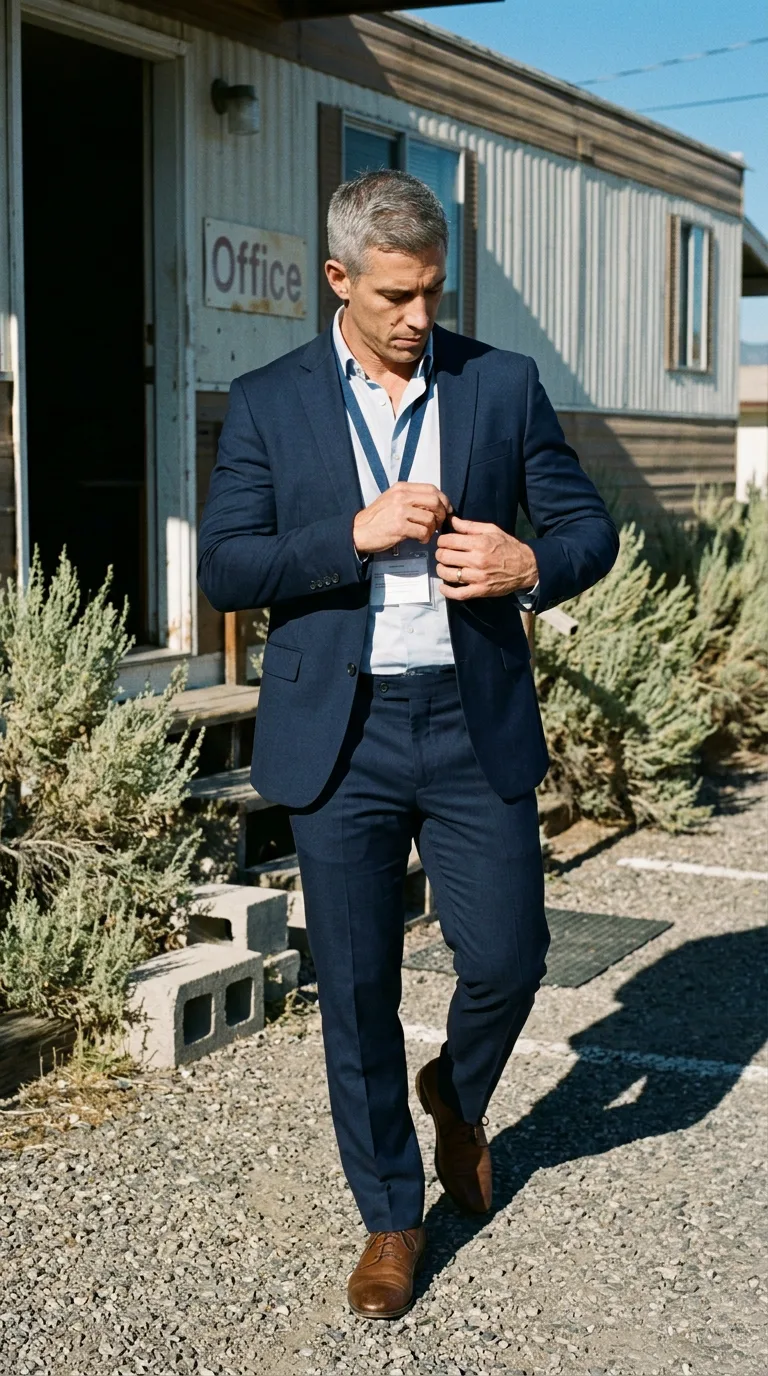
Rarest thing about him: High-desert Nevada — uncommon, 1 in 44
Season 0seed 209565750 · engine v10
Character card
lineage 2NZHHJ
His body-swap story
@colin.hasbrook, wearing Nathan Ishida, rolled the wheel on and woke up as Grant Osweiler, spent under a minute in him, then spun the wheel and woke up as Brendan Hoyt
The turnout coat is still on the hook where he hung it an hour ago, and that's the problem. Nathan Ishida keeps looking at it like it's going to say something. You've had this one an hour and four minutes and already the shine is off — the ache in a shoulder that isn't yours yet feels like it should mean something, the little apartment smells like somebody else's fabric softener, and there's a text on his phone from a woman named Priya that you don't have the history to answer honestly. You could stay. Grief counselors would tell you staying is the brave thing. But you didn't spin two hundred and ninety-eight times to learn bravery, and the hero always gets boring by the second hour, because the whole appeal of a hero is the one fire, not the six thousand ordinary evenings around it. You want the itch of not knowing yet. You open the site on his phone with his thumbprint, because it's still shaped like his thumb for a few more seconds, and you spin.
The office trailer is behind him, gravel under him, and his hand is at the second button of a navy jacket, fingers walking it closed the way they've done every weekday for nine years — and then they don't. The button slips from between them. It slides open again on its own weight. You feel the day's heat first, dry and flat against a face that isn't damp with the low-grade coastal sweat you just left, and under your — his — feet the ground has gone from asphalt to gravel, sharp through thin-soled dress shoes. The motion that was supposed to be button-jacket-walk comes out as button-stop-look-down, and then, carefully, deliberately, the fingers do it again, slower, correct this time, because something in the hand insists on checking its own work.
The lanyard is what opens first. It's cheap, plasticky, warm from his sternum, and touching it gives you a conference hall in Reno, badge scanners beeping, a woman from another territory laughing too hard at something you — he — said about the sales numbers, and under that laugh a small flare of something he'd call nothing, because he is married and decent and doesn't let himself finish the thought about her mouth. Her name arrives with the feeling and not before it: Denise. Not the wife. The one from four years ago, the one who took a job in Boise and didn't ask him to follow and he has never once told anyone how much that not-asking cost him, because it would mean admitting he'd have said yes.
The jacket lining slides against a forearm and gives you a fitting room, a salesman with a tape measure, Grant standing in front of a mirror thinking he looked like someone else's idea of himself, and buying it anyway because the territory manager job needed a man who photographed well in navy. The shirt — you feel it now, the whole shape of this morning, sleeve by sleeve, his hands and not yours: the button at the cuff that always sticks, the second button from the top left open on purpose because his neck thickened two years back and the collar reads tight otherwise, the little tug he gives the hem before the jacket goes on, unconscious, learned. The mole on his cheek isn't something he touches but you feel him aware of it the way you're aware of your own tongue, a fact of his face nobody mentions anymore.
The wedding band is cold against the next finger over from where the jacket cuff ends, and that's a bigger door than the others: a woman named Carol who married him in a backyard in Pahrump with folding chairs and a dog that wouldn't stop barking during the vows, and eleven years since, most of them fine, some of them the long flat fine that isn't happiness but isn't its opposite either. A boy — nine, maybe ten by the weight of the memory — who has Grant's same habit of going quiet before he's about to say something true. The trailer they live in, blocks and skirting and sagebrush pushing up against the step no matter how many times he clears it, and Grant standing outside it some evenings just breathing before he goes in, not because anything's wrong, just because the day needs a seam between it and home.
His jaw is already tight — that's his, always, the thing his hands never do but his jaw does instead, clenching over nothing, over commission math and Carol's tired voice on the phone an hour ago and a client in the lobby who wanted a discount Grant can't give — and you feel that tightness now like a held note. His body is compact and hard in a way that surprised you, thirty-four and gym-strong under the suit, a body that does its job without complaint, no drink in it, no nicotine, nothing in the blood but coffee and the particular clean tiredness of a man who has never once needed an exit from himself before now.
You look down at the hand that failed the button twice. You turn it over, palm up in the hard desert light, gravel-shadow sharp across it, ring catching sun.
"Okay," you say, out loud, to no one, in a voice that is his and isn't. "Let's see what you're worth."