Grady Whitcombe
Fictional. Generated by AI — not a real person, and no likeness of one is intended.
43, wrestling coach in Seattle · rolled by @colin.hasbrook · card — no film
History
who has worn him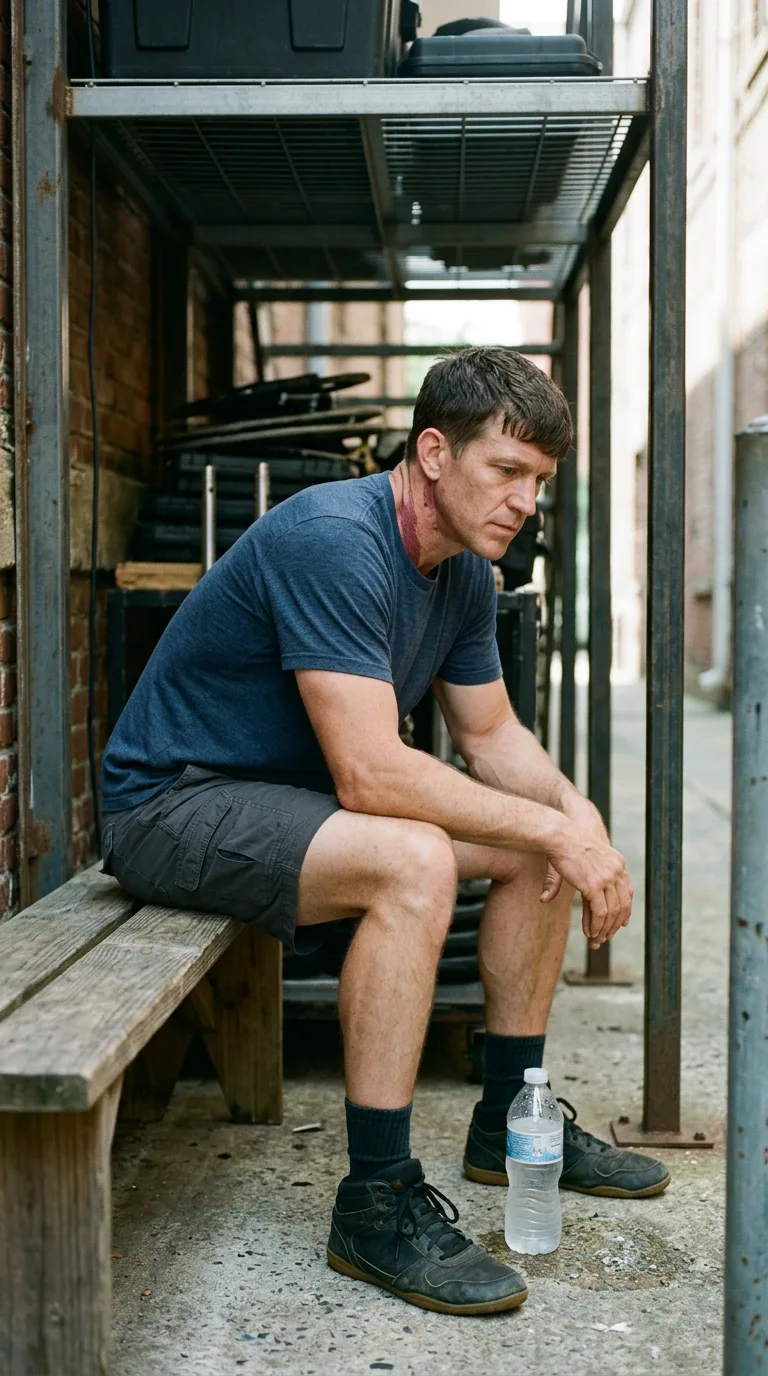
Rarest thing about him: A birthmark on the face — epic, 1 in 95
Season 0seed 2047219209 · engine v10
Character card
lineage 2NZHHJ
His body-swap story
@colin.hasbrook, wearing Kenji Amano, rolled the wheel on and woke up as Grady Whitcombe, spent under a minute in him, then spun the wheel and woke up as Ross Delaney
The office chair in Hays, Kansas is the wrong size for the body you're in, and that's the first thing you notice — Kenji Amano's feet don't reach the floor the way they should, or maybe they do and it's the eighteen-year-old bones under them that feel wrong, borrowed, un-lived-in after less than a minute of wear. Freckled forearms on a keyboard that isn't his. A spreadsheet open that isn't his either — a stranger's ledger, a stranger's Monday, a stranger's afternoon light coming sideways through blinds someone else chose. You have been him for less than sixty seconds and already the wanting is back, already the itch under the itch, because seventy-one men in and you have learned the only thing this body was ever going to teach you about itself is how quickly it stops being new. Kenji Amano's hand — your hand, for now, for nothing — moves the mouse to the little tab still open from before. Vessel.cards. The wheel sitting there mid-spin in its last resting frame like it's been waiting for you to get bored, which it has, which it always has, and you don't examine the wanting, you never do, you just let the cursor find the spin button and press.
The bar is two inches wider in your hands than it was a heartbeat ago, and you don't know that yet — you only know that your palms are calloused in a way that isn't a memory but a fact, immediate, already yours the way skin is yours. Weight overhead. A gym smell, rubber and sweat and the particular cold fluorescence of a school gymnasium at midday. Legs bent at a depth some other discipline decided on years before you arrived. The rep doesn't stop. You feel — before you understand — a body that knows exactly what it is doing, grinding through the bottom of a squat with a patience that has nothing to do with you, and your first sensation in him isn't confusion, it's borrowed competence, the specific dumb comfort of a body executing a thing it has done ten thousand times without needing you at all.
The bar goes back on the rack with a sound that lands in your chest before it lands in your ears. Grady Whitcombe's chest. Forty-three years in it, and it comes up through the bar first — steel, chalk, the grip tape peeling slightly at one spot he keeps meaning to replace and never does because there's always another kid to tape up first, always another Tuesday practice, always somebody's ankle to look at before his own hands. The whistle against his sternum swings once on its cord and you feel that too, small, cold, a decade of muscle memory in the way two fingers already want to find it and don't, not yet, because he's still breathing through the last rep.
The hoodie is next — maroon, worn soft at the cuffs, and it gives you a morning: him pulling it over his head in a gray-lit bedroom that has never once had another person's clothes in the closet since her, since the ex whose name comes up out of the cotton like a smell, faint, not unkind, just there the way certain rooms are always a little bit someone else's after long enough. Her voice from some kitchen years back, laughing about something small. Not grief. Just residue, worn into fabric the way sweat is. He tugged the hoodie on this morning one-armed, phone tucked against his shoulder, talking to an assistant coach about a forfeit at 138, and the whole small ordinary administration of his life comes with it — team roster, a kid named DeShaun who's cutting weight wrong, a gym key that sticks in October when the metal contracts.
The shorts know the bench they've sat on a hundred times, this one under the equipment rack in the alley behind the gym where he goes between sets to get five minutes without anybody needing anything from him. The concrete under his sneakers is uneven, familiar, the crack by the drain he always half-trips on and never falls. His neck — the birthmark, wine-dark, warm under your fingers when you touch it without deciding to, an old habit from being twelve years old and self-conscious surfacing once and then gone — carries nothing dramatic, just a lifetime of people's eyes sliding to it and away, and his own hand's old habit of not touching it at all.
Knuckles crack on their own, both hands, a tic that isn't yours and does itself anyway, and in that small mechanical gesture you get the rest of him in a rush: a father's church on Sunday mornings that Grady stopped attending regularly around thirty-five but still calls his mother about every week; a nicotine pouch tucked in his lip most of the day, the small itch of wanting one now; a bank balance he doesn't think about because there's enough of it, built slow, unspectacular, invested by a guy from his gym; a big night out every few weeks with the other coaches that always ends the same way, loud, then quiet, then home; wrestlers who call him Coach and mean it like a kind of family he built instead of the one he didn't get around to having. No wife. No kids. A life assembled instead out of practice schedules and other people's sons.
None of it is yours. All of it sits in you anyway, warm and complete and already fading at the edges the way all of them do eventually, the way Kenji is already fading, the way seventy other men have gone soft and grey somewhere behind you while you kept moving forward into the next one.
You look down. Grady's hands — broad, calloused at the base of the fingers, one knuckle permanently a little swollen from some old mat injury he never had looked at — turn over in the gym light like you're checking them for a wound. You lift your eyes off them, into the shine of the rack's chrome upright, close enough to something like a lens, and you say, quiet, almost to yourself:
"Who's running my second period."