Gordon Maslin
Fictional. Generated by AI — not a real person, and no likeness of one is intended.
49, administrative assistant in New York · rolled by @colin.hasbrook · card — no film
History
who has worn him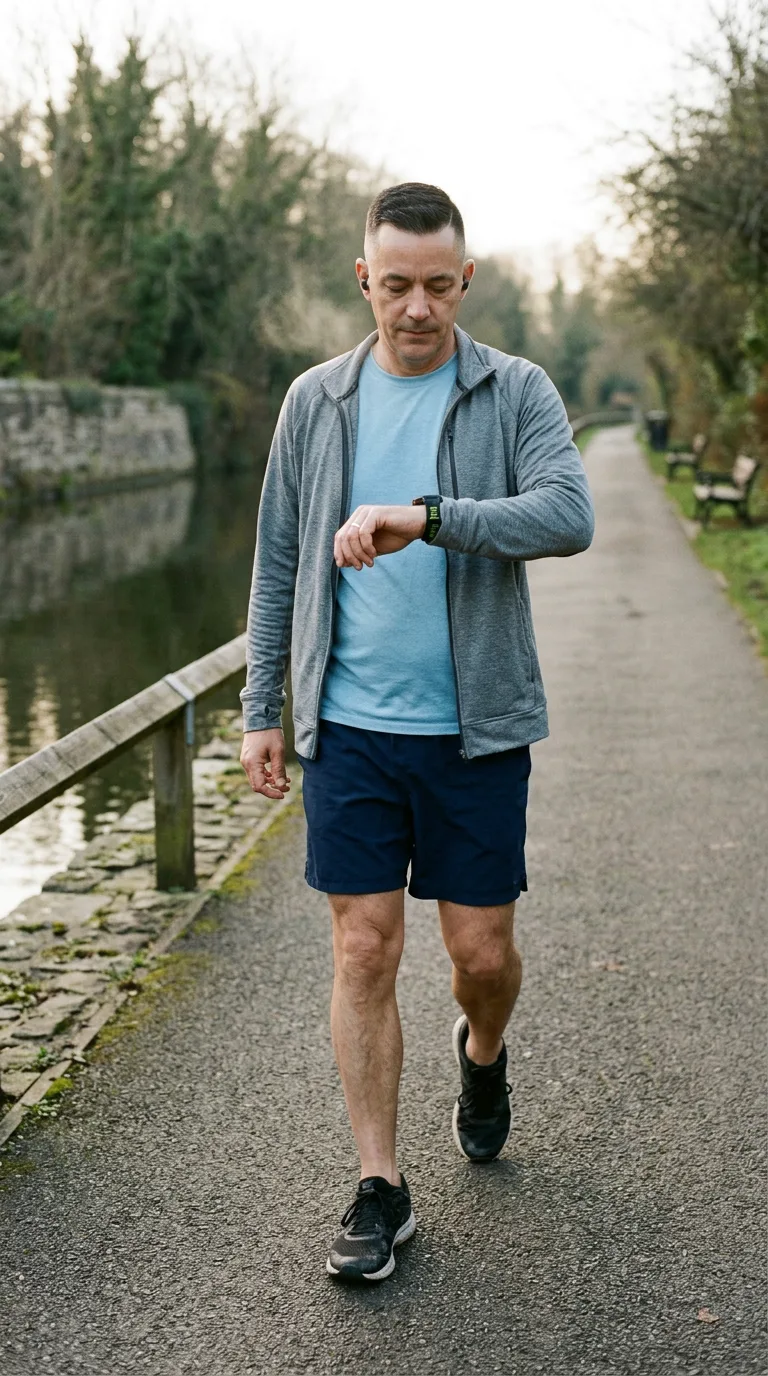
Rarest thing about him: Out for a run — common, 1 in 41
Season 1seed 124342615 · engine v11
Character card
lineage 2NZHHJ
His body-swap story
@colin.hasbrook, wearing Darnell Osei, rolled the wheel on and woke up as Gordon Maslin, spent under a minute in him, then spun the wheel and woke up as Cornell Trask
You are standing in Darnell's kitchen at eleven at night, in a body that isn't tired even though it should be, and the fridge hum is the only sound in the apartment. His shift log is stuck under a magnet — tomorrow, 6 a.m., Mrs. Alvarez's sponge bath and her blood pressure cuff and the particular way she likes her toast cut into triangles. You did that today. You did it competently, even kindly, because thirty-two years of this man's muscle memory does the kindness for you whether you feel it or not. That's the trouble. It runs itself. You stood in his good arms and his easy laugh and his scarred eyebrow for less than a minute of clock time before the itch started under all of it — not boredom with him exactly, something colder, the thing that always comes back no matter which one you're wearing: the fridge hum, the log on the counter, the sense that this life, too, is already fully explained. You want the part before the explaining. You open the laptop instead of going to bed you don't need. The wheel is already loading. You do not let yourself think about the taste of Darnell Osei's coffee, still on the tongue you're about to leave behind.
The path breaks under you.
Not far — two steps, a stumble that never quite becomes a fall — and then you're running again, except the legs are wrong in a way that isn't wrong at all, longer through the shin, lighter, an old ache behind one knee announcing itself like a colleague. Cold air. Real cold, biting at a throat that isn't used to November like this. A watch on your left wrist buzzes a split for a mile you never ran. Earbuds feed you a woman's voice saying something about pace. The canal beside you holds a flat gray light that hasn't decided yet whether it's morning.
The jacket is what opens first. Zip pull cold under your — his — fingers, and there's a flash of a closet, gray light through a blind, the small ritual of tugging this exact jacket off a hook and already knowing the run before the run: four miles, canal path, same as every day since the divorce because it is easier to run than to sit in the apartment on the mornings the kids aren't there. That's Gordon. Gordon Maslin, forty-nine, and the name comes with the jacket the way a smell comes with a coat pulled from storage.
The watch gives you more. Strapped on standing in a bathroom that isn't the brownstone's — a different apartment, an emptier one, seven months into living alone after nineteen years of not — clipping the band and thinking, the way he thinks most mornings, that Denise used to say he ran to avoid talking and she wasn't wrong, and thinking it without much heat left in it anymore, because time has sanded the argument down to something almost fond. Three kids. The watch remembers, in fragments, all three at once — a driveway basketball hoop, a girl's braces catching the porch light, a boy's voice cracking on the phone last week about college money — and none of it comes with your grief, only his, muted the way a man's grief gets muted when he's mostly finished crying about it in the shower and started just carrying it instead.
The shorts, the shirt, all of it dressed in the dark of an apartment forty minutes before this, sleeve by sleeve remembered now in reverse: the shirt over the head, cold cotton smelling like the drawer; the fleece zipped to the throat against a chill his skinny-fat body never quite tolerates the way it used to. He is not a runner's body, not really — softness over the stomach no mileage seems to touch, calves that ache by mile three and complain a little now, at four — but it's his and he shows up anyway, every dawn, because the alternative is sitting still with the apartment.
The tan line comes last, and comes hardest — a paler stripe on the ring finger, and with it a whole wedding, briefly, whole and complete and then gone: a hand held across a restaurant table decades back, the exact weight of a band he twisted off two years ago in a bathroom not much bigger than a closet, the specific quiet of the apartment on the first night it was only him in it. Under the corner office where he sits outside a door that isn't his, clicking a pen he doesn't notice he's clicking, he thinks about that finger more than anyone would guess. Nobody at the office asks. Nobody at the office would know to.
You have all of it now, sitting loose in a body that is still running, breath showing in the cold, mouth still tasting faintly of nothing — he skipped water this morning, in the rush, a small thing that comes back like a physical fact, dry at the back of the throat.
You slow to a stop at the rail, hands coming up without your telling them to, and you look down at them — his hands, unremarkable, a pen-callus at the middle finger, the ring-finger stripe pale in the gray light — turning them over like they might explain something they can't.
"Okay," you say, out loud, to no one, in his voice, watching your breath go up into the cold.
Behind you, four thousand miles off, an empty kitchen keeps humming to a man who isn't in it anymore, and somewhere ahead of you a wheel is already spinning down to stillness, waiting on nothing but the next time the wanting comes back.