Gerald Shinkle
Fictional. Generated by AI — not a real person, and no likeness of one is intended.
64, sales rep in Philadelphia · rolled by @jaylen.okonkwo · card — no film
History
who has worn him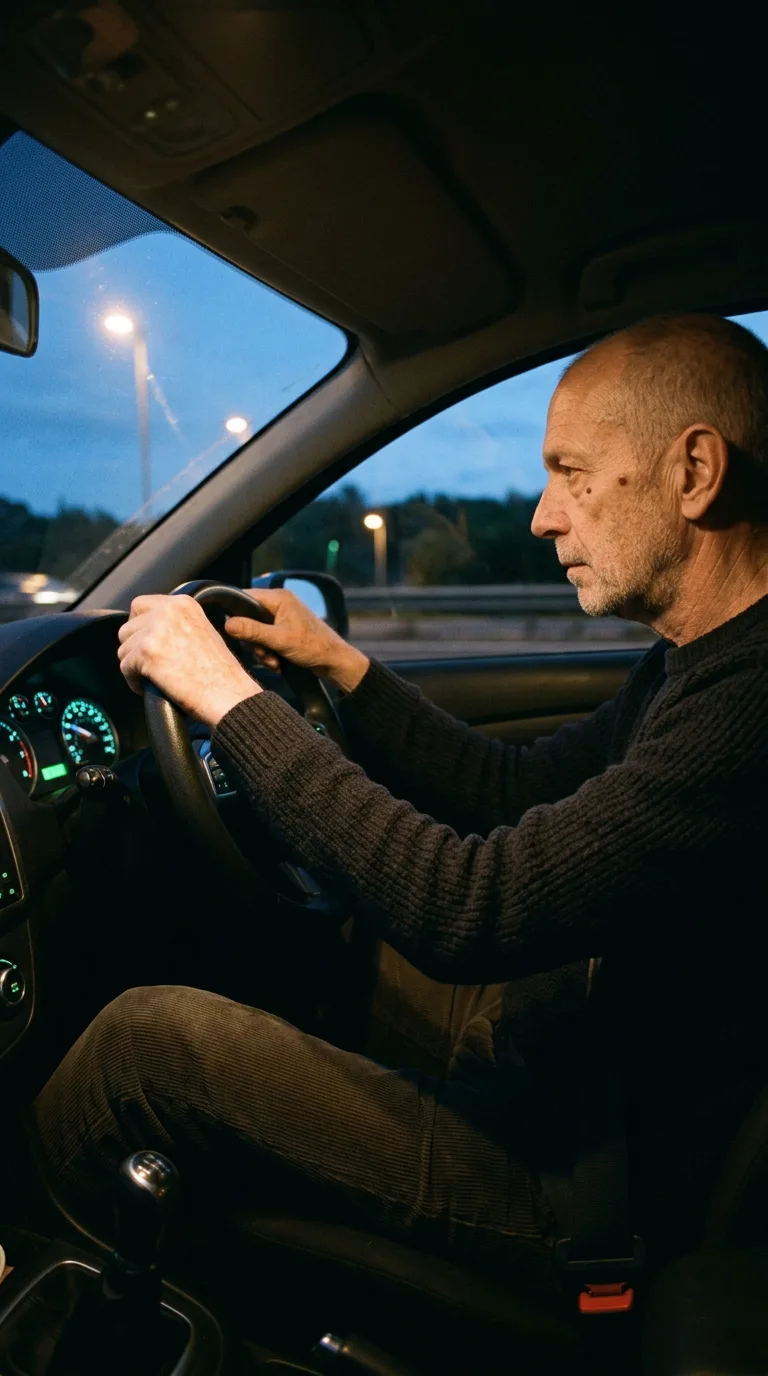
Rarest thing about him: Latter-day Saint — common, 1 in 64
Season 1seed 1005627245 · engine v11
Character card
lineage Q3AZ7V
His body-swap story
@jaylen.okonkwo, wearing David Han-Yoon, rolled the wheel on and woke up as Gerald Shinkle
The precinct locker room smells like Axe body spray and old coffee, and you are standing in front of David Han-Yoon's locker holding David Han-Yoon's badge, and you are so tired of him you could scream. Two days. Two days of radio chatter and a captain who calls you "Han" like it's a bark, two days of a body that aches in the knees on the stairs, a gut that pulls at the waistband, dimples that show in the mirror every time you practice a face that isn't yours to practice. You took him on a whim and the whim cashed out fast: being a cop sounded like power and turned out to be paperwork and a dispatcher who hates you for reasons that belong to a man who isn't even home anymore. You shut the locker. Your shift ended forty minutes ago. You pull out your phone in the parking lot, Houston heat sitting on the asphalt even this late, and you open vessel.cards with his — your — thumb, and you spin, because the wanting came back faster than you expected and you've stopped being ashamed of that.
The wheel turns.
You are sitting. That is the first thing — not standing, sitting, low and settled, something cupped in your right hand that is textured, ridged, familiar to a body that isn't familiar to you at all. Fluorescent light from somewhere high and indirect. A lanyard weight against your sternum. You are three miles from a home you have never seen, except you are not anywhere near a highway — you are in a chair, and the dark road from a second ago is simply gone, replaced whole, no seam. Your hand — his hand — turns a laminated card over without you telling it to, old habit finishing itself before you catch up to owning it.
The chair is a hotel lobby chair, low-backed, the kind bolted into a row near the elevators. The card is a room key. The thing against your chest is a conference lanyard, white badge turned backward. And now his life comes in through everything you're touching at once, overlapping, none of it waiting its turn.
The lanyard first — cheap woven strap, somebody's logo you don't recognize, and it brings a whole day: six meetings, a product nobody in the room wanted, a joke he made about the coffee that got a real laugh out of a buyer from Allentown. Gerald Shinkle has sold industrial fasteners for thirty-one years. He is good at it in the specific way people are good at things they never loved — thorough, patient, unhurried, a closer who never raises his voice because he learned a long time ago that was the only way certain rooms would let him stay in them.
The shirt — pale blue, a little damp under the arms from the walk between buildings — gives you this morning: standing in a bedroom with afternoon light already old by Philadelphia standards, buttoning cuffs with fingers that know the motion without looking, because he has dressed himself for a sales floor five days a week since Reagan was president. Undershirt first, always, because his mother taught him that sixty years ago and he never once thought to stop. The blazer went on last, off a wooden hanger that used to be his father's, and he checked the mole in the mirror the way you check a scar — not with shame anymore, just acknowledgment, an old visitor.
The shoes — brown, oxford, resoled twice — bring his knees, the ache starting about four years ago and never really leaving, a dull complaint he manages with stretching he does in hotel rooms where nobody can see a sixty-four-year-old man touch his toes and grunt about it.
And under the shoes, the carpet, patterned and forgettable, brings up a different hotel, a different year — Scranton, maybe, or was it Allentown again — and a man named Thom who he loved for six years in the careful, folded-up way the Church and the territory both demanded of him in the eighties and nineties, a love conducted mostly in hotel rooms much like this one, curtains drawn against afternoon light, and ending not with a fight but with Thom simply marrying a woman from his ward and Gerald standing at the reception in a rented tuxedo clapping along with everyone else. They still talk. Every few months, a call that goes an hour. Neither of them says what it was. Gerald has never told his bishop, has sat through forty years of testimony meetings with that single fact folded into a pocket nobody pats down, has made peace with a faith that would not entirely make peace with him by simply loving it anyway, the way you love a parent who was wrong about one thing and right about everything else.
No husband. No children. A ring he never wore because there was never, in his whole life, a day it would have been safe to wear one. Money that came slow and steady from three decades of commission checks he never spent much of, because there was never anyone to spend it with and travel alone only interests a man for so long.
The mole on his cheek itches, faintly, the way it always has — a small, specific, bodily fact, the one thing anyone ever says when they describe him, and he has made a kind of peace with being known by it.
You look down. His hand — your hand now — is still holding the room key, thumb worn smooth on one corner, and you turn it over once, slow, the way a man checks a tool he's about to use.
You look up into the lobby, into the low gold light off the elevators, and you say, to no one, in his voice, quiet:
"Just me again."