Gerald Pruitt
Fictional. Generated by AI — not a real person, and no likeness of one is intended.
65, chief executive in New York · rolled by @owen.prescott · card — no film
History
who has worn him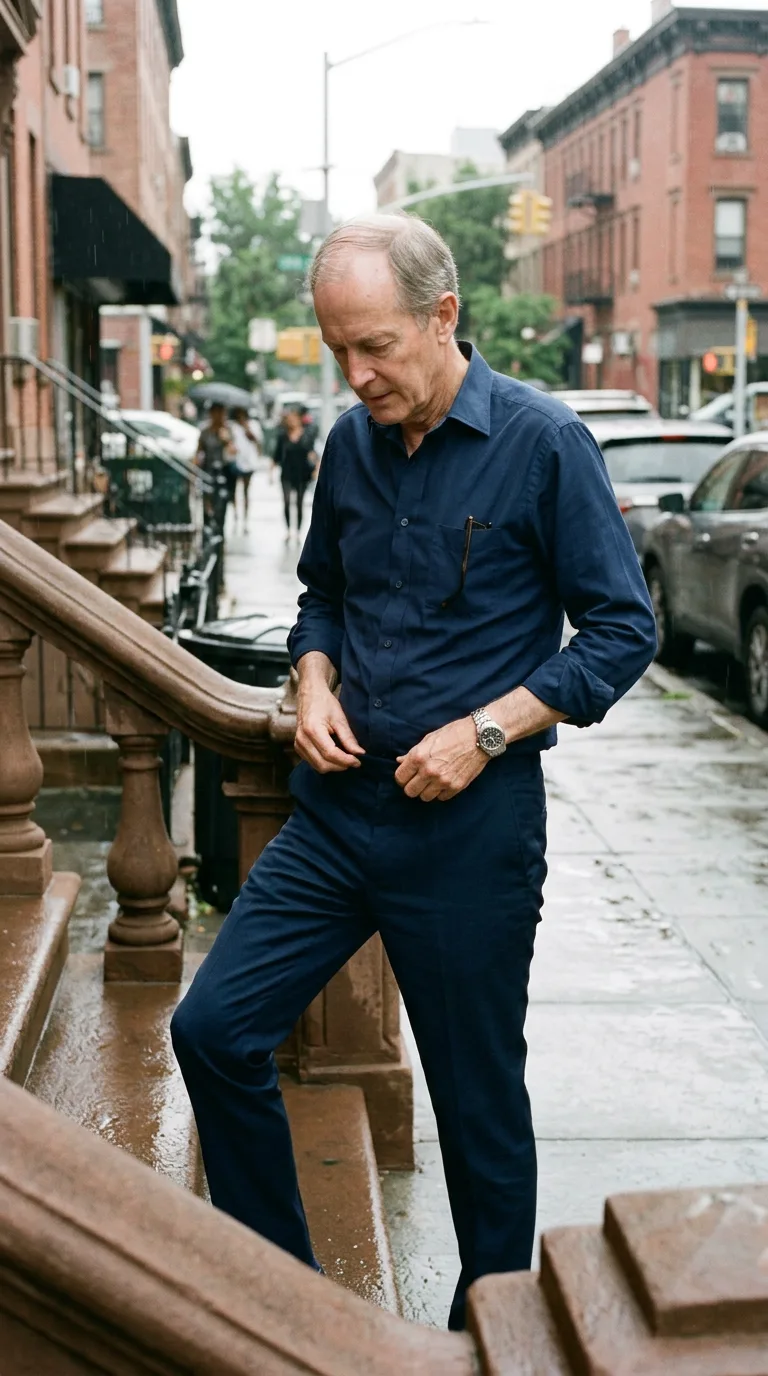
Rarest thing about him: Other Christian — rare, 1 in 219
Season 1seed 546428686 · engine v11
Character card
lineage 5OR92V
His body-swap story
@owen.prescott, wearing Arturo Benítez Salgado, rolled the wheel on and woke up as Gerald Pruitt, spent under a minute in him, then spun the wheel and woke up as Walter Emerson Coombs
You were Colton Pruitt for under a minute, and he was enough to leave. Nashville was a mop bucket, a wet gray smell, a beard that itched when you breathed hard. You stood in a hallway of a school after hours with the handle of a push broom in both hands, and you knew what the broom knew: a boy of twenty-five who had never once called his father first. It was something that happened inside the minute, a phone lighting up on a windowsill with DAD on it. You did not answer. You were not his to answer for. But the name sat in you like a swallowed stone, and Arturo in Pittsburgh was no help. Arturo, with his green eyes and his engineering reviews, was sitting at a kitchen table on a Tuesday morning, and you were already clicking.
The wheel turns. Nothing travels.
It is raining, and you are on a stoop with one foot lifted to the next step and one hand sliding down the front of a shirt. The fingers are working a button, the one at the waist, tucking, smoothing, done ten thousand times and not watched. Then the half second breaks. Your thumb misses. You do it again slowly, and correctly, and then ten more motions, each one checked, as if the body is auditing itself.
Wet brownstone under your palm, the banister cold and slick and carved into fat balusters. Sodium-orange lies on the puddles though it is morning, the sky so low it has turned the lamps on. Your knees speak first. Sixty-five years of them, a dull grind at the bend. Your belly sits soft over the belt, though your arms are thin and your wrists are narrow, and the heavy steel watch slides on the left one.
The shirt is navy, and the cuff rolled twice against your forearm gives you the first thing. His hands, Gerald's hands, his, doing the roll in a hallway upstairs, the light from a window on a washed floor. The girlfriend's voice from the kitchen: *you're wearing the blue again.* Her name comes warm and unwelcome, and with it the coffee she leaves him, too sweet, which he drinks anyway because she made it.
The glasses in the pocket tap your chest as you move. You touch them, and a conference table opens, glass walls, a city lit at dusk, forty people waiting for him to say the number. He says it. His stomach is calm and cold and enormous, the feeling of being obeyed. Under it, small and older, is the feeling of a man who has been obeyed for so long that he no longer hears his own name used by anyone who is not afraid of him.
The watch is heavier. You turn it, and a boy in a hospital corridor, his boy, a first one, a red furious face in a blanket. Then another, and another, three, four, he has lost the exact count of the afternoons. One of the names is Colton. The weight that comes is not pride. It is a phone he stopped dialing, a Christmas he spent at work on purpose. You hold the rail until it passes. You know what it is to be the son holding the broom. Now you are the father with the unanswered call, standing in his own rain.
His mouth tastes faintly of bourbon from last night, one or two, always one or two, and under it a ghost of tobacco he quit twenty years ago and still reaches for when he is frightened. The reach is in your fingers now, toward the pocket where the pack would be.
Water drips off the stoop. You lift your right hand and turn it over, palm, knuckles, the thin skin, the clean nails. Not yours. Yours is nobody's. You raise your eyes to the street and say, in a voice drier and slower than the one you came with, "Colton." It is only the name. It tries out the shape of calling first.
Somewhere past the rain, a wheel is waiting, and you wonder how long before you want it. Today, tomorrow, the next light.