Arturo Benítez Salgado
Fictional. Generated by AI — not a real person, and no likeness of one is intended.
60, engineering manager in Pittsburgh · rolled by @owen.prescott · card — no film
History
who has worn him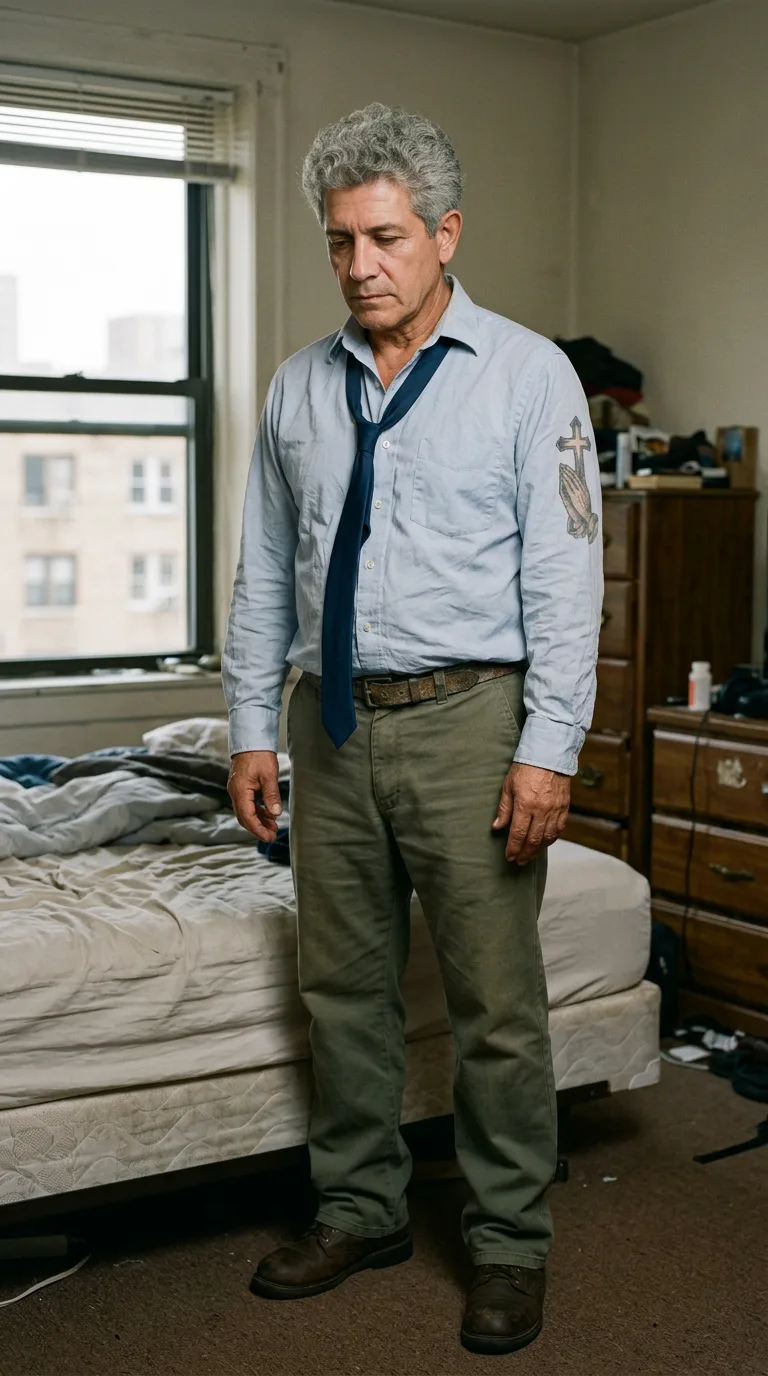
Rarest thing about him: Getting dressed for work — common, 1 in 48
Season 1seed 1725549638 · engine v11
Character card
lineage 5OR92V
His body-swap story
@owen.prescott, wearing Marcus Delano Whitfield, rolled the wheel on and woke up as Arturo Benítez Salgado, spent under a minute in him, then spun the wheel and woke up as Gerald Pruitt
The man you are wearing has been Marcus for less than a minute, and already you know what's wrong with him. He is thirty-four and the whole of him is easy: the shaved scalp cool under the air conditioning, the beard you keep touching, the cleft in the chin your tongue goes looking for. You have a spreadsheet open on a monitor in Houston, a mid-morning Tuesday, and a cursor blinking in a cell. Nothing about him is wrong. That is the trouble. Every number in that cell is his and none of them have any weight for you. You sit there with a body that works and feel the wanting come back like a draft under a door, and you open the page with the wheel on it again.
It turns. You pay for it with his card, his thumb, his name.
Then there is a floor under you that is not his floor. Carpet, thin, over concrete. Your hand is stopped halfway to your chest and the shirt is cold and soft against it. The light is gray, a window full of wet brick. You are at the foot of a bed that has not been made, and a tie hangs open around your neck.
Your hand lies flat on your chest. Under it are ribs, a little give of skin, a heart going steady. Sixty years of it. It does not hurry.
The shirt comes first. The cotton is washed thin, and it carries him into you through your shoulder blades: a Sunday, a church with bad radiators, a daughter in a pale dress holding his sleeve. He ironed this shirt himself, badly, at the kitchen counter, because the one woman who used to do it no longer stands there. The ache of that is his, a dull flat thing, like a stone in a coat pocket.
Your fingers find the buttons. They know the way. The knuckles crack as they close, a small dry pop he has done ten thousand times without hearing it. A memory slides up through it: a drafting table, a pencil behind the ear, his father's voice telling him to fix the thing, not complain about it. He has been fixing things for thirty years. Now he manages the people who fix them.
The belt is stiff, brown, worn white at one hole. It pulls a night out of him: the girlfriend laughing in a doorway, saying he looks like a man going to a funeral when he puts on a tie. He liked that she said it. Under it lies the other woman, the recent one, who is not laughing, and the quiet that came after her in this room. His chest tightens and then lets go.
The cloth along your upper arm is damp where the sleeve meets the tattoo. The cross and the praying hands, half hidden. Hot needle, a young man's promise, a mother in a hospital. You do not read it. You only feel it prickle, warm and certain, like a prayer said so often it has gone smooth.
His legs are solid. The back is stiff at the base, a morning ache. His knees are tired, though they hold. No cigarette taste has ever lived in this mouth. No drink has either; the clean thing in it is something he chose and kept choosing.
You lift your hands. They are broad, brown, scarred across the knuckles by nothing you can name. His hands. The tie lies loose across your fingers, and they start knotting it before you ask them to, folding it in a way this closet has never seen. It is yours, that knot, and it surprises you.
You turn the hand over. You look up.
"All right," you say, in a voice with gravel in it. "Let's see how long you last."
The window is full of gray. Somewhere under the quiet the old wanting is already stirring, small, patient, asking how long.