Gerald Poindexter
Fictional. Generated by AI — not a real person, and no likeness of one is intended.
63, waiter in Boston · rolled by @bryce.kellerman · card — no film
History
who has worn him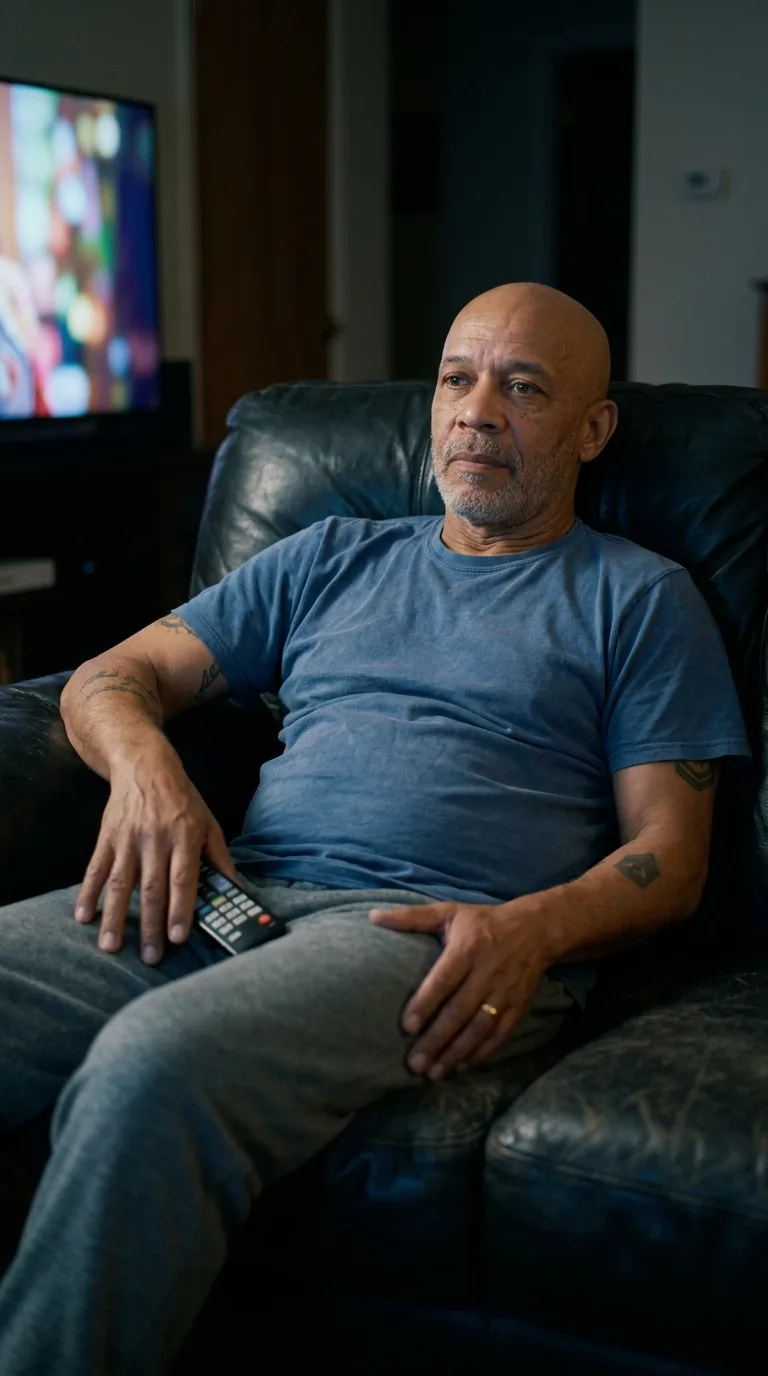
Rarest thing about him: Waiter — rare, 1 in 76
Season 0seed 1280567895 · engine v10
Character card
lineage 9IC4OB
His body-swap story
@bryce.kellerman, wearing Marcus Whitfield, rolled the wheel on and woke up as Gerald Poindexter, spent 3 minutes in him, then spun the wheel and woke up as Kevin Cho
The garage smells like brake cleaner and someone else's coffee gone cold, and you are nineteen years old in it, wiping your hands on a rag that used to be a towel, dark brown hair stuck to your forehead under a ball cap that isn't yours. Marcus Whitfield's shoulders ache in a way that isn't tiredness so much as a body that carries more than it wants to. Nine hours and thirty-six minutes since the last spin, and already you're standing at the workbench again with the site pulled up on a cracked phone screen, thumb hovering. It isn't boredom exactly. It's that you can feel this one settling — the dad bod, the early shift, the landlord texting about rent that isn't yours to owe — starting to feel less like a costume and more like a Monday. You didn't come here for a Monday. You spin because the wheel is still warm and because somewhere out there, right now, a life is happening that isn't asking anything of you yet.
You press SPIN before you can think better of it.
The couch takes your weight before you understand it's a couch. Leather, worn soft at the arm, a body heavier through the middle than the one you just left, older — you feel it in the knees first, a low ache that's been there so long it's stopped announcing itself. The remote is loose against your palm. The television throws blue light in a room gone dark except for it, and on the screen the scene cuts — bright, sudden — and you are sitting up straighter than the man was a half-second ago, spine finding itself, the show going on in front of you as if nothing happened, and somewhere in the room a furnace ticks and it is the middle of a Monday morning and the shades are drawn like it's night.
The remote is warm from a hand that isn't quite gone yet. That's where it starts — heat holding a shape. A double shift. Not sickness, not a day off: he came home from a double, twelve hours on his feet at a place on the water where the chairs go up on the tables at close, and he drew every shade in the house so his body could believe the lie of night, because the graveyard-adjacent schedule the restaurant's been running him on for three months does that to a house, turns it nocturnal in daylight. You feel it in the knees, the low back, the particular flat exhaustion of a man who has been saying "still good over here, folks?" for eleven hours and meant it every time.
The T-shirt against your back gives you the morning: pulling it on in a bedroom with the shade already down, his wife's voice from the kitchen asking if he wants eggs, the two of them married thirty-one years and still, some mornings, talking through a wall like it's the only intimacy they have energy left for. He said no to the eggs. He thought about Renata instead — not his wife, the other one, the one from eight months ago who is technically an ex now and technically shouldn't still be a weather system in his chest, but is. Younger than him by a lot, laughed at things he said that his wife stopped laughing at years back, and it ended the way those things end, badly and quietly, and he has not told anyone it still visits him at odd hours, like now, like this couch, like a man watching a rerun with his mind half on a face he's not supposed to still be picturing.
The wedding band is on your hand and your fingers already know it, turning it, a habit older than thought — thirty-one years of turning it when he's not deciding to. Under the shirt the tattoos surface in touch-memory: the insignia on the forearm from a hitch decades gone, desert heat and men whose names he still knows, a war that ended for the world before it ended in him. Two kids raised on tip money and overtime, now grown, now calling on Sundays, one of them a nurse, proud of that in a way that sits warm under the sternum. The restaurant itself comes up through the soles of feet that ache from standing on them: the walk-in's cold, the register drawer that sticks, the regulars who tip like family and the ones who don't, thirty years of carrying plates on one flattened palm, the body knowing balance the way a dancer's does, without asking.
Cholesterol pills on the bathroom counter, a doctor's mild annual warning, a drink most evenings that he never lets become two too many. A man doing fine — better than fine, if you looked at the number instead of the man, four hundred-some thousand built slow out of good tips and a wife who managed money like a second job. Historically Black Protestant, church some Sundays and not others, a faith worn comfortably rather than performed. None of it loud. None of it asking to be noticed. Which is, itself, the thing worth noticing: sixty-three years of a life that never needed a headline, and somehow that is what makes the ache in the knees, the ring under the thumb, feel like something you're trespassing in rather than something you were given.
You look down. The hand turning the ring stops turning it. You lift it, study the wedding band, the knuckles, the brown of it under the blue TV light, like you've never seen a hand do that before.
"There you are," you say, to no one in the room, and the television keeps talking into the quiet like it hasn't noticed a thing.