Gavin Torkelson
Fictional. Generated by AI — not a real person, and no likeness of one is intended.
42, head chef in New York · rolled by @gavin.torkelson · card — no film
History
who has worn him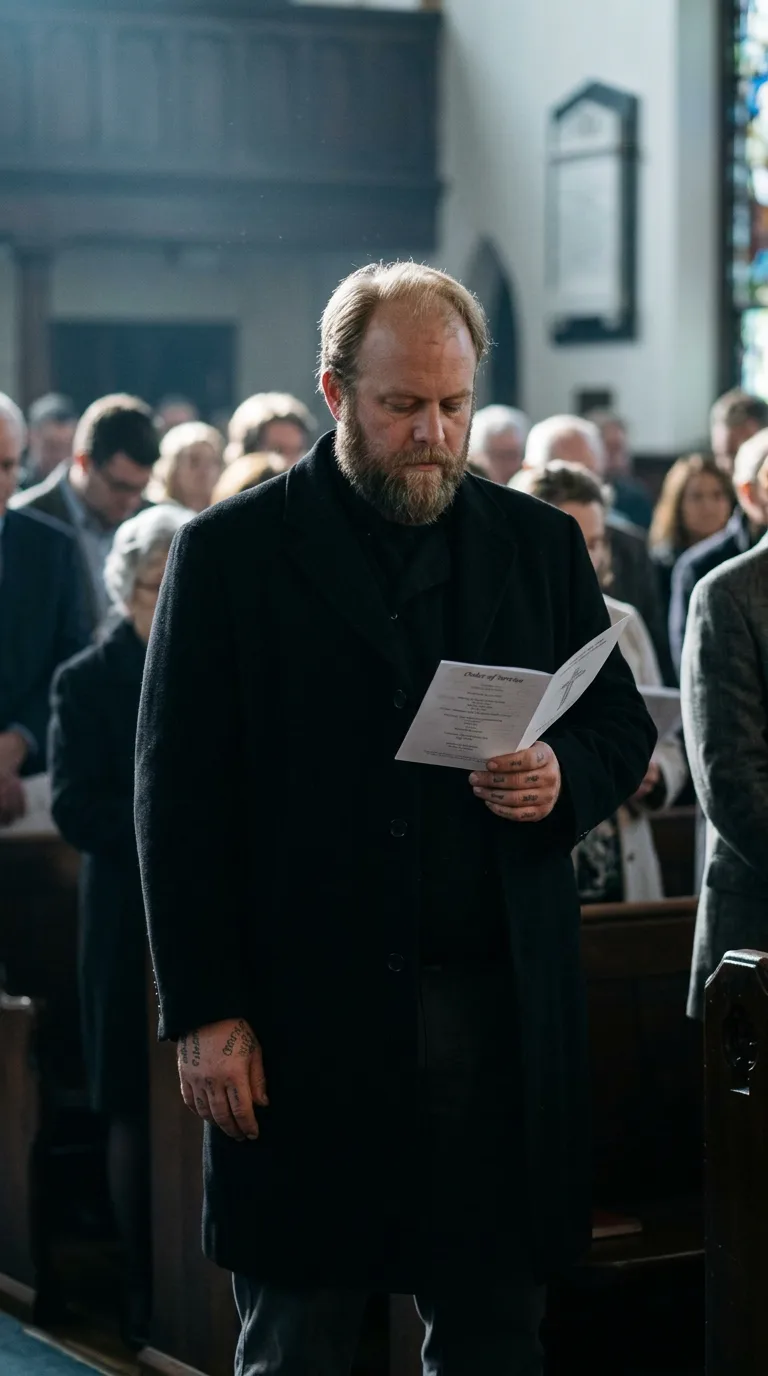
Rarest thing about him: At a funeral, at the back — common, 1 in 112
Season 1seed 1522988088 · engine v11
Character card
lineage KEPHG1
His body-swap story
@gavin.torkelson, wearing Anthony Morales, rolled the wheel on and woke up as Gavin Torkelson, spent 1 hour in him, then spun the wheel and woke up as Klaus Dietermann
The call comes in at 5:52 a.m., and Anthony Morales's radio is already dead air, the ambulance idling outside a rowhouse where nobody is bleeding badly enough to matter. That's the thing about Anthony — good hands, good heart, the kind of steady you'd want holding your artery shut. You've been wearing him for three hours and twenty-five minutes and every one of them has been this: waiting rooms, a diabetic who didn't want to go to the hospital, a partner named Deb who keeps looking over like she's checking a gauge. It isn't boredom exactly. It's that you can feel how much Anthony loves this, loves being needed at 5 a.m. by strangers, and none of that love is yours, and wearing a life you can't feel the point of is worse than wearing nothing. You take the phone out at a red light Deb doesn't notice you running, and you open vessel.cards with Anthony's thumbprint on a screen that isn't his anymore, and you spin.
The organ stops.
Your knees know before you do — that's the strangeness of arriving mid-motion, the body already leaning into a rise it was always going to make, and you're just the thing riding it up out of the pew. A coat, wool, heavier than it should be for a chapel this warm. A folded paper going soft at the crease in your left hand. Two hundred people standing at once around you, a wash of coats and cleared throats, and the light through a stained window laying red and gold across the back of a bald man's head three rows up. You are behind his eyes and his eyes are lowered, still, out of some habit that hasn't caught up to the fact that you're not the one who put them there.
The coat is the first thing that talks to you. Not yours — borrowed, he thinks, borrowed from Marcus's closet because his own black coat is at the cleaner's and he didn't want to make a thing of asking — and under that thought is a whole kitchen argument about whether he even needed a coat this nice for cousin Deb's — no, not Deb, that's the other one, that's the paramedic still rattling loose in you like a coin in a dryer — for cousin Renee's husband's funeral, a man Gavin met maybe six times and liked fine and is standing here for because family is family even when you've spent fifteen years making a life two hundred miles from most of them.
The paper in his hand is the order of service, and it is warm from his own palm, and it gives you a hallway smell — hairspray and hymnals — and under it, unbidden, a whole morning: the alarm at 4:40 because the train south leaves early and the kitchen doesn't run itself just because someone died, does it, he'd said that to Dominic at the pass last night, half joking, and Dominic had looked at him the way Dominic looks at him when he's not joking enough to cover it. The shirt against your back gives you buttoning it in a dark bedroom trying not to wake Marcus, Marcus's arm coming up anyway, sleep-heavy, to catch two fingers of his hand and hold them a second — go easy today — before letting go. That's this morning. That's four hours ago and six hundred miles closer than the paramedic ever was.
The tattoos on the forearm under the coat sleeve start talking too, faint, half-buried under wool: a date in old blue ink, a name under it, and the memory that comes with it isn't a wedding, it's a hospital corridor, years back, waiting on news that turned out fine, and getting the date put on his arm afterward the way some men buy a drink. Another name further down, newer, darker — not Marcus. An ex-husband's, from before, kept anyway, the way you keep a scar because taking it off would mean pretending at something.
His body stands up around you heavy and familiar to itself if not to you — forty-two years of feet that have stood at a pass twelve hours at a stretch, a low ache already filed under normal in his knees, a gut that's soft in a way his hands have stopped apologizing for. His jaw works before you tell it to: gum, tucked at the back of a molar, going through the motions on its own schedule, and it keeps working now, in the middle of a funeral, because it never once asked his permission. His hands, when the room starts filing out toward the doors and the coat needs smoothing down the front, do it themselves — find the top button, then the next, careful, competent, a line cook's fingers that know exactly how much pressure a thing wants — while you are only just now learning where the buttons are.
You look down at those hands on that coat and you turn one over, and the tattoos run wrong-way-up from this angle, and nobody around you looks back, all of them still shuffling toward the light of the doors, grieving something that was never going to be yours to grieve.
You say, quiet, just for the ones close enough in the aisle to catch it: "Sorry — I need a minute."
They think it's grief. It isn't nothing.