Gary Pelletier
Fictional. Generated by AI — not a real person, and no likeness of one is intended.
57, line cook in Small-town Ohio · rolled by @tyler.iverson · card — no film
History
who has worn him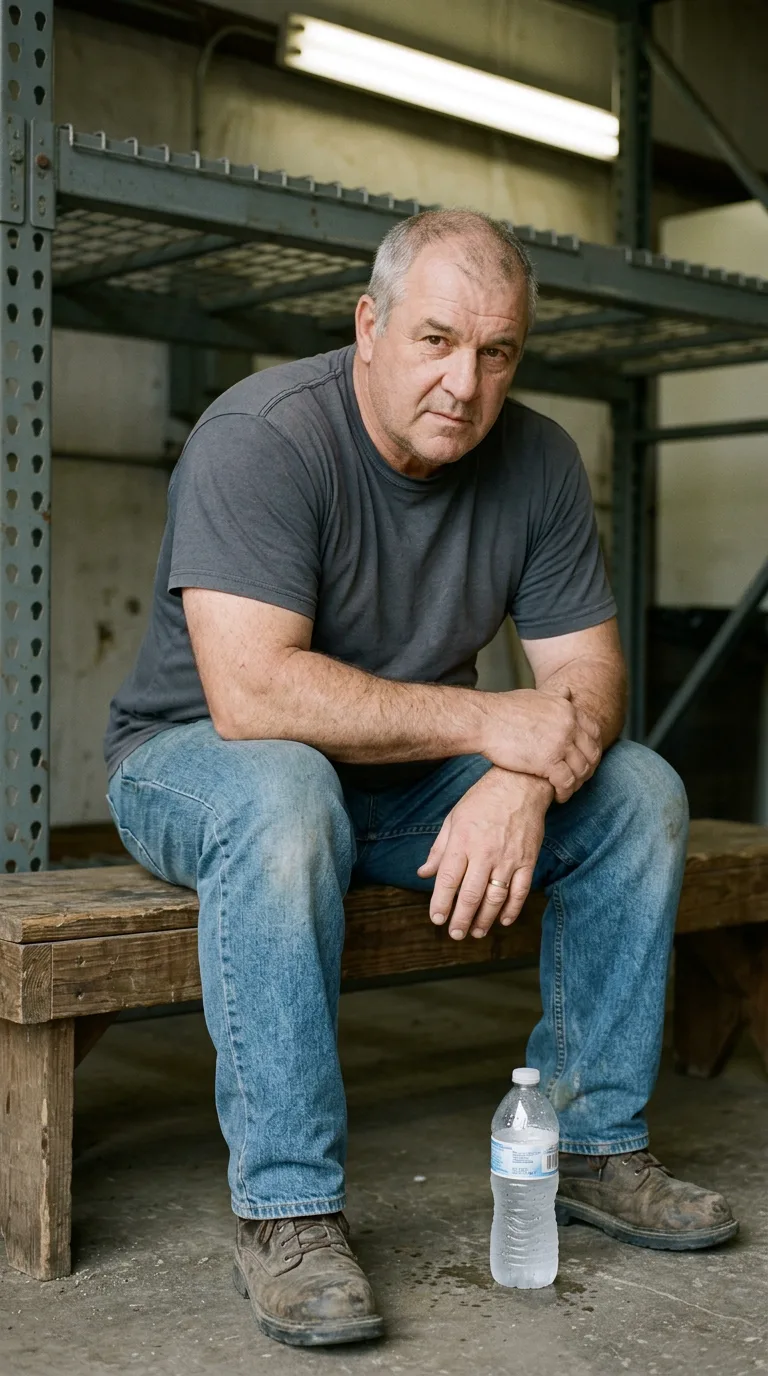
Rarest thing about him: ADHD, diagnosed as an adult — rare, 1 in 101
Season 0seed 1907193619 · engine v10
Character card
lineage 9IC4OB
His body-swap story
@tyler.iverson, wearing Danny Restrepo, rolled the wheel on and woke up as Gary Pelletier, spent 3 minutes in him, then spun the wheel and woke up as Kenji Otsuka
The espresso machine has been quiet for four hours and you have been sitting on Danny Restrepo's kitchen floor for two of them, back against the cabinet, phone brightness all the way down so the light doesn't reach the hallway where his girlfriend sleeps. Three minutes in this body and already you know its complaints: the tightness across the belly from a decade of oat milk foam and late bagels, the ache behind the left knee that isn't yours and never will be, the particular itch of a lower lip ring you keep touching with your tongue because it's new to you even if it's been in his face for six years. You liked the idea of Danny for about ninety seconds — young, warm climate, a face that gets free pastries. But he doesn't lift anything heavier than a portafilter, and there's a restlessness sitting in his chest that isn't ADHD like the file says some men carry, it's just you, wanting. Twenty-six spins in, you've learned the wanting doesn't ask permission and doesn't explain itself. You open the site again, the little wheel with its dumb cheerful color wedges, and you spin it standing over a stranger's sleeping girlfriend at four in the morning, because there is no one to stop you and no reason has ever been required.
The bench is wood, cold through denim, and your forearms are already on your knees when you arrive, which is the strange part — no seam, no falling into it, just suddenly the weight is different, the shoulders are wider and heavier and sit lower, and there is a burn running down both arms that belongs to someone else's fourth set. You stop blowing air through your teeth a beat early. Your hands find the bar two inches wider than muscle memory wants and you grind the last two reps out slow, jaw tight, face doing none of the wobble a last rep should do, because this body doesn't know yet that it's not the one deciding.
The bar is knurled aluminum, warm where his palms have been gripping it for forty minutes, and it gives you the first flash: not this gym, an older one, a Nautilus circuit in a strip mall that closed in 2009, a much younger back that didn't hurt yet. Then the bar is set down with a clank and both hands go to the knees and the flashes come faster, stacking.
The water bottle sweating on the concrete by the bench — you haven't touched it yet, but your eyes go to it and something in the chest recognizes the brand, the gas station a mile from the restaurant where he always buys two on the way in, because the kitchen runs a hundred and four degrees by six p.m. and Denny stopped trusting the tap water there in 2015 after a plumbing thing nobody explained properly. The apron isn't on him now, he's between shifts, but his hands still ache in the shape of a chef's knife, and that ache runs backward into thirty years of it: the first restaurant in Zanesville where he burned his forearm so bad the scar should be there and isn't, because the wheel doesn't invent, only the memory of the pain is real and the mark it left is somewhere the facts don't reach. His actual hands, the ones you're wearing now, know how to break down a case of chicken thighs blind, how to plate four tickets at once without looking at the pass, how to swear at a fry cook without breaking his stride, all of it sitting there ready and unbidden.
The wedding band is on the left hand, resting on the left knee, and touching it — just the weight of his own hand against his own finger — brings her. Carol. Not a flash but a whole Tuesday: her at the kitchen table doing the Kroger receipts with a highlighter, the two of them not talking because they don't have to anymore, thirty-one years of not having to. Two kids grown and out, a daughter in Columbus who calls on Sundays, a son who took a job in Charlotte and comes back at Christmas smelling like a different life. Gary loves them in the specific tired way of a man who worked doubles through both their childhoods and is still faintly surprised they turned out fine anyway.
The shirt — gray, damp under the arms already — remembers itself going on this morning, except it wasn't morning, it was somewhere close to midnight when he left for the gym because the only machines free are the ones nobody wants at that hour, because he sleeps days now, has for three years, since the new owner moved dinner service later and later trying to catch the highway traffic that never quite materializes off exit 9. He quit drinking around the same time, not dramatically, just noticed one week he hadn't wanted one, and let it go. Quit the cigarettes a decade before that, for Carol, mostly, and a little for the ADHD meds that finally explained why he'd spent forty years feeling like his own brain was a fry cook who never called back an order.
The floor under his boots — concrete, gritty, a gym that used to be a feed warehouse — gives nothing, just cold, just an old man's feet inside young men's shoes that have gone soft with age. He is spiritual in the unbothered way of a man who has seen enough dawns come up over a loading dock to believe in something without needing a name for it. Nothing hurts him more than the knees and the lower back, and nothing about him is remarkable, and he would tell you that himself if you asked, plainly, without self-pity: I cook food on a line in a town with one stoplight, and that's the whole of it, and it was enough.
You look at your hands — his hands, thick-fingered, a white line of callus along the base of every one, the ring loose enough now to spin a little with the tendons — and you turn them over once like you're checking they're real, and under the buzzing fluorescent tube you say, out loud, to no one, in his voice, "Little wide on that grip," and you don't know yet if that's the last thing you'll ever let him say, or just the first.