Gary Halvorsen
Fictional. Generated by AI — not a real person, and no likeness of one is intended.
59, cashier in Rural Texas · rolled by @colin.hasbrook · card — no film
History
who has worn him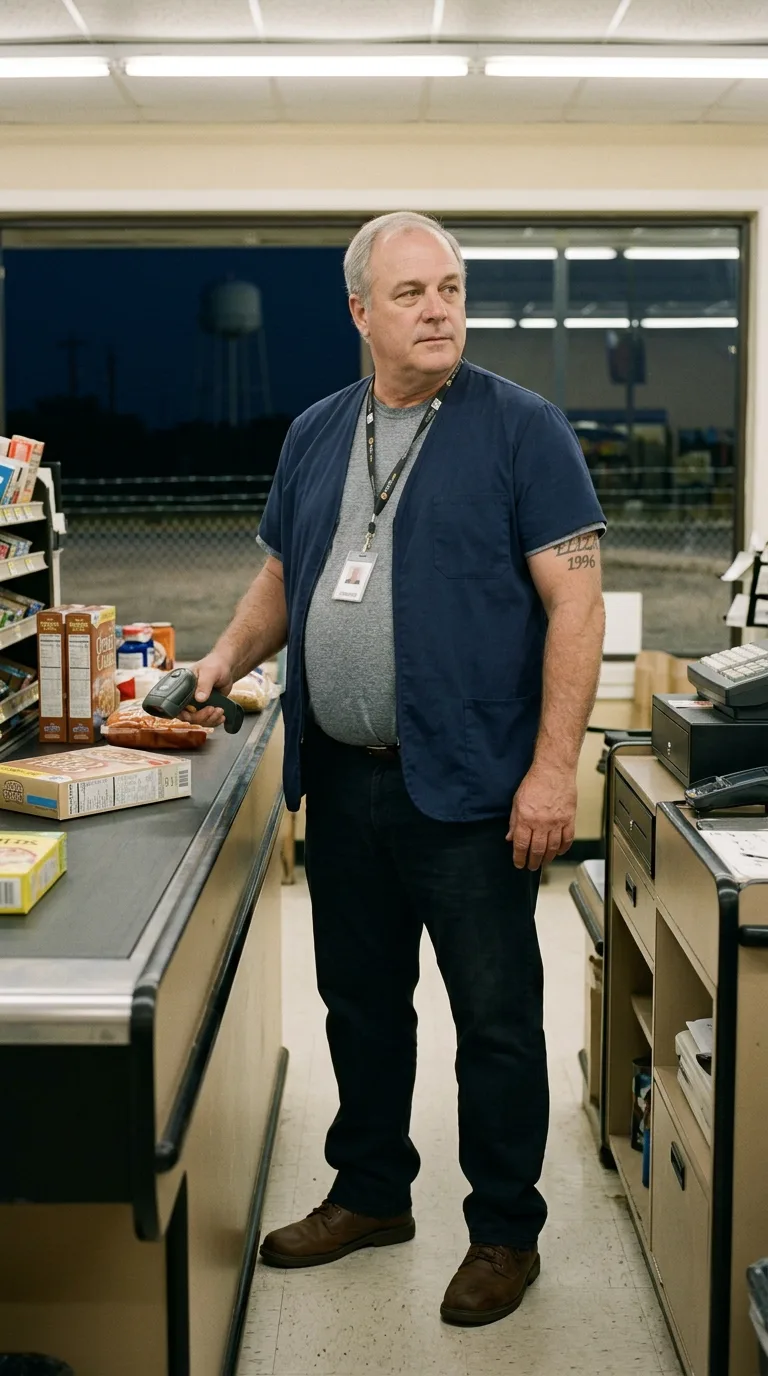
Rarest thing about him: Gay — common, 1 in 32
Season 1seed 895062805 · engine v11
Character card
lineage 2NZHHJ
His body-swap story
@colin.hasbrook, wearing Craig Holsapple, rolled the wheel on and woke up as Gary Halvorsen, spent under a minute in him, then spun the wheel and woke up as Aaron Sechrist
You are Craig Holsapple for less than a minute before you decide you are done being him.
It is the middle of a Friday shift, the ward light too white, your vitiligo hands — his hands, you correct yourself, though the correction never lands the way it should — steady on a chart you don't care about. You spun the wheel less than a minute ago and got this: forty, muscular, gray-eyed, competent, a nurse who apparently loves the work. You can feel that he loves it, distantly, like heat off someone else's stove. It isn't yours. You have been him for the length of one held breath and already the itch is back, the old one, the only reliable one — not boredom with Sydney exactly, not this man's decent face, but the plain fact that you paid for a body and got a job instead of a life, and somewhere behind your sternum, still faintly Craig's, a returning shift alarm is chiming for tomorrow morning. You do not want tomorrow morning. You want the wheel again, now, before the feeling settles into a shape you'd have to keep.
You are back at vessel.cards inside his skin, his thumb — competent, tired — on your own phone, and you spin.
—
The rhythm breaks. A barcode passes under the scanner and does not beep, and your hand — heavier now, spotted, a wedding-ring-less finger where his was — draws the cereal box back over the red light a second time, slow, deliberate, checking a job that has checked itself ten thousand times without you. It beeps. You set it down wrong on the belt and fix that too. Beyond the register glass it is full dark, a water tower lit dim against the black, gravel and wire fence past the lot. A gray T-shirt is stuck to a soft belly under a blue smock. A lanyard swings.
Cereal. Bread. A twelve-pack of something. Your hand — his hand — keeps moving through the scan, each item checked twice now, and that hitch is the only sign anything happened at all, and no one on either side of the counter will ever know it did.
The smock against your shoulders remembers itself before you do: a locker room, fluorescent, this same navy fabric coming off a hook this morning — no, yesterday morning, because this is Thursday evening and something in you insists it should be Friday, insists on a hospital corridor that isn't here anymore. You shrug the confusion off the way his shoulders shrug off a strap. The shirt gives you buttoning it, the little pull at the second button where it's gone snug over the years, a private joke with his own gut that he stopped being annoyed by around year three of the job. Fifty-nine years old in this body and the knees already know the tile floor too well, a low ache standing up through both shins that has nothing urgent in it, just weather.
The lanyard against your collarbone gives you a name badge photo taken four Aprils ago, a haircut he doesn't have anymore because there's less to cut. Thinning at the crown, and his hand — yours now — goes up out of old habit to feel the bare place there before catching a customer's eye and dropping again, self-conscious in a way that has become just posture.
The scanner in your palm gives you the most: eleven years of it, the exact weight, the button under your index finger worn smooth, and under that a whole gallery of Thursday nights just like this one — the diner crowd after church league, teenagers buying energy drinks with crumpled fives, an old woman who tips in butterscotch candies she keeps in her purse. You like these people. You didn't expect to, this deep in, but the feeling arrives whole and unearned and yours to keep for now: a plain, steady liking for a town that fits him like the smock does.
The tattoo on your upper arm is half under the short sleeve, and touching your own forearm — restocking a bag, brushing the ink by accident — opens it like a door: ELIZA, and 1996 under it, and grief that has gone soft and fond with age, an older sister who died young, whom he still talks to some nights driving home, whom nobody at this register has ever asked about because nobody here needed to. You hold that one a second longer than the others.
The belt hums under a returning weight and gives you this morning — no, yesterday morning, the day insists on doubling on you — pulling these exact jeans on in a bedroom with the blinds already bright, dressing slow because the body wants slow now, a shirt he's owned long enough to have a favorite side to fold, the smell of the same detergent for fifteen years. Getting dressed for a person waiting on him: a man's name comes with the smell of the closet, comes with a kiss goodbye that was easy and certain in a way it took Gary decades and one broken marriage to earn the right to expect. Wife, once, and grief there too but old and settled, a divorce that stopped being a wound around the time the parish stopped asking when he'd remarry. Then, later than he thought it would come, a name that isn't Eliza's, a man he is dating now, unhurried, a standing Sunday call and a body that has finally stopped lying to him about what it wants.
Faith comes up through the floor tile itself — the hush of a sanctuary he still drives to most weeks, half habit, half something realer he doesn't examine too hard, a peace that arrived without an argument. No drink in years; he drifted off it the way men drift off things that stopped being fun before they stopped being a problem. No cigarettes, never had the taste for it.
The customer in front of you is still there, still waiting, holding out a card.
—
You look down at your hand on the scanner — soft-knuckled, gray-haired at the wrist, a tan line where a wedding ring used to sit — and turn it over once like it might answer you.
Then you lift your eyes to the register camera bolted over the door, and you say, quiet, mostly to yourself:
"Didn't know I still had a sister."