Aaron Sechrist
Fictional. Generated by AI — not a real person, and no likeness of one is intended.
61, call center agent in El Paso · rolled by @colin.hasbrook · card — no film
History
who has worn him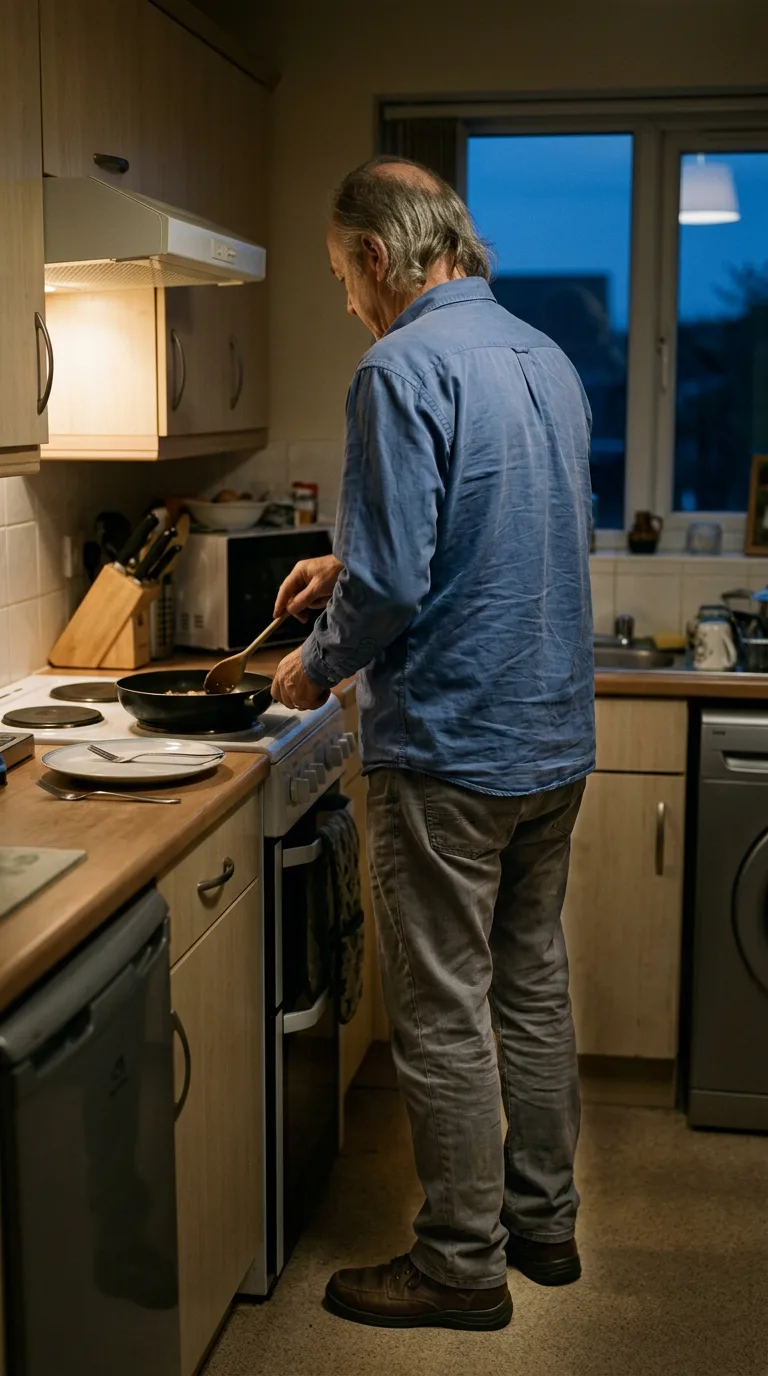
Rarest thing about him: Receding, grown out long — common, 1 in 78
Season 1seed 476910488 · engine v11
Character card
lineage 2NZHHJ
His body-swap story
@colin.hasbrook, wearing Gary Halvorsen, rolled the wheel on and woke up as Aaron Sechrist, spent under a minute in him, then spun the wheel and woke up as Rigoberto Salcedo
Gary Halvorsen's hands are on the register drawer, counting out a twenty and two ones for a kid buying beer he's too polite to card properly, and the fluorescent light over lane 3 has been humming the same dying note for six months and nobody has changed it. You have been him for less than a minute. That is the whole problem. Sixty seconds ago you were nobody, spinning, and now you are fifty-nine and soft in the middle and your feet already ache in a way that promises to still ache in ten years, and the kid says *thanks man* and you think: no. Not this. Not a register drawer for the rest of whatever this is. You did not spin eight hundred and seventy-three times to stand in a man who smells like hot dog water at 9pm on a Thursday. The want comes up fast, the way it always does, ugly and simple — *more, again, something else* — and your hand, Gary's hand, is already reaching under the counter for the phone before the kid's even out the door.
The stirring stops mid-circle. Starts again the other way.
You are taller now, and the light is wrong — not the sick white of the store but a low yellow bulb over a stove, and beyond the window over the sink the sky is that flat dark blue of a desert evening, no stars in it yet. There's a wooden spoon in your right hand and a pan under it, something with onions gone translucent and starting to catch. You salt it without tasting. You reach up into the cabinet — your hand knows exactly where, doesn't hesitate, doesn't search — and take down a second plate, and set it down next to the first one on the counter, and only the smallest, farthest-back part of you wonders why a man cooking for one just made room for someone.
The shirt is what opens first. Chambray, soft from washing, warm at the collar where his own neck heat has been sitting in it since six a.m., and it comes with the particular ache of a body that has spent thirty years standing — not walking, standing, the stillness of it worse on the knees than any amount of miles — because Aaron Sechrist has worked a headset since before headsets were wireless, since before the building he sits in had his name on a laminated badge instead of handwritten on tape. *Aaron. Call Ctr Rep. El Paso.* The lanyard isn't on him now, it's on the hook by the door, but the groove it's worn into the back of his neck is, a permanent faint chafe under gray-silver hair grown long enough at the sides to cover it if he wants.
The spoon gives you the rest, because his hands know the spoon better than they know most people. Thirty-four years of cooking for a house that used to hold four and now, some nights, holds one — his wife Carla at her sister's this week, the kids grown and scattered, one in Austin, one in Tucson, both taller than him now and he still isn't used to that, still ducks slightly when he hugs them out of a habit thirty years old. He sets a second plate down most nights even when he's alone. Not sadness, not exactly — Carla would say he's sentimental and she wouldn't be wrong — just a man who spent three decades setting the table for people and can't quite retrain the hand.
Under your feet, the linoleum is cool and a little tacky near the stove where grease has gotten into the grout no matter how many times he's scrubbed it, and this house — turquoise outside, chain-link out front holding back nothing but dust — is paid off, has been for six years, sits on a lot worth more than he ever expected a house of his to be worth, back when he was twenty-six and broke and Evangelical and certain God had a plan that did not involve a cubicle. It did, mostly. He's not bitter about it. There's a Bible on the nightstand with a receipt from an oil change used as a bookmark, and a wedding band on his left hand that has never once come off, not for dish soap, not for the cold, and through it comes a wedding thirty-six years gone — Carla in a dress her mother made too tight in the shoulders, both of them laughing about it after, the whole church smelling like carnations and July.
The shift comes back too, because the body remembers what it just finished before it remembers anything older: eight hours of headset static, a woman screaming about a billing error that wasn't his fault, the particular exhaustion of being calm at people all day for money. He clocked out, drove home in the last of the light, and now he's standing over onions that are one more minute from burning, doing the only thing that has ever fully quieted his head — cooking, plainly, for whoever might come through the door, even when he knows no one will tonight.
You look down. The spoon is still in his hand, your hand, turning the onions without needing to be told. You set it across the pan's edge and lift the hand up in front of your face instead, turn it over — broad, a little swollen at the knuckle on the ring finger where the band has sat so long the skin has grown a groove to match it, a working man's hand that has never worked with tools, only with words and a headset and, every evening of thirty-some years, a spoon.
"Two plates," you say, out loud, to the empty kitchen, in his voice, and you don't put the second one away.