Gary Dunmore
Fictional. Generated by AI — not a real person, and no likeness of one is intended.
59, chief executive in Phoenix · rolled by @glenn.aldercy · card — no film
History
who has worn him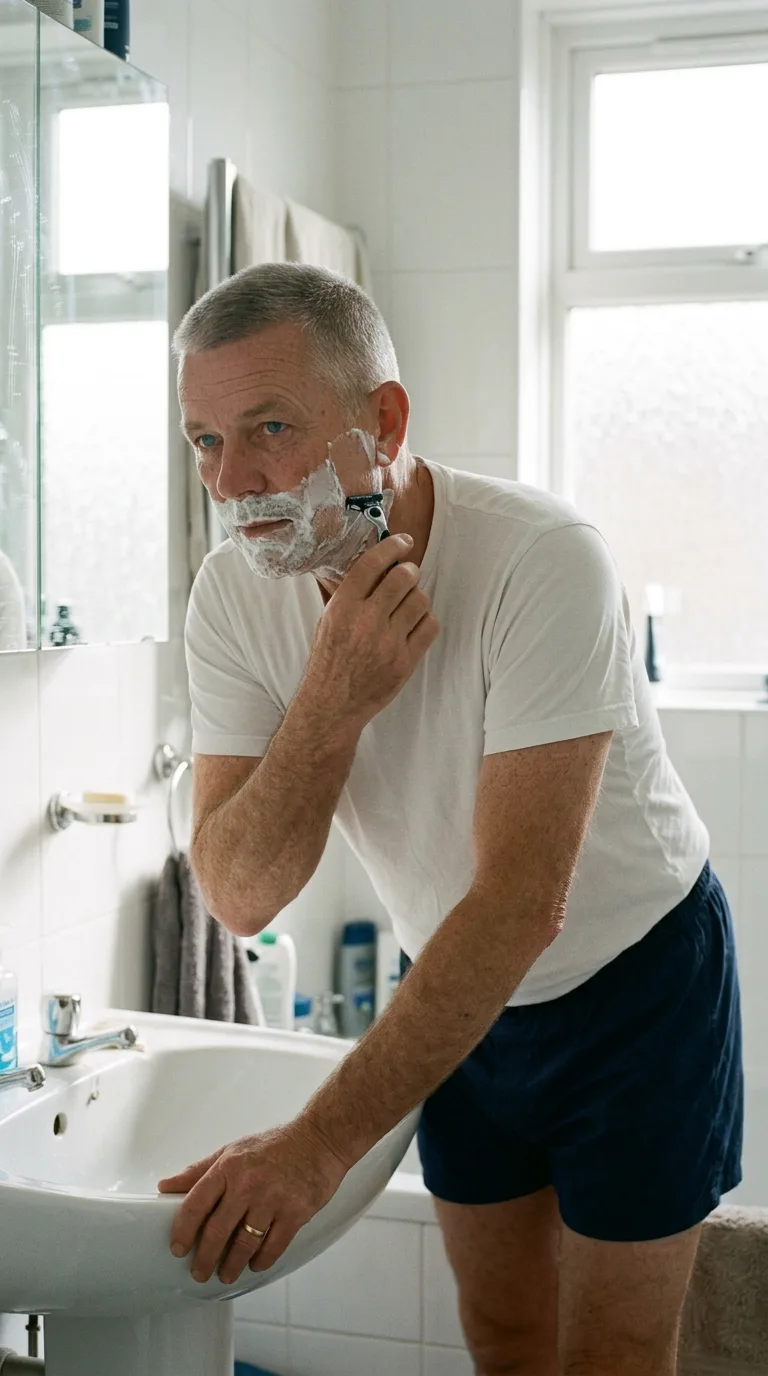
Rarest thing about him: Flips a lighter — common, 1 in 37
Season 1seed 2049008063 · engine v11
Character card
lineage EU5SNZ
His body-swap story
@glenn.aldercy, wearing Dwight Arceneaux, rolled the wheel on and woke up as Gary Dunmore, spent under a minute in him, then spun the wheel and woke up as Kenta Osei
---
Dwight Arceneaux's shoulders ache from the line, and it is eleven in the morning on a Sunday and you have already run out of reasons to be him. The machine shop is closed. The apartment is quiet in a way that feels like a held breath. You spun him up fourteenth and sat with him less than a minute before you got restless — his good knees, his big hands, the freckles going pale along his forearms — and none of it mattered once you remembered who you had been five spins back and only kept for four minutes. Craig Dillenbeck. Blond, dimpled, thirty years old, a civil engineer with a laugh you liked wearing. You left him too fast. You know his house. You know his best friend's name the way you know your own pulse, because for four minutes you were close enough to him to feel what he felt about the man — admiration with an edge of something else, an old debt, a long envy dressed up as love. That was Gary. You want to stand where Craig stood and look at Gary from the other side of it.
You pay. You spin. You do not travel.
The razor is already moving. It goes up the jaw against the grain, no hesitation where he always hesitates, at the corner of his own mouth — his hand finishing the second half of his face faster than the first, because you are already more certain than he ever was. Foam, warm water, a short hard sound of blade on stubble. The mirror throws back a face you have never worn: silver hair clipped close with a hard line at the back, blue eyes, fifty-nine years old, a jaw just scraped clean. Outside the window the light is already vicious — Phoenix at midmorning, the glare flattening everything white. Gravel somewhere close. A saguaro's shadow laid flat and short across a wall like a sundial told you is nearly noon.
The sink is cold under his left palm and the wedding band clicks once against the porcelain, and that small sound opens a door.
A wedding, decades gone — a tent, folding chairs, a bride in her mother's veil, his own voice cracking on the vow because he meant it more than he expected to. Two kids after that, both grown now, a boy and a girl whose faces come back to you in fragments — a graduation gown, a minivan door slamming, a phone call from college that he didn't pick up fast enough and regretted for a week. Church on Sundays, folding chairs again, different chairs, a megachurch auditorium with a screen instead of a cross, his voice joining three thousand others on a chorus he half-believes and fully needs. He quit drinking somewhere in his forties without telling anyone why; there was a night he doesn't like remembering, nothing dramatic, just a tiredness in himself he didn't want to carry twice.
The razor's handle is warm from his grip, ribbed plastic worn smooth at the pivot — his hand already knows this motion a thousand mornings deep, the tilt of the head, the two-stroke rhythm, cheek then jaw then the dangerous place at the corner of the mouth he always slows for and today did not. The undershirt against his back is thin and soft from washing, a hundred Sundays of it, and through it comes the gravel yard behind his house, the actual crunch of actual stone under actual boots, a hobby he never explains to anyone — rock collecting, embarrassingly boyish for a man who runs a company, little specimens lined on a shelf in the garage nobody but him dusts.
And Gary. Gary Dunmore, who flips a lighter he doesn't smoke from just to have something in his hand during calls, who made his first real money the same quarter Craig Dillenbeck passed his PE exam and called him crying with relief, who has stood godfather-adjacent to Craig's whole adult life without either of them naming what that costs. You were Craig for four minutes only, long enough to feel the particular ache of being the friend who stayed ordinary next to the one who got rich — and now you are the rich one, and the shoe is entirely on the other foot, and something in you that isn't Gary and isn't quite you either finds that funny.
The shirt waiting on the hook behind the door — white, long sleeves he always rolls at the cuff exactly twice — comes back to you in the particular memory of this morning, before the spin, before any of this: he put it on already knowing he'd drive nowhere today, a Sunday with no church because the trip got cancelled, his wife still asleep, the house too quiet the way big houses get. He doesn't know yet he won't finish getting dressed as himself.
Water drips off the razor into the basin. The foam on the left side of his jaw, untouched, cold already.
You look down. Their hand — his hand, the one you're wearing — lifts off the sink, fingers spreading in the fluorescent light, the wedding band catching it wrong, too bright.
"Huh," you say, to the mirror, to no one, in a voice forty years older than the one you had eight minutes ago. "Didn't think it'd be him."
You set the razor down. You don't finish the other cheek. Somewhere a long way off and a few hours behind, a machinist's body in Seattle is standing empty in a quiet apartment, and somewhere ahead, unscheduled, a wheel is still spinning without you, waiting for whenever you come back to it.