Gary Dombrowski
Fictional. Generated by AI — not a real person, and no likeness of one is intended.
54, manager (mid-level) in Pittsburgh · rolled by @julian.reyes · card — no film
History
who has worn him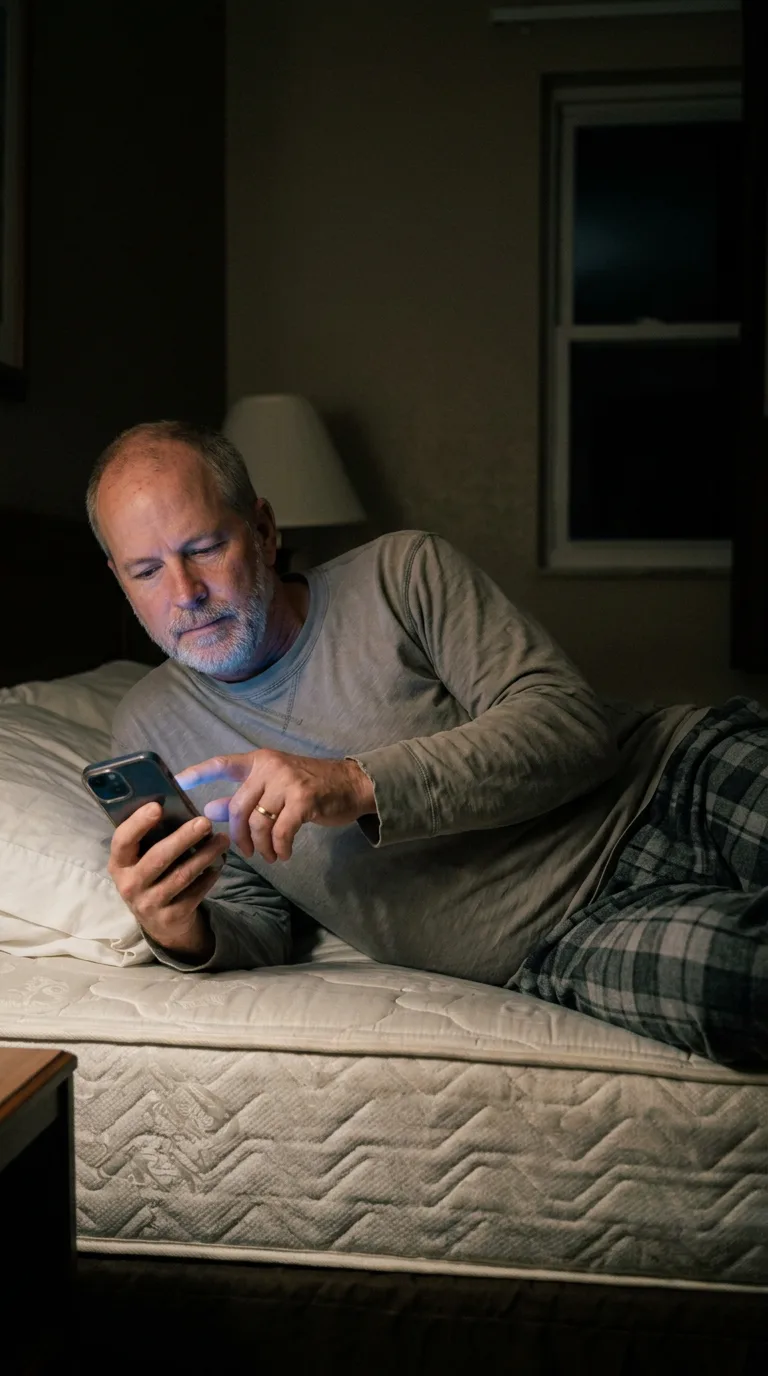
Rarest thing about him: Millionaire — $1M to $3M — common, 1 in 20
Season 1seed 40667994 · engine v11
Character card
lineage PYNCV3
His body-swap story
@julian.reyes (admin), wearing Craig Pelletier, rolled the wheel on and woke up as Gary Dombrowski, spent 1 minute in him, then spun the wheel and woke up as Terrell Odom
You are Craig Pelletier, and the shaved head is cold under your palm. You have been standing in his kitchen for a while with the lights off, because the lights make it a kitchen. A man who balances other people's books for a living, who has a birthmark he has stopped seeing, who put a spreadsheet to bed at six and has not known what to do with his own evening since. Twenty-two hours and thirty minutes. The body works. The body is not the trouble.
The trouble is that he never wants anything. You open the refrigerator and he wants nothing. You stand at the window over the dark desert and he wants nothing, and the nothing is clean and tidy and balanced to the penny. Somewhere in his hands there is a calm you cannot get under. So you carry his phone to the counter, and the wheel is already there, patient, and you pay, and you spin, and you do not say goodbye to the green eyes in the black glass.
Now the dark is a bedroom. You are on your side, a pillow under the ear, blue light on one cheek, a phone six inches from your face. The thumb has stopped mid-scroll. You start it again, faster and steadier than it was, flicking past everything he stopped on. Nobody is in here to object.
The first thing is the bed. Flannel against your shin, the mattress firm on the hip, a good one, bought after the back trouble. The ache arrives behind it: a low dull seam at the base of the spine, fifty-four years of it, and a knee that remembers. Memory comes through the flannel. Pajama pants, Christmas, a daughter's wrapping, too much tape. Then the gray shirt at your ribs, worn soft, and the morning he pulled it on in the dark because the wife was asleep: arm, arm, head through the neck, the collar that has always sat a little crooked. He pulls it straight without thinking. Your hand does it now.
The ring is a pressure on the finger. You turn it with your thumb and a whole kitchen comes up: a woman laughing with her back to you at a stove, three children arguing behind, the particular tired gladness of a man who has more people than rooms. Under it, a smaller room. A girl from before, a porch, a long-ago summer he does not tell anyone about, thought of only at night, never acted on, prayed over. Church on Sundays, hard folding chairs, a hymn he knows in his chest. Money, too, quietly, years of it, the glass-walled office with the door always open because he wanted them to see he had nothing to hide. A cigarette he has not had in eleven years and still reaches for at the end of the day, and the reaching is in your fingers now.
He was a decent man. It comes through everything, like warmth through cloth. You did not want a decent man. You wanted wanting, and he has plenty, buried, disciplined, kept on a short leash. It pulls at you now.
You set the phone face down on your chest. Beard under the palm, short and coarse. Thin hair at the crown. Brown eyes, adjusting. You hold up your left hand in the last of the screen glow, the plain band on it, and turn it over. Veins, a scar of nothing, a stranger's good hand.
You lift your eyes and say, quietly, "Hello, Gary."
The house is asleep around you. How long, you wonder. Until the wanting comes back, until tomorrow, until the next time the wheel starts to hum.