Craig Pelletier
Fictional. Generated by AI — not a real person, and no likeness of one is intended.
44, accountant in High-desert Nevada · rolled by @julian.reyes · card — no film
History
who has worn him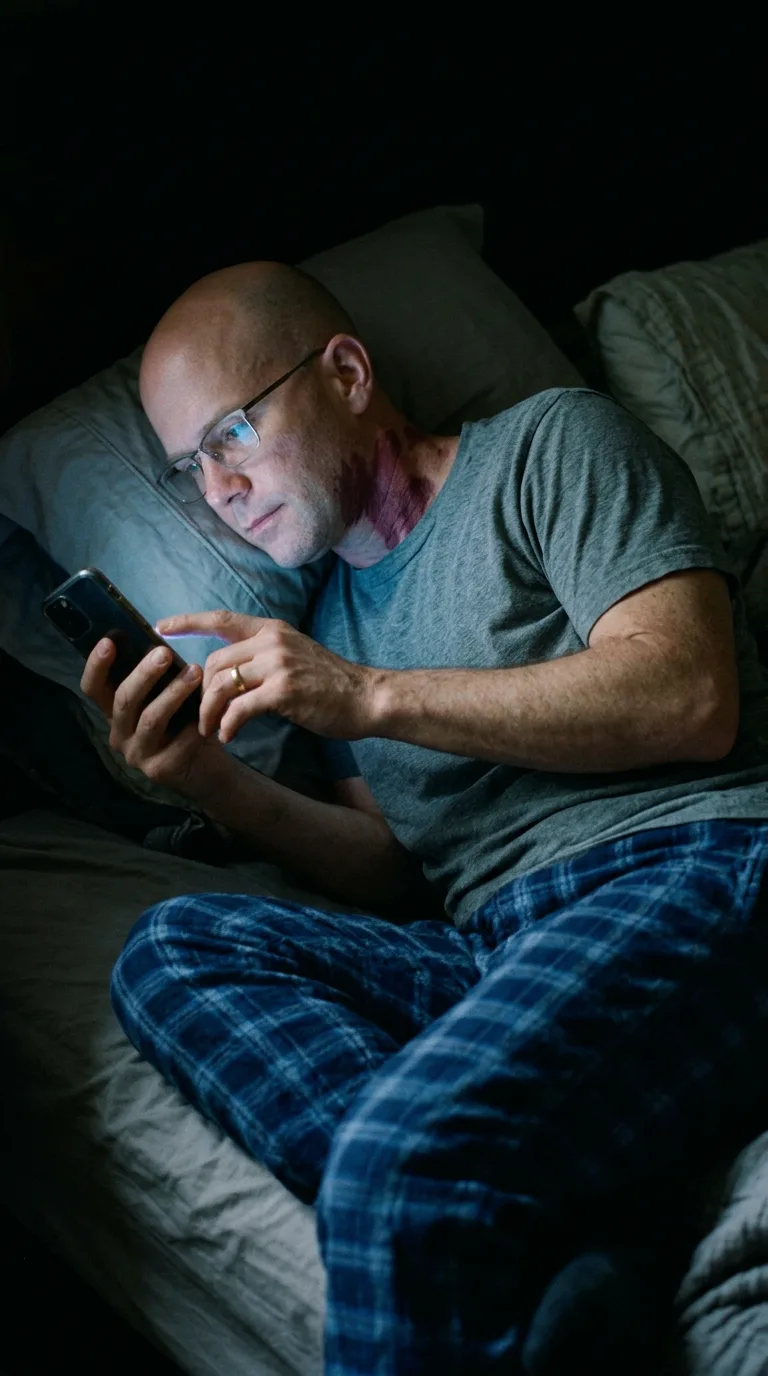
Rarest thing about him: A birthmark on the face — uncommon, 1 in 99
Season 1seed 515337542 · engine v11
Character card
lineage PYNCV3
His body-swap story
@julian.reyes (admin), wearing Julian Mercado, rolled the wheel on and woke up as Craig Pelletier
You are standing in Julian Mercado's kitchen in Pittsburgh at an hour when the refrigerator is the loudest thing in the house. His socks are cold on the linoleum. His mustache itches when you breathe out. You have worn it four days and one hour, and in that time you have learned that he keeps a drawer of takeout menus for restaurants that closed. You have learned how to answer his mother's texts. You have not learned why he keeps the porch light on for a sister who moved to Phoenix.
Tonight his phone is on the counter, a message from her lit and unanswered. *You up?* She is asking him. Julian would know what to say. You stand there with his thumb over the glass and nothing comes, because the sentence belongs to a man who is not in the room anymore. You are only wearing his hands.
So you open the other page, the one with the wheel, and you pay.
The wheel clicks. Click, click, slower.
Your thumb is moving. It is flicking up the glass faster and steadier than a thumb has any need to, past things he stopped on, and the dark is tight around a blue rectangle six inches from your face. You are on your side. The pillow is warm under your cheek, and the left side of your neck and jaw feels hot and strange, a patch of skin that carries weight. Your own breath comes back at you off the screen. Your eyes have forgotten to blink, and then they remember all at once, and they sting.
Under the pillow's cotton there is a smell of laundry soap and, beneath that, skin, and it opens something. A hot afternoon. A woman's laugh in a car with the windows down, not his wife, years before. He drove her to the lake. She wore a yellow dress and he was twenty-six and sure he was boring. He kept the feeling of that afternoon in a place he never visited. It comes up in you whole, and it is his, soft and a little ashamed.
The T-shirt against your ribs is worn thin. Sleeve first, his right arm in it, the mornings he'd pulled it on after a shower with the bathroom fan rattling. Then the plaid flannel of the pants across your knees. The ring on your left hand turns when you flex the fingers, and with it comes the wedding. A courthouse. A cold February. Her hand in his, her voice shaking on the vows, and his own steadiness, which surprised him. He has loved her in the dull, daily way for sixteen years. You feel it as warmth and as weight, like a coat you have not asked to wear.
The phone case is rubbery and scratched at one corner. His thumb knows where the corner is. It remembers tax season: two monitors, the fluorescent hum, the ache between his shoulder blades at the end of March, the clients who brought shoeboxes of receipts. A man in a trailer with a sagebrush yard who cried over a penalty he could not pay. Craig fixed it quietly, and told no one, and went home to the single-wide on its blocks and ate standing up.
His body is forty-four. The hip is stiff from lying on it. His lower back complains in a low steady voice. His scalp is cool where the pillow is not, and when you drag your free hand across it, it is smooth, shaved that morning. His jaw too. His fingertips find the birthmark and the skin there feels the same as the rest. He stopped noticing it in his twenties. Before that, a schoolyard, a boy's laugh, a long summer of collars turned up. It comes, and it goes.
Somewhere past the wall the wind scrapes the trailer's skin. The sheet is cool and smells of dust and sage. It is a different quiet from Pittsburgh, and wider.
You lower the phone. You hold up your left hand in the blue light and turn it over, the ring, the square nails, the faint freckles. Then you look up into the dark and say, quietly, in a voice that is not yours and not Julian's either:
"Okay. Okay, you."
The screen dims against your chest. Nothing in you says how long. A year, a night, until the wanting comes back. You listen for it, the way you listen for a stair in a house you do not know.