Farid Nassar
Fictional. Generated by AI — not a real person, and no likeness of one is intended.
56, warehouse picker in Atlanta · rolled by @colin.hasbrook · card — no film
History
who has worn him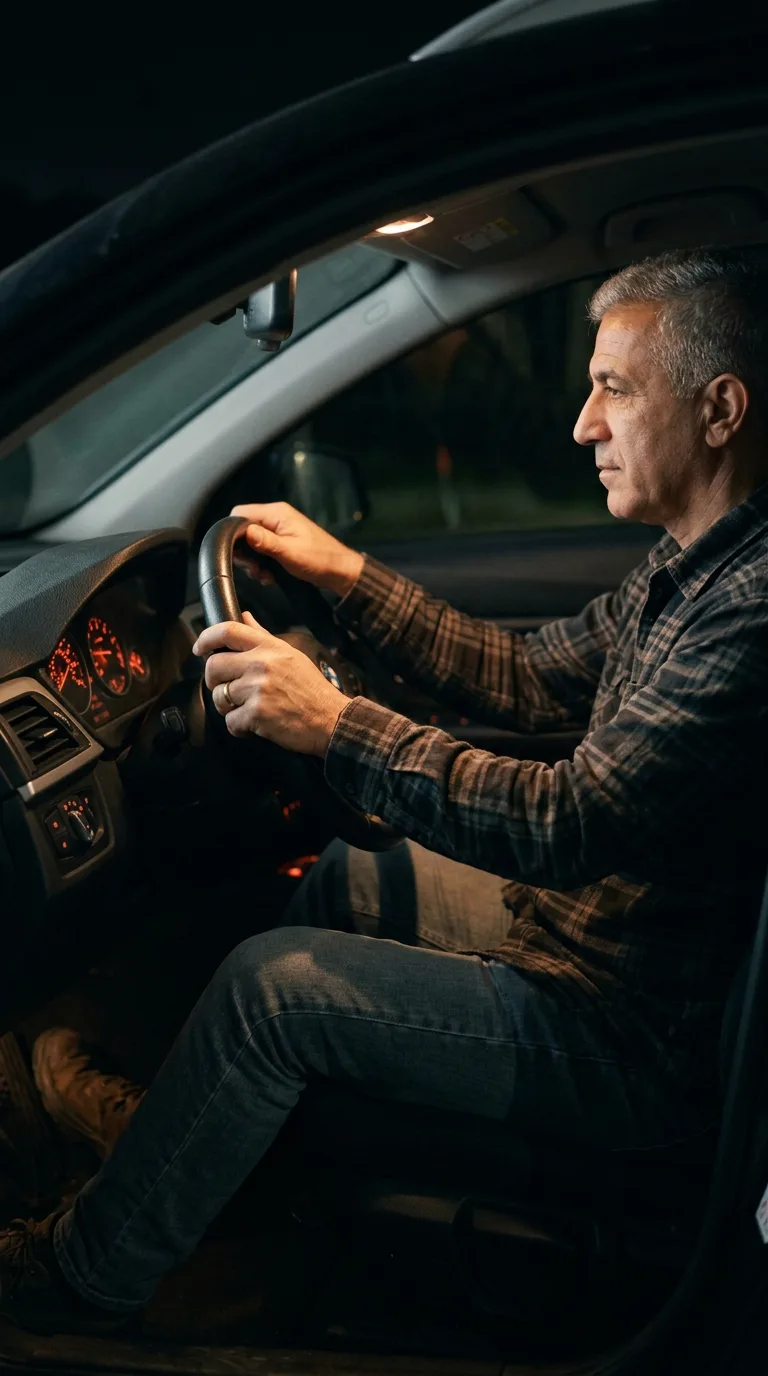
Rarest thing about him: Middle Eastern — rare, 1 in 34
Season 0seed 1143803426 · engine v10
Character card
lineage 2NZHHJ
His body-swap story
@colin.hasbrook, wearing John Tallchief, rolled the wheel on and woke up as Farid Nassar, spent under a minute in him, then spun the wheel and woke up as Danny Kowalski
You are two minutes into John Tallchief and it is already wrong. The Kansas light through the truck-stop window is too flat, too wide, the kind of afternoon that goes on forever over wheat that isn't yours. His phone is buzzing with a name you don't know. His knee aches in a way that has nothing to do with you. You spent forty of your hundred and fourteen bodies learning that the first few minutes are the worst, the sync-static of somebody else's hunger and somebody else's debts sitting in your chest like a swallowed stone, and you have never once sat still in it. Two minutes is your limit. It was your limit at body six. John Tallchief's scarred eyebrow is reflected in the truck-stop glass, unbothered, unaware, already being left. You take out the phone that isn't yours, thumb the browser, and there it is, bookmarked the way a man bookmarks his own bloodstream: vessel.cards. The wheel is already loading before he's finished his coffee.
The road tips a foot toward the centerline and comes back clean, and you are the hands that correct it. Ten and two. Dash light the color of a dying ember laid across knuckles that are not the knuckles you had a second ago — thicker, older, a plain gold band catching the glow. You feel the seatbelt cut low across a stomach with more give to it than you're used to, feel a lower back that has opinions about eight-hour shifts, feel the specific dryness of a mouth that has been smoking since noon. Both hands leave the wheel for a half-second — an old animal panic that isn't yours either, it's just what a body does — and resettle low and wide, the way a tired man drives. The turn signal clicks on, green arrow pulsing against the dark glass, ticking for an exit that belongs to someone else's Monday.
The shirt is what opens first — flannel, soft from washing, snap up at the collar loose against a throat gone a little heavy with age. Sleeve by sleeve it comes back to you in his feeling: standing in front of a closet this morning — his morning, hours behind yours, hours behind everyone's — pulling this same shirt off the hanger because Layla likes him in the brown one, though Layla is at her sister's this week and won't see it, and he put it on anyway, out of habit, out of some small fidelity that doesn't need an audience. The wedding band is warm from the wheel and it comes with twenty-two years folded into it, a courthouse in Marietta, her hand shaking more than his, a fight two nights ago about money that ended the way it always ends now, both of them too tired to finish it. There were an old girlfriend's photographs in a shoebox once, years back, Dalia, a name that still catches faintly on nothing at all when a certain song comes on the radio, and you get one full breath of her before it's gone again, folded back under everything that came after.
The seat under you knows this body better than you ever will — twelve hours on a concrete floor, a scanner gun's plastic grip worn smooth into the shape of this exact palm, the ache that lives permanently now in the balls of both feet. A pack of Marlboros rides in the shirt pocket, and just touching the cellophane through the cotton gives you the taste of the last one, the parking lot, the RF scanner strapped to a wrist heavier than the one you had this morning as somebody else. There is a toothpick already between his back teeth — has been there twenty minutes, he doesn't remember starting it, his jaw just does this now, has done it since he quit the second time and never quite finished quitting. Somewhere behind the ribs a small orange pill bottle rattles its memory, mornings with water, a doctor with kind eyes and a script pad, the quiet unglamorous discipline of a man managing something instead of drowning in it, mostly. And under that, the drink — not managed, not discussed, a six-pack that becomes an eight-pack that his wife has stopped commenting on because commenting never worked. Two kids, grown now, one who calls every Sunday and one who doesn't, both of their faces arriving at once and gone just as fast, warm and useless in the dark car.
Three miles from a driveway you have never stood in.
You look down at the hand on the lower part of the wheel — spotted a little, ring catching the dash glow, a scar on one knuckle you didn't put there and don't know the story of — and you turn it over slowly, the way you always do, checking it like new hardware. Fifty-six years of wear in it, none of it yours yet, all of it yours now.
"Okay," you say, out loud, to the empty car, to the exit sign sliding past that isn't his exit at all. "Okay, Farid."
Behind you, back in Kansas, in a truck-stop parking lot, John Tallchief is still standing there with his phone in his hand, whole again, not knowing what he almost wasn't. Somewhere the wheel is still warm from spinning.