Danny Kowalski
Fictional. Generated by AI — not a real person, and no likeness of one is intended.
40, mail carrier in Boston · rolled by @colin.hasbrook · card — no film
History
who has worn him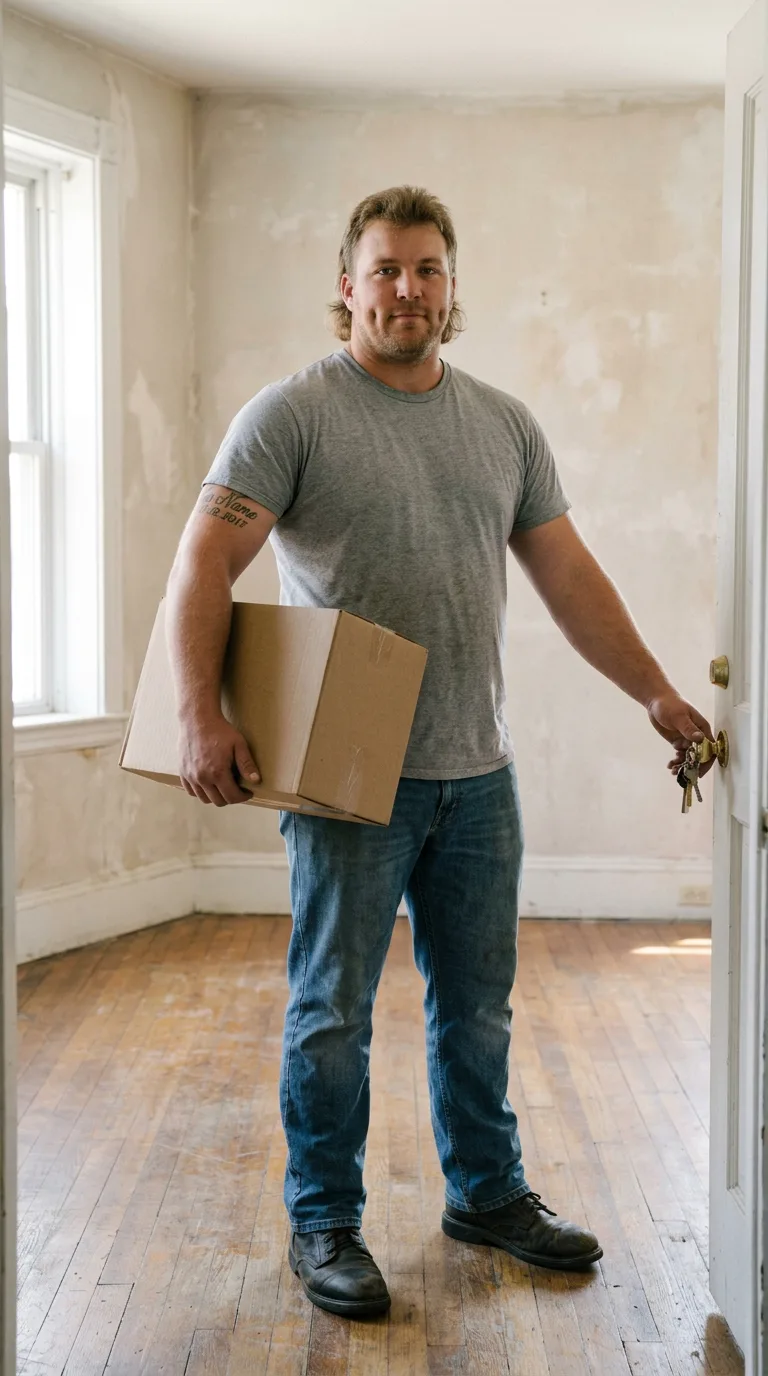
Rarest thing about him: A mullet — rare, 1 in 134
Season 0seed 716780021 · engine v10
Character card
lineage 2NZHHJ
His body-swap story
@colin.hasbrook, wearing Farid Nassar, rolled the wheel on and woke up as Danny Kowalski, spent under a minute in him, then spun the wheel and woke up as Warren Getchell
The warehouse floor is cold through Farid's socks, and that's the first thing you notice, the thing that decides it — his knees, fifty-six years old, aching in a way that has nothing to do with you and everything to do with a lifetime of a body you didn't build. You've been him less than a minute. Somebody radioed a break, and you stood there in the loading bay light thinking: not this one, not today, and your thumb was already moving toward your pocket before you'd finished the thought. It isn't hatred of him. It's simpler and worse than that — it's the itch, the same itch at spin fourteen and spin sixty and now spin one hundred and fifteen, the flat certainty that whoever is next is more interesting than the man currently holding your bones. You don't say it out loud. You never do. The phone is already up, the site already loading, the wheel already spinning under your gray thumb before Farid's shift lead has finished saying your — his — name.
Then you are not cold anymore.
You are standing in a bright empty room that smells like old plaster and cut wood, and there is a cardboard box heavy against your hip, and your other hand is still closed around a ring of keys hanging from a door that hasn't shut yet. Afternoon light, flat and grayish, autumn light, coming through a window with no curtain. Your knees don't hurt. Nothing hurts. You are enormous in a way Farid never was, wide through the shoulders, thick through the middle, and the box in your arm is nothing, is a bag of feathers, and some animal part of this body registers that and is, in its own dumb way, glad.
The box goes down onto the floor first, gentle, the way you'd set down something that mattered even though it's just a box of kitchen stuff, and the keys you leave hanging where they are, still in the lock, swinging slightly. Your hand — his hand — drags along the wall as you walk the perimeter of the room, knuckles bumping the cool plaster, and that's not a decision you make, that's a thing his body already knew to do in an empty house, checking corners, feeling for outlets, for drafts, for the shape of a place before the furniture arrives and buries it. The wall is cold and a little damp under the paint. Your knuckles find a divot near the baseboard and the second they do, something opens.
Not a scene. A season. You are up before dawn in a Dorchester triple-decker that smells like coffee and wet wool, lacing boots that are already broken in from a thousand identical mornings, and the mail satchel's strap is settling into the same groove on your shoulder it always settles into, the leather gone dark and soft there years ago. Your hands know the strap without looking — buckle, adjust, the half-twist that keeps it from digging into your collarbone on the long stretch up Adams Street. You feel the specific ache of a Monday route in November, feet already sore before the first house, the particular cold that comes up through boot soles that have been resoled twice and are due a third time. You feel dimples pull at your own cheeks — muscle memory of a hundred porches, a hundred old women saying your name like they'd been waiting for you specifically — and you didn't ask that face to smile, it just does, at rest, like it's stuck that way.
Another knock against the wall and you're somewhere warmer: a bar in Quincy, a woman's laugh you'd know in the dark, an old flame — gone now, married to somebody else's Monday — and the particular hollow her name still leaves, small and manageable, like a tooth you learned to chew around. And a newer one, right behind it, warmer still: a woman laughing at something you said while you were both hauling a mattress up three flights, and you telling her this is the last box, baby, I swear, and meaning it the way you mean things you're not sure of yet.
Your sleeve moves against your arm and there it is — the tattoo, script and a date, half under the fabric, and it comes with a flash of a tattoo parlor in Revere, a buzzing needle, a friend's name and a day you don't examine too closely because his memory doesn't want to, not right now, not with the box down and the keys still swinging. You let it sit there, tender and unspoken, the way he keeps it.
The floor under your boots is scarred oak, older than you by a century, and it tells you nothing about him except that this house is new to him too — new keys, new lock, new smell of paint and someone else's old life stripped off the walls. You feel how much this body is worth without anyone saying a number: the easy weight of it, the unhurried way he walked the room like a man who doesn't need to rush, who bought this place outright and is only now getting around to filling it. Mail carrier's hands, thick-knuckled, calloused across the palm in a line that a satchel strap makes over twenty years. They want to crack, unbidden, one knuckle at a time, and you let them, because it's easier than fighting a habit that isn't yours yet.
You look down at those hands. Turn one over. The knuckles are wide, the nails a little dirty from the move, and there's a tan line where a watch usually sits, missing today, packed in a box somewhere in this empty house.
You lift your eyes toward the door where the keys are still hanging, still swinging very slightly, like the room hasn't finished settling either.
"Well," you say, in his voice, testing the shape of those dimples, "guess I live here now."