Ethan Marchetti
Fictional. Generated by AI — not a real person, and no likeness of one is intended.
23, soldier in Nashville · rolled by @colin.hasbrook · card — no film
History
who has worn him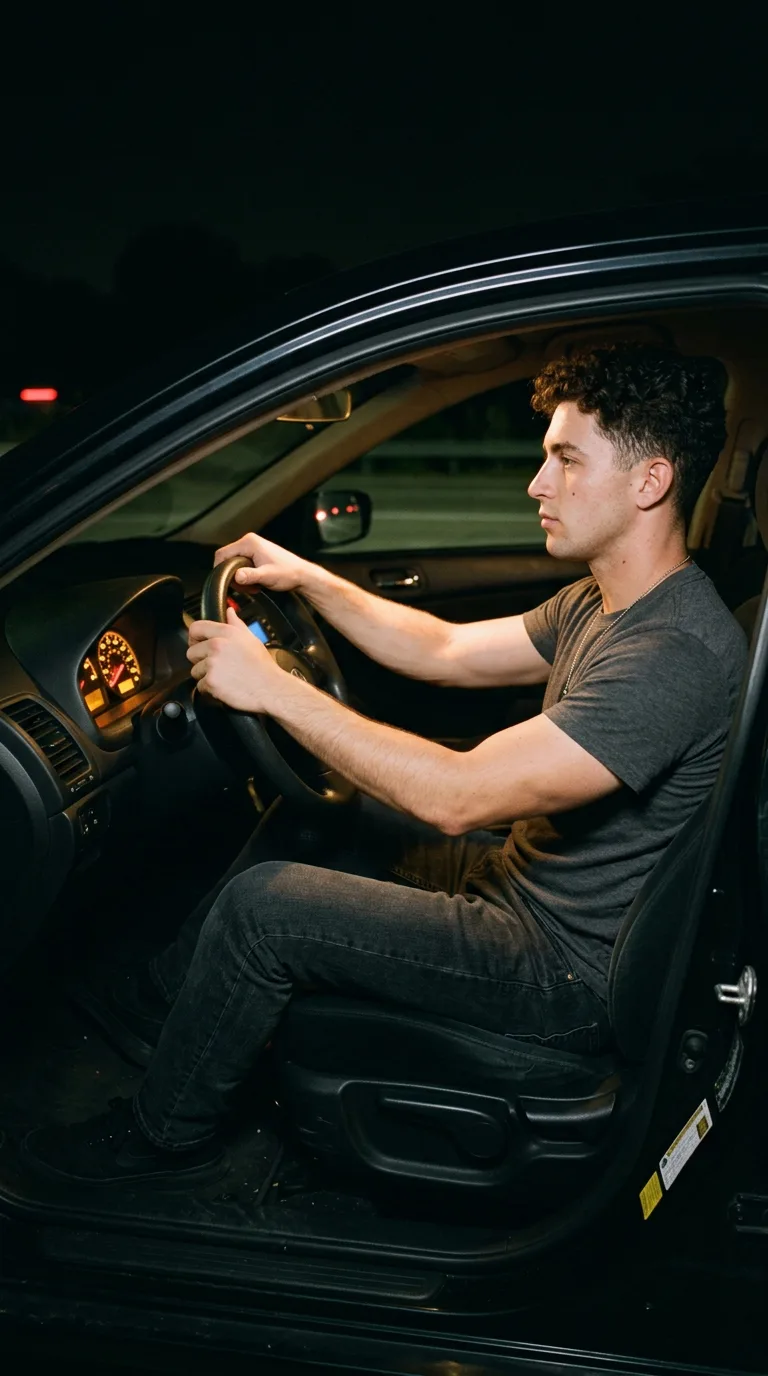
Rarest thing about him: Soldier — common, 1 in 292
Season 1seed 993661435 · engine v11
Character card
lineage 2NZHHJ
His body-swap story
@colin.hasbrook, wearing Colton Braswick, rolled the wheel on and woke up as Ethan Marchetti, spent 1 hour in him, then spun the wheel and woke up as Gerald Muncaster
Colton's hands smell like diesel no matter how long he scrubs, and that's the thing you notice first when you look down at them, spread on a workbench in a garage in Los Angeles, the light going orange through the roll-up door. Less than a minute ago you became him. Now you are already bored of him, and that boredom is the whole reason you're standing here instead of finishing the brake job in front of you. He is thirty-one and his knees ache and his girlfriend texted twice and he hasn't answered either, and none of that is interesting, not after eight hundred and eighty-eight other lives. You wipe your palms on a rag that is his rag, in a shop that is his shop, and you think: not this one, not tonight, and you go to the laptop balanced on a tool chest and you pull up the page with the wheel on it, because the wanting doesn't ask permission and it doesn't explain itself even to you.
You spin.
There is no falling, no travel, just an edit cut with no warning on either side of it — his hands leave the wheel, resettle lower and wider, ten and two undone in half a second, and the turn signal ticks on for an exit that isn't his, and you are three miles from a home you have never seen, in the driver's seat of a car that smells like pine air freshener and somebody's gym bag, dash light green instead of amber on knuckles that are not Colton's knuckles anymore. Younger hands. No calluses like his. A ring on the right hand, plain and silver, already turning itself between thumb and forefinger like it has a memory of its own.
It does. That's when the first flash comes — the ring, warm from his skin, and underneath your fingers a courthouse steps at golden hour and Amber in a blue dress that wasn't a wedding dress because they aren't married, just living together, just this — no, wait, that's wrong, it's not a wedding ring at all, it's his grandfather's, army-issued, too big for the finger it's on, and the flash corrects itself with the specific ache of a man remembering his grandfather's hands instead of his own. You feel the shape of that grief pass through and out before you can hold it.
The shirt is next — plain gray T-shirt, thin from washing, and pulling it over your head this morning (his morning, hours ago by his clock, his hands, not yours) comes back sleeve first: the mirror in a bedroom he shares with Amber, her half of the closet spilling onto the floor the way it always does, him laughing at it instead of minding it. He'd stood there in his boxers turning the shirt right-side out, thinking about nothing, thinking about the drive to the honky-tonk where his buddy Deshawn was playing a bad set for tips, thinking he should eat something before he left because he never does. The jeans went on next, dark denim gone soft at the knee, and his body under them is twenty-three years old and strong in a different way than Colton's — no ache in it yet, just tiredness, a low hum of a body that runs six miles most mornings outside a barracks fence before the sun's all the way up, boots he laced without looking because his hands know the motion the way they know a rifle strap, though the rifle isn't with him now, isn't ever with him off-post, and that absence sits strange and familiar both.
The steering wheel gives you driving itself — three years of this exact road, the exit for their apartment complex a mile past the one his blinker is now aimed at, wrong, wrong on purpose from wherever you steered him. Under your back the seat remembers hours of it: leaving base at odd hours, drills that start before dawn, the particular exhaustion of being twenty-three and disciplined about it, proud of it in a way he'd never say out loud to anyone but Amber, who married the idea of him a little, and loved the actual him more, which he knew and was grateful for daily without composing the gratitude into words.
The dashboard's glow gives you the barracks itself in flashes — gray light, cold concrete, a sergeant's voice, boots on wet pavement in formation, the specific ordinary pride of doing a hard thing at an hour nobody sees you do it. And the honky-tonk gives you neon bleed in a back alley, three hours ago his time, laughing with Deshawn over cheap beer he only drinks once or twice a month because more than that never sat right with him, some inherited carefulness from a mother who never says much about her own father's drinking but didn't have to.
None of it is yours. All of it is passing through your borrowed hands like heat through metal.
You look down. The ring is still between your fingers, turning, turning, an old soldier's habit inherited whole from a man who never met you and never will. You lift your eyes off it and into the windshield, into your own reflection ghosted there over the dark road, and you say, out loud, to no one, in his voice and not yours:
"Whose exit is this."