Ernesto Villaroel
Fictional. Generated by AI — not a real person, and no likeness of one is intended.
60, retired in Nashville · rolled by @ernesto.villaroel · card — no film
History
who has worn him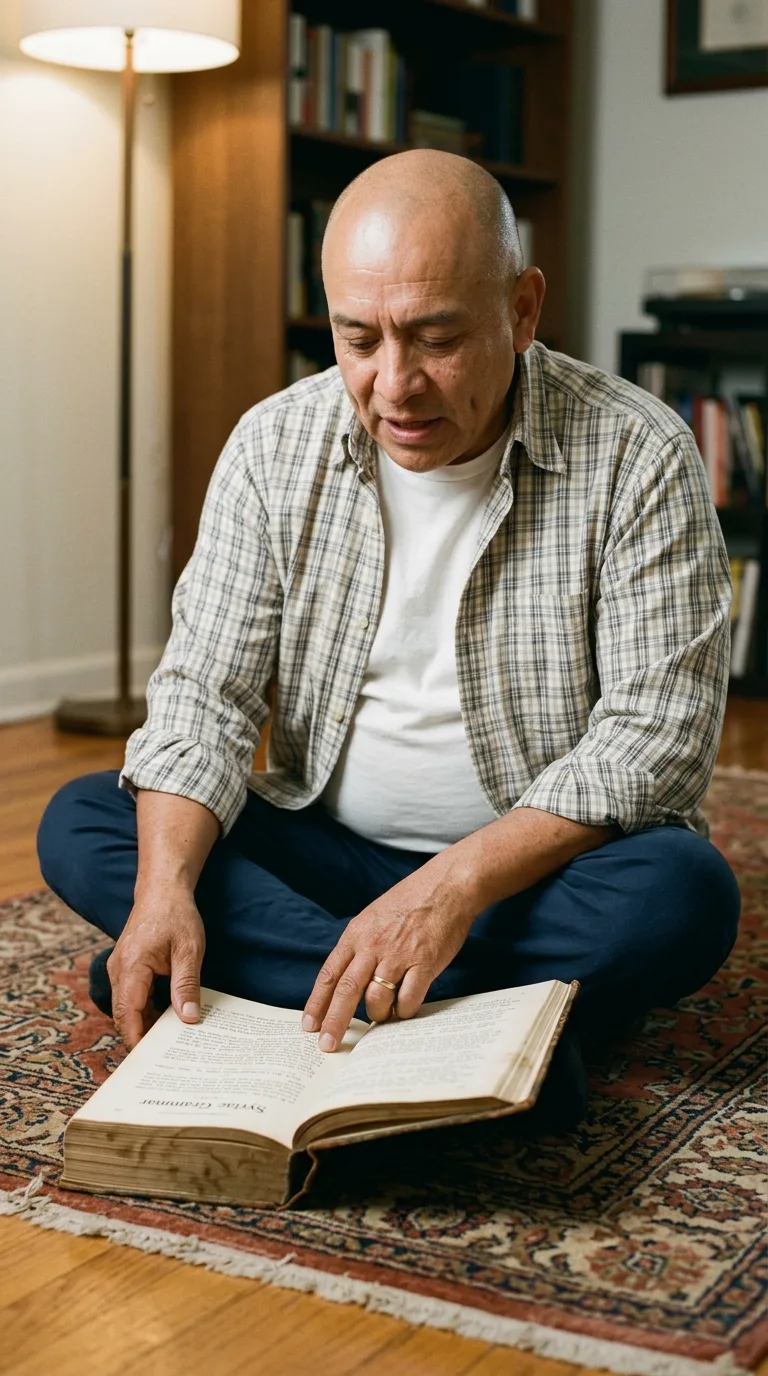
Rarest thing about him: Reading something he was not meant to — rare, 1 in 109
Season 0seed 373013434 · engine v10
Character card
lineage JWSE6J
His body-swap story
@ernesto.villaroel rolled the wheel on and woke up as Ernesto Villaroel — their first, spent 12 minutes in him, then spun the wheel and woke up as Kevin Zhu
The evening is nothing much, which is exactly how these things happen. Everyone asleep, the apartment quiet, some hour past reasonable, and you at a screen you have opened and closed a dozen times over the years without ever quite believing in it. Body swapping. Possession. Waking up behind a stranger's eyes. You've wanted this since before you could explain why — the films, the forum threads at two in the morning, the daydream you never told anyone because there was nowhere to spend it. Tonight there is a wheel. Tonight it takes a card. You spin before you can talk yourself out of it, and the page does something between a shudder and a shrug, and then it isn't a page anymore.
You are cross-legged on a rug. Your knees ache from a position they have held too long. There is a book open under your fingers, water-stained, the paper soft as cloth, and your mouth is already moving — you feel it moving before you feel anything else, feel the third line collapse into nonsense the way it must have collapsed a dozen times before you got here, and then feel yourself try again, and this time the vowels come from somewhere that already knows them. Not your knowing. His. You finish the page without looking down, in a voice that isn't announcing itself as new to anyone, least of all him.
The rug is a Persian thing, worn soft in the middle where knees have pressed it for years, and it gives you the room before it gives you anything else — a lamp with a stained-glass shade, bookshelves crowded two rows deep, the particular hush of a house at an hour when a man his age should be asleep and instead is awake, alone, doing this. The book under your hands is a grammar, Syriac, bought at an estate sale for four dollars because the seller didn't know what it was and Ernesto did, a little, enough to be dangerous. He does this most nights now that Marisol goes to bed early and the porch gets cold. He would tell you, if you were the kind of thing he could tell, that he isn't sure why it matters to him — only that retirement left a room in him the size of thirty-one years of dispatching trucks for a freight company he was, in the end, glad to leave, and he has been filling that room with dead languages and half-formed rituals he doesn't believe are real, not exactly, the way a man doesn't believe in the horoscope he still reads first.
The shirt gives you more — flannel, soft from washing, and the memory of putting it on this same morning, sleeves rolled twice because his forearms are shorter than the cuffs expect, second button skipped because it never sat right against his belly, a private adjustment made without thought for going on thirty years. Under the shirt is the body itself, and it comes to you honestly, the way the facts insist: sixty years old, five-four, weight settled low and comfortable the way a dad bod settles, a shaved head that catches the lamp warm instead of cold, hands a little swollen at the knuckles in the mornings, better by noon. There is a dull ache low in the back from the rug, from age, from nothing in particular. There is a steadiness in the fingers that have done crosswords and untangled Christmas lights and once, for a living, traced routes on a map with a grease pencil for a company that folded the year before he left it — good riddance, that part of him thinks, clean and simple, the way you only think about a job you survived rather than loved.
The wedding band on the left hand is warm from his skin, and it opens the biggest room of all: Marisol, twenty-eight years, an argument about tile grout that became a joke that became a marriage-long private language, her laugh through the wall right now, three rooms away, asleep. No children — a decision made twice, once by accident of timing and once on purpose, and grieved a little, quietly, on certain anniversaries neither of them names aloud. And under that, further back, an ex — Denise, a name that still has weight to it decades later, not longing exactly, just a door he doesn't open but knows is there, knows exactly where in the house it would be if this were a house of doors. There's a small brown bottle of pills in the bathroom cabinet that this body knows the shape of by touch, taken every morning without drama, the anxiety old and managed and no longer a story he tells about himself. He believes there's something under the world's floorboards — has for years, in the vague unshaped way of a man who left church at thirty and never filled the space with anything except this, books like the one in his lap, promising a shape to things.
The last line of the page finishes itself in a mouth that is, for these seconds, both of you and neither of you, and then it's done, and the syllables let go of him, and the room comes back to just a room.
You look down. The hands on the book are broad and brown and a little swollen, and the ring catches the lamp, and they are not yours and were never going to be, and something in you turns them over anyway, palms up, like checking a hand you were dealt.
You look up, past the shelves, into whatever is watching, and you say, in his voice, mild with the wonder of a man who has just heard himself do something he didn't know he could do:
"Well — I didn't know I had that in me."
Somewhere behind you a woman sleeps who doesn't know either. Nobody does. You don't know how long you keep him. That was never the deal.