Ernesto Cabazos
Fictional. Generated by AI — not a real person, and no likeness of one is intended.
51, retired in Small-town Ohio · rolled by @glenn.aldercy · card — no film
History
who has worn him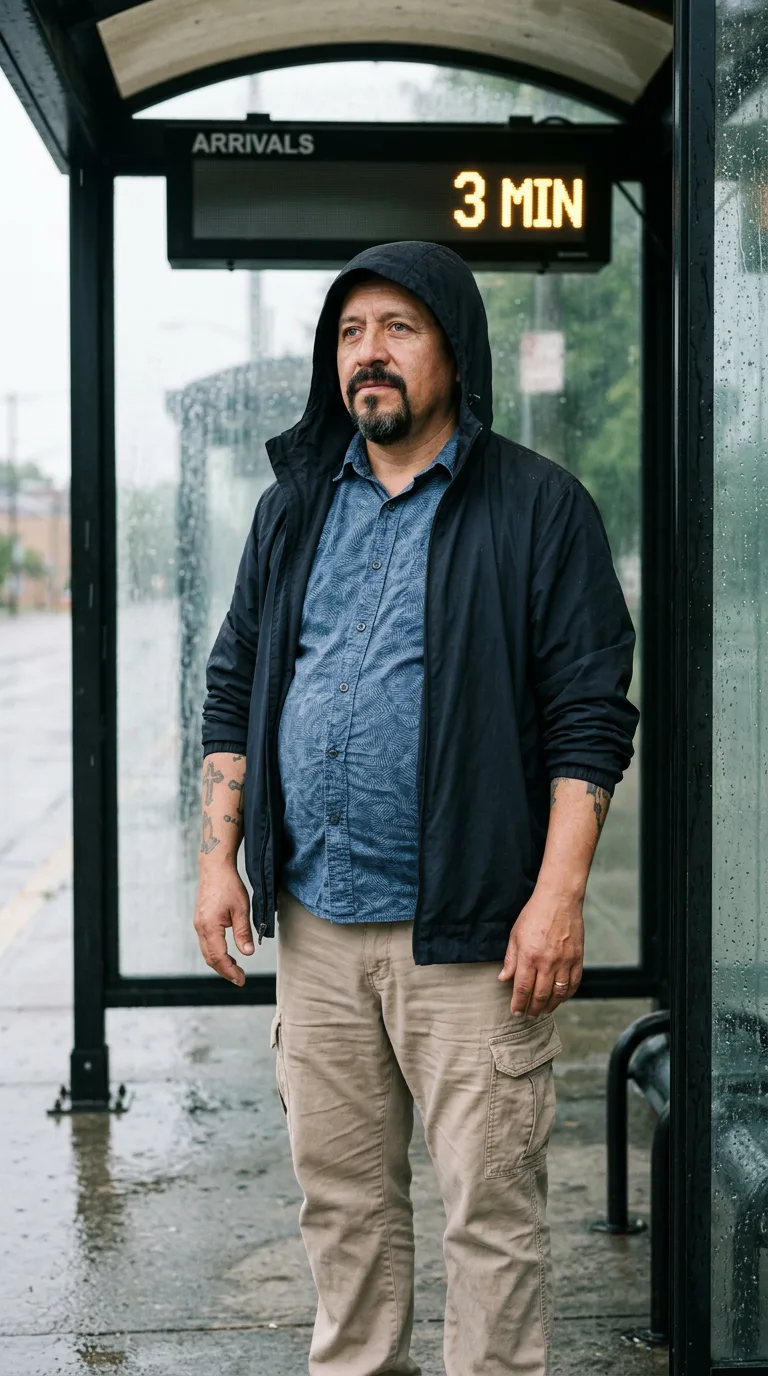
Rarest thing about him: Stutters under pressure — common, 1 in 79
Season 1seed 1472465127 · engine v11
Character card
lineage EU5SNZ
His body-swap story
@glenn.aldercy, wearing Gavin Oleshansky, rolled the wheel on and woke up as Ernesto Cabazos, spent under a minute in him, then spun the wheel and woke up as Colin Harmon
---
Gavin's kitchen has a window over the sink that faces west, and the morning light through it is doing that thing where it makes the granite look wet. You have been him for three minutes. You know this because you counted, out of a habit older than Gavin, older than any of the seventeen. The coffee he started is not done. His wife is still asleep upstairs, in a Sunday that costs forty dollars an hour of your attention and gives you nothing you want. You stand in his kitchen with his gray hair and his beauty mark and his gut pushing at a undershirt that smells like a stranger's detergent, and you already know you are leaving. That's the thing nobody who hasn't done it understands — the wanting doesn't wait for the body to go bad. Gavin is fine. Gavin is comfortable, competent, forty-three and solvent and boring in a way that was interesting for about a day and a half. You didn't spin again because of anything he did. You spun because the kitchen was quiet and his phone was full of emails with the subject line RE: RE: RE:, and because somewhere behind your sternum, in whatever is left of you that isn't a rotation of other men, something said *not this one, not today,* the way it has said it sixteen times before. You set the mug down un-drunk. You open the site on his phone, thumb used to a motion that isn't yours, and the wheel spins while his coffee goes cold three thousand miles from wherever it's about to land.
Rain. That's the first thing — not sight, not thought, just rain, loud on a plastic shelter roof, and the particular cold-wet smell of a hood that's been up too long. Your face is tipped back and up, water running off a beard into your collar, and your legs are moving before you're really in them, one step out from under the shelter's lip into a sheet of runoff, shoes already soaked. Somewhere above, a sign you don't look at says a number that doesn't matter anymore. You are five-four in a body built for sitting on porches, soft through the middle, solid through the shoulders, and you are standing in the rain with your face turned up into it like it's something you've waited years to feel again.
The jacket is the first thing that talks to you. Navy, zipped halfway, the lining gone a little slick with age — and under your fingers, through the fabric, comes a flash: a closet with a bare bulb, a woman's voice saying *you'll ruin that jacket, Erno*, laughing, not really minding. Then more, unasked: this jacket bought at a Kohl's in Mansfield eleven years ago, on sale, because the blue one made Marisol say he looked like a cop and he liked that, actually, liked being mistaken for someone official once in his life. The zipper pull is worn smooth where his thumb has run over it a thousand times, a habit his hand does without him, the way hands keep secrets from the men who own them.
The shirt under it — storm-blue, patterned, buttons running down a belly that's fed a family for thirty years — gives you the morning he put it on: hours ago now by his clock, years ago by nobody's, standing in a bedroom with the shade half down, Marisol still under the sheet, him buttoning slow because his fingers have never liked buttons, never liked anything that asks for precision under a watching eye. That's the stutter — not nerves exactly, just a thing his hands do when they know someone's counting the seconds, a tremor that showed up at his own wedding reaching for Marisol's ring finger and that the priest, kind man, pretended not to notice. He got the shirt buttoned. He always gets the shirt buttoned.
The tattoos come up through the wet sleeve like something remembered in the skin itself before the mind catches up: a cross on the left forearm, inked at twenty-two in somebody's garage in Lorain, and the praying hands below it, added at forty after his father died, because grief wanted somewhere to go and his arm was already in the habit of carrying God around on it. Mass most Sundays. Not today — today there's a bus, there's his son's apartment two towns over and a visit that's been owed since Easter, there's a grandbaby he hasn't held enough. He quit drinking the year the boy was born and never missed it the way people warned him he would; some things just stop mattering once there's a better reason to stay clear-headed on a Sunday morning.
The ring. Plain, left hand, thirty-one years on the same finger, and it gives you the most of anything — not one memory but a whole married weight, mornings on a porch with coffee, her laugh through a screen door, the two of them going quiet together in the kind of comfortable that took decades to build and that he has never once, not for a single rainy Sunday, taken for granted.
Your feet are planted in runoff that's gone past his ankles. The board behind you ticks over, unread. You could still step back under the roof. You don't, and some version of him that isn't fully you anymore — isn't anybody now — simply isn't there to mind.
You bring your hand up out of the rain and look at it: thick fingers, a cross in fading ink, water running off the knuckle of a ring that was never yours to put on. It doesn't shake, not from the cold. It shakes a little anyway, on its own schedule, the way it always has for him under a watching eye, and you understand, distantly, that this time the eye watching is you.
"Okay," you say, to no one, in a voice pitched lower than Gavin's ever was, rain running straight into your open mouth like you don't mind it at all. "Okay, Ernesto."