Emilio Casares
Fictional. Generated by AI — not a real person, and no likeness of one is intended.
29, lawyer in Los Angeles · rolled by @colin.hasbrook · card — no film
History
who has worn him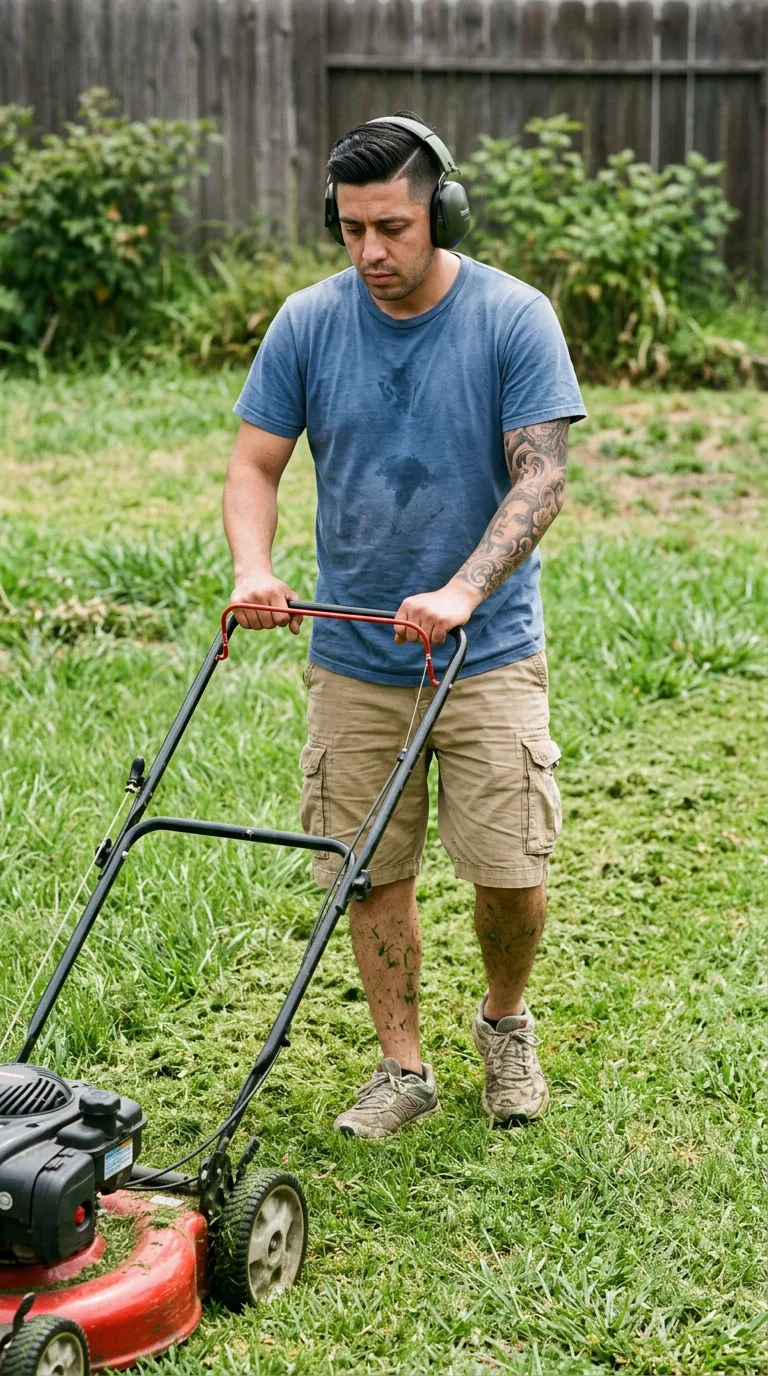
Rarest thing about him: Half sleeve — epic, 1 in 52
Season 0seed 1555830409 · engine v10
Character card
lineage 2NZHHJ
His body-swap story
@colin.hasbrook, wearing Cole Bratcher, rolled the wheel on and woke up as Emilio Casares, spent 38 minutes in him, then spun the wheel and woke up as an unnamed body
You are Cole Bratcher for one hour and twelve minutes, and it turns out that is exactly long enough to learn that twenty and rich and bored is its own kind of cage. You are sitting in a room the size of an apartment, in a house that does not creak, with a scar through your eyebrow that some other version of this body earned before you ever wore it. You crack the knuckles on a hand that isn't the habit of this hand — that's borrowed too, it turns out, muscle memory that isn't yours, that came in with somebody else's card. There is a decanter you have not touched because Cole Bratcher, this Cole Bratcher, quit, or drifted, same as always — the wheel keeps giving you men who quit things — and there is a window with the flat white Houston afternoon in it, and there is nothing in this room you want. That's the whole reason, if you're honest, which you are not required to be, even with yourself. Wanting nothing is worse than wanting something bad. You open the site on a phone that unlocks to your own thumbprint, whoever "you" is underneath three hundred and forty-two men now, and you spin.
The engine coughs — one bad note, a catch in the throat of it — and your hands do not let go of the bar. That's the first thing: not shock, not falling, just weight arriving into two arms and two legs already committed to a stride, already mid-push, and the earmuff that had slipped half off swings back down over an ear you did not lift a hand to touch. It settles like it knew where it was going. The next row runs dead straight. Grass clippings are stuck wet to shins that ache faintly, low, a good ache, the kind that comes from using a body instead of sitting in a chair being one.
The mower's handle is old rubber, cracked at the grip, and where your palms close on it something comes up through the cracks — not a thought, a Saturday. Early. His kids weren't with him this weekend, which is most weekends now, and he'd said to himself, fine, I'll get the lawn done, and there was something almost holy in doing a chore nobody was watching. That's Emilio. You don't know the name yet, not in words, but it arrives anyway, the way a smell arrives before you've named what's burning.
The t-shirt is damp at the collar, sweated through in a map you can feel more than see, and it gives you the morning: pulling it over his head in an apartment with a courtyard and dry palms outside the window, humming nothing, thinking about a deposition on Thursday he hadn't finished prepping. He'd almost worn a different shirt. He doesn't remember why he didn't. The cargo shorts at his hips are heavier on the right from keys he isn't carrying right now, keys to an office on the ninth floor of a building downtown where he stands on the courthouse steps some mornings with a briefcase that cost more than these shorts and this shirt combined, dressed like a different man entirely, and it is the same man, that's the joke of it, the same hands that button a cuff also push this mower through crabgrass because the landlord doesn't do yards and Emilio doesn't like paying someone for what he can do himself on a Saturday when the apartment is too quiet.
The tattoo on the right arm — the woman's face in black and gray, done over two long sessions in a shop on Melrose, the pain of the linework along the inner forearm sharper than he expected, worth it anyway — that's not a memory, that's just there, under the skin, the way it's always there, and it doesn't come with a story so much as a feeling: chosen, kept, never regretted, unlike some things.
The shoes come through last, laced the exact same way every time, a habit from somewhere — his father, maybe, though the specific afternoon that taught him won't surface, just the shape of a man crouched in front of him tying a small shoe too tight and Emilio, thirty years later, tying his own the same way without deciding to. There's an ex-girlfriend somewhere behind all of this too, not in the shoes or the shirt but just present, the way a stitch left in a wound is present — Marisol, the name comes without a hand touching anything, maybe because some names just live at the surface — and two kids who are hers on the school-week days and his on the weekends he doesn't waste on a lawn, except this weekend he did waste it, or didn't waste it, depending on what a Saturday is for when nobody's there to see you do it right.
He does not drink. He used to smoke and there are days, mowing, sweating, when his fingers ache for the specific occupation of it, something to do with the hand that isn't the mower bar. He believes in something, loosely, the kind of belief that doesn't ask for a building. He is thirty-eight thousand dollars in credit card debt and does not think about it on Saturdays if he can help it.
You let go of the bar. The engine idles rough under your palm where it still rests, out of old habit that is now already partly yours, and you look down at the hand — brown-knuckled, a callus at the base of the thumb, grass stain ground into the crease of the palm — and turn it once, like checking it for a tremor that isn't there.
"Okay," you say, out loud, to no one, to the fence and the dry patch by the gate he never quite gets the mower over right. "Okay."
You don't push the mower again yet. You just stand there in his skin, in his sweat, holding still in the one lawn he was ever going to finish today, and somewhere very far off, a version of you that used to be twenty and bored in Houston is already gone, already nothing, already spent — and this is what you bought instead.