Cole Bratcher
Fictional. Generated by AI — not a real person, and no likeness of one is intended.
20, billionaire in Houston · rolled by @colin.hasbrook · card — no film
History
who has worn him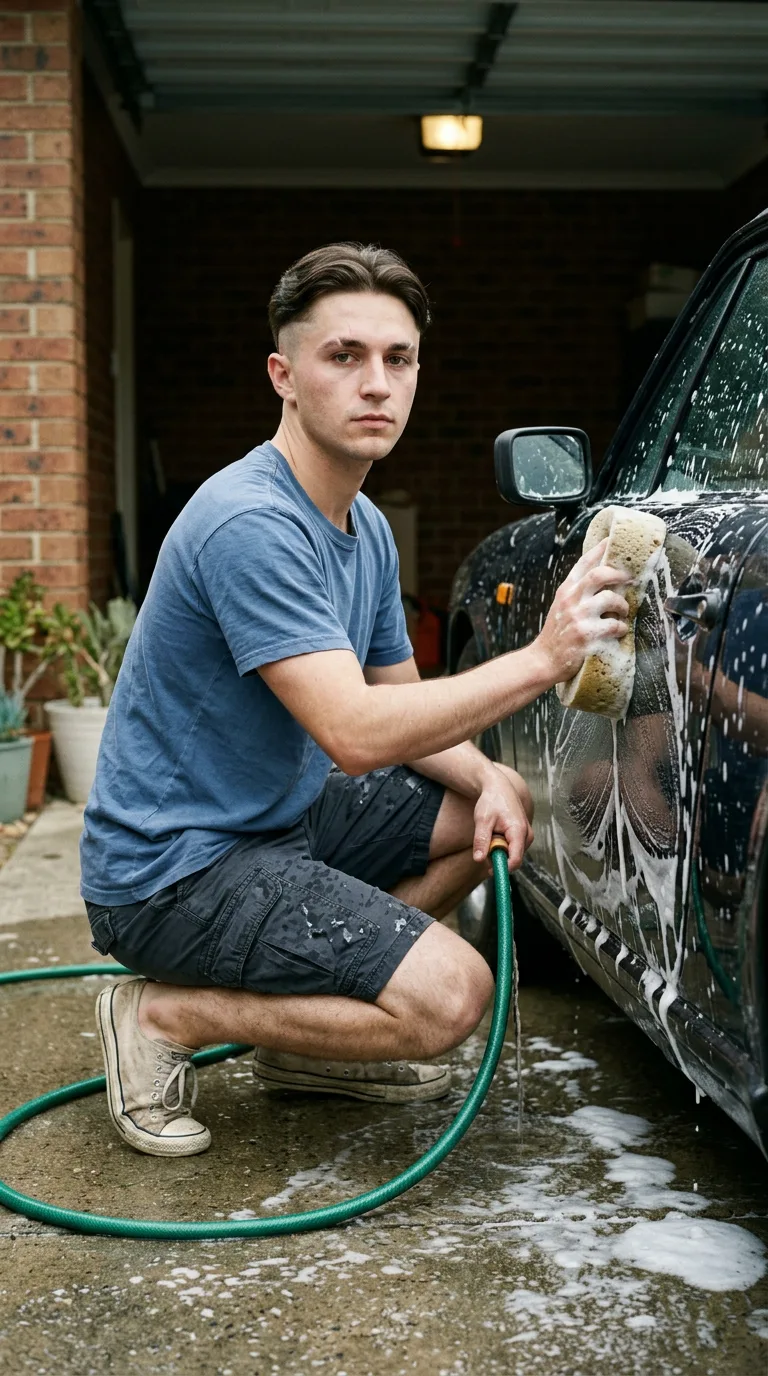
Rarest thing about him: Billionaire — rare, 1 in 558
Season 0seed 1367863888 · engine v10
Character card
lineage 2NZHHJ
His body-swap story
@colin.hasbrook, wearing Dale Kowalczyk, rolled the wheel on and woke up as Cole Bratcher, spent 1 hour in him, then spun the wheel and woke up as Emilio Casares
Dale Kowalczyk's hands don't shake anymore. That's the thing you notice first, kneeling under a slop sink in a two-flat on Kedzie with a pipe wrench that's too big for the joint, sweat running into a cleft chin that isn't yours and never will be. Forty-four years on this earth for him, and maybe six minutes of it for you, and already you know the whole trouble: the wrench keeps slipping because his grip strength isn't what his memory thinks it is. Something in the shoulder. Something old. You are crouched in a stranger's ruined knees in a customer's basement, and the customer is upstairs complaining through the floor joists about the smell, and you think, not for the first time today: this is not what you spun for.
You spun for the plumber because the wheel doesn't ask what you want, it only gives. And you took him because you take what you're given, three hundred and forty times over, and there is a kind of hunger that doesn't care anymore which body carries it, only that it keeps moving. But six minutes into Dale's Monday you already know his knees, his mortgage, the ex-wife in Cicero he still calls on Sundays out of habit more than love, and none of it is yours to want, and all of it is boring in the specific way that having enough is boring when you have had everything else. You set the wrench down on the concrete. You are standing in a stranger's ruin, and somewhere it is also afternoon, and you think about the wheel the way a man thinks about a door he already has his hand on.
You go back to it still wearing him — the site doesn't care whose thumbs are on the phone, only that they pay — and you spin, and Chicago drops away like water off a hood.
—
The water is still running. That's the first thing: not silence but the specific hiss of a hose against concrete, close, constant, and your knee is wet through denim that isn't denim, it's cargo shorts, soaked at both knees, and there's a sponge in your right hand, heavy with suds, pressed flat against a car door that gleams black even in the shade of a garage. Your left hand holds the hose low, thumb tucked over the nozzle, and it's turning — small circles, unhurried, a rhythm laid down by a body that has done this ten thousand times and doesn't need you for it. The swirl marks that should be spreading behind the sponge stop. Just stop, mid-arc, soap sliding down in a sheet with nothing pushing it.
You are twenty. You can feel that immediately, the way the knees don't complain, the way the shoulder is just a shoulder and not a filing cabinet of old injuries. Average build, and it holds itself like it's used to being looked at and also like it would rather not be. A scar interrupts one eyebrow — you feel it before you could ever see it, a thin numbness in the skin when the humid air moves across it.
—
The T-shirt is the first thing that talks. Blue, worn thin at the collar, and it gives you a closet — not a big one, surprisingly, for a name that when it finally surfaces makes your borrowed pulse do something strange. Cole Bratcher. Twenty years old and worth more than whole zip codes, and his closet is full of shirts he's had since before any of that mattered, because his mother bought them at a Target off 610 back when they still lived in the house with the carport, before the money, before the trust, before his father's company went from regional to obscene in the space of eighteen months while Cole was failing algebra in ninth grade. The shirt remembers being new. It remembers a hundred wash cycles since.
The sponge gives you more: a Saturday ritual that has survived every version of his life, rich or poor, happy or not. His father used to wash the cars with him in the old driveway, and when the old driveway became a circular one in River Oaks with a fountain nobody asked for, Cole kept doing it anyway, alone, because it was the only hour of any week that felt like it belonged to him instead of to the money. People who work for his family have offered, more than once, gently, to do this for him. He has always said no in a voice that comes out smaller than he means it to.
The hose in his palm carries calluses that don't fit a man who owns nine properties — real ones, earned from grip, from yard work he insists on doing himself, a small stubborn refusal to let his hands go soft the way the rest of his life has. His hands stutter when he's watched: boardrooms, dinners, a girl once — Marisol, and that name arrives whole and aching, three years gone and still the shape his memory returns to at rest — his hands would shake reaching for a water glass in front of her mother while his mouth stayed calm. Nobody who matters to him knows that. It is the one unglamorous, human thing about being twenty and richer than a small country: his hands betray him exactly when he needs them not to, and here, alone with a hose and a sponge, they have never once let him down.
The scar over his eyebrow comes from a bicycle, nine years old, a curb in the old neighborhood, blood down his face and his father laughing with relief once he saw it wasn't worse. It aches faintly, a phantom, whenever he's tired.
The terrace comes to you sideways, through no object at all, just a memory surfacing on its own the way the biggest ones do: him standing forty floors up with a drink he didn't touch, the city laid out under a sunset that looked fake, and a feeling underneath all of it that he could not name, still can't, something like being handed a life that fits like a jacket bought for a bigger man. He is spiritual in the unspecific way people are when they've been given every material answer and none of the other kind. He drinks rarely and remembers each time clearly. He has never smoked. He carries nothing he'd mention — no habit, no ring, no old wound he'd bring up at a dinner table — just the quiet, permanent hum of money so large it stops being real, and underneath that, smaller and more real than the money, the hour with the hose.
—
You look down. The sponge is still in your hand, suds sliding between your fingers, and you turn it over once like you're checking it's really there.
"Huh," you say, out loud, to no one, to the garage, to the black car with the water still beading on it. "Didn't figure it'd be you."