Elijah Davis
Fictional. Generated by AI — not a real person, and no likeness of one is intended.
20, soldier in High-desert Nevada · rolled by @colin.hasbrook · card — no film
History
who has worn him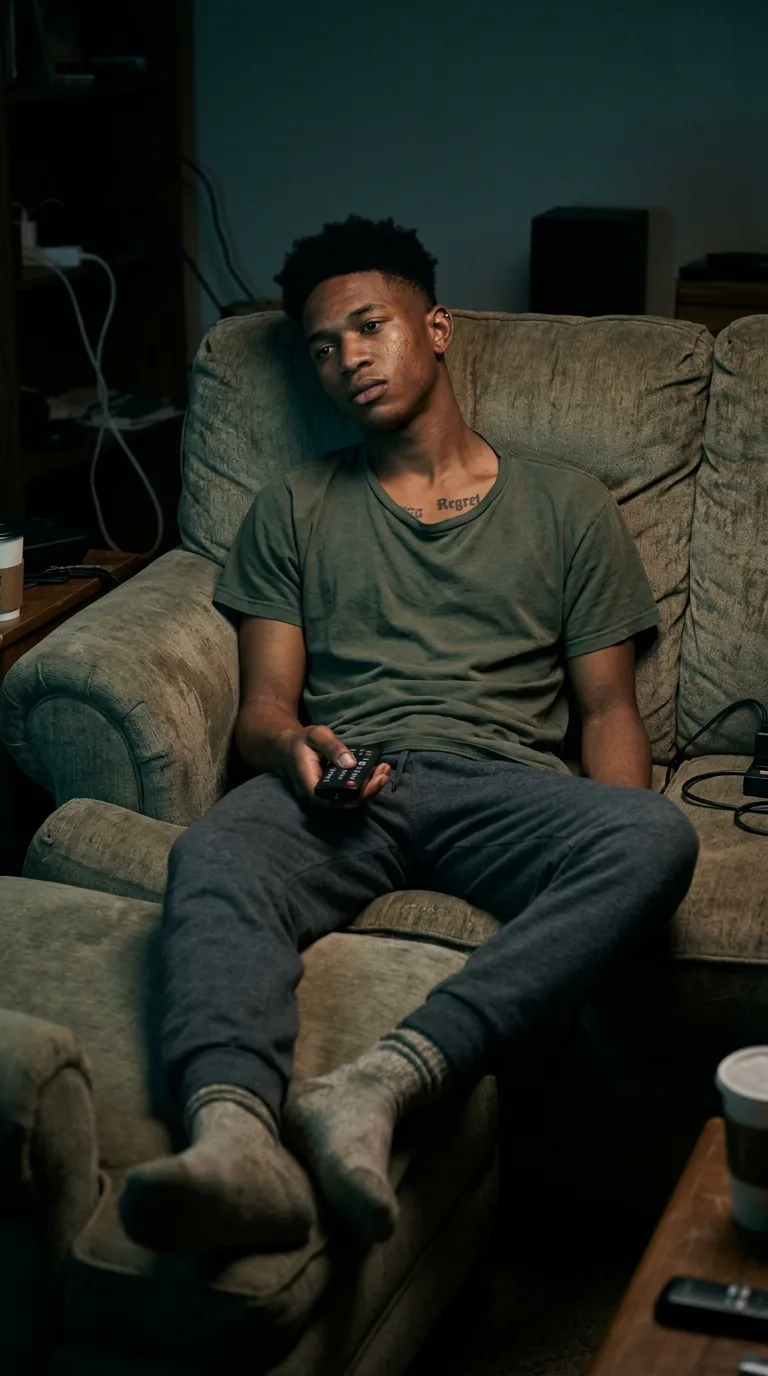
Rarest thing about him: Ear cartilage — epic, 1 in 87
Season 0seed 2060394665 · engine v10
Character card
lineage 2NZHHJ
His body-swap story
@colin.hasbrook, wearing an unnamed body, rolled the wheel on and woke up as Elijah Davis, spent under a minute in him, then spun the wheel and woke up as Nathan Prybilski
The El Paso body is on shift, three hours into it, and the smell of the station is diesel and burnt coffee and other men's aftershave, and you are standing in the bay doing nothing because there is nothing to do. That is the thing about him you've decided you're finished with: the waiting. Thirty-three years old, average in every direction, a nose broken once by somebody else's elbow and healed a little wrong, and he is a good man to be, brave in the ways that get written up, but he spends most of his life leaning on a truck listening for a bell. You have been him less than an hour and already your thumb is working the phone in his pocket, already the site is loading behind the equipment locker where nobody can see the wheel spin. It isn't boredom exactly. It's that you know now, 142 times over, that stillness is the one thing you can't stand to wear for long, in anybody.
You spin, and the pain in the wheel's engine finds a barracks road in Nevada and folds you into it sideways, and there is a couch under you that was not under you a second ago, cushions gone soft and grey with wear, a television throwing its light up across a stranger's jaw, and the remote is loose and warm in a hand that is now yours, thin-fingered, knuckles a little ashy, and the show cuts to something brighter and you feel your own spine straighten without deciding to, setting the remote down on the arm of the couch like a man arriving somewhere he meant to be all along.
The shirt is what starts it — an old olive tee, thin at the collar from a hundred washes, and the moment it moves against your collarbone you get him getting dressed in it that morning before that isn't morning at all here, it's the middle of a Monday and the blackout curtain over the trailer's one window is doing its job, because Elijah Davis sleeps when the sun is up and stands post when it's down, and somewhere under this borrowed calm is a body that clocked out four hours ago and hasn't slept right yet. The shirt gives you his hands buttoning nothing, because there's nothing to button, just pulling it over his head in the dark trailer with the AC unit rattling in the window and sagebrush shadows laid flat and hard across the linoleum outside, and under that a flash of the barracks in real daylight, boots identical in a long tan row, his name tape — DAVIS — sewn on crooked because he did it himself and was too proud to ask the guy in the next bunk to fix it.
The tattoo at his collar gives you more than a flash — it gives you the whole ugly week of it, nineteen years old, a name that isn't there anymore inked under a word he thought was permanent in a different way than he meant, done by a friend's cousin in a garage in Pahrump for sixty dollars, and every time he catches it in a mirror since he has the same flinch, quick and private, gone before anyone could catch him having it. The cartilage piercing at the top of his ear is newer, done on a dare he lost, and it aches a little in cold weather, which this morning was not.
The couch itself, the weight of your own body sunk into it, brings back the ex — not her face all at once but her laugh at something dumb on this same screen, her feet where your feet are now, six months gone and the trailer still faintly rearranged around the shape of her absence, a coffee mug of hers he never got around to donating sitting behind the coffee maker he doesn't use because he doesn't drink coffee, never has, never needed the jitter on top of what his own chest already does to him most days. There's a bottle in the bathroom cabinet, and touching nothing yet you already know its label, the dosage, the appointment card behind it with a civilian counselor's name on it that he drives forty minutes to see because the number on base felt too much like a report. He is careful with it the way he is careful with everything that could go wrong in front of other people — because his hands, when nobody's watching them, are steady enough, but put him in front of a sergeant, a crowd, a girl he liked, and they'll stutter on him, fumble a strap or a sentence, and he has spent years building a face that doesn't show it costs him anything.
Underneath all of it is the frame itself: twenty years old, six foot of him folded into a couch built for someone shorter, skinny in the way that hasn't caught up to how tall he got, brown eyes that the television keeps painting different colors, a body that runs three miles before breakfast without complaint and still somehow always looks like it's owed a meal. Church on Sundays when he can get off, quietly, a faith he doesn't perform loud but carries the way he carries the bottle, in a pocket close to the body. None of it decided anything for you. All of it just arrived, the way it does, uninvited, through his own shirt and his own couch and his own held-warm remote.
You look down at the hand still resting where the remote was. Turn it over once, like it might unfold into something you recognize.
"Didn't laugh that time," you say, to the empty trailer, to nobody, in a voice that isn't shaking yet, and you lift your eyes to where a camera would be if there were one, and you hold there, already wondering how long you'll want this stillness before you go looking for the wheel again.