Earnest Boykin
Fictional. Generated by AI — not a real person, and no likeness of one is intended.
65, mechanic in Phoenix · rolled by @colin.hasbrook · card — no film
History
who has worn him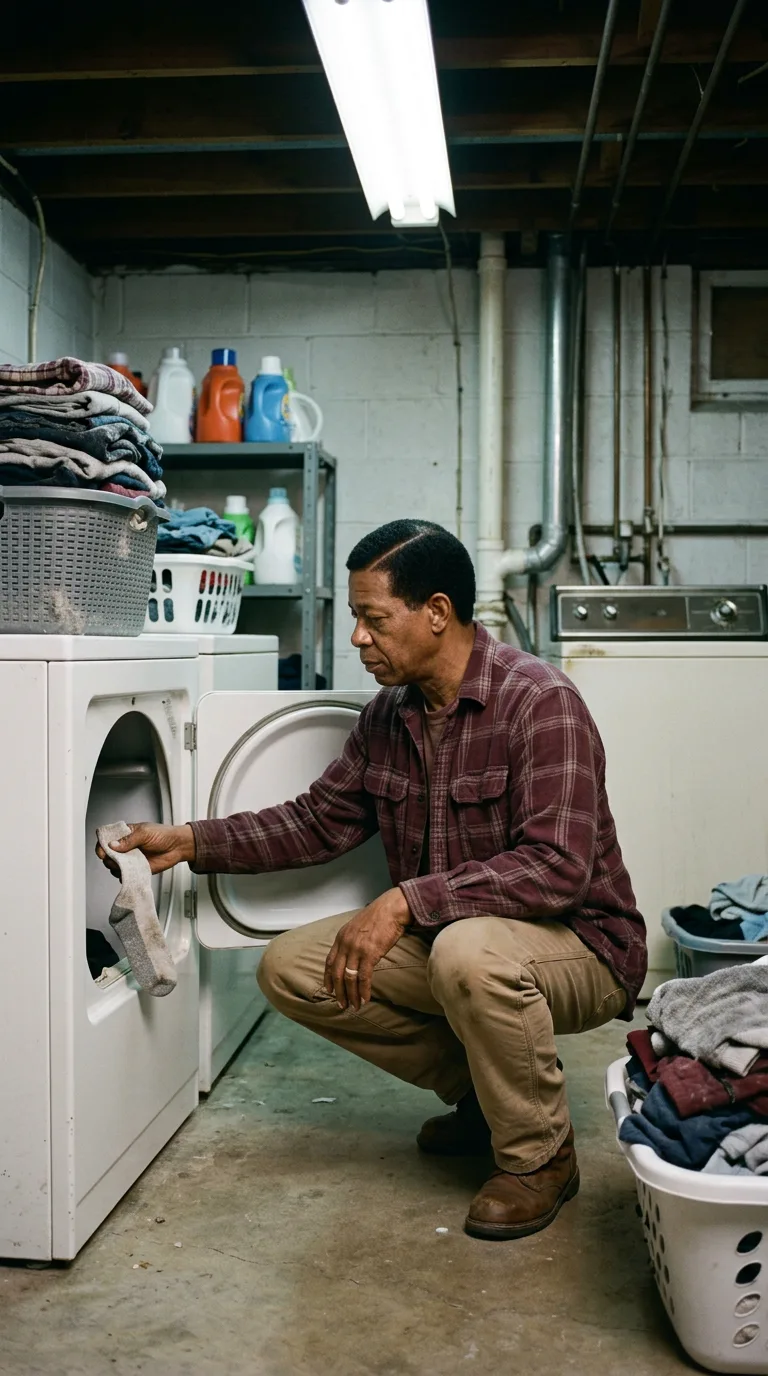
Rarest thing about him: Mechanic — rare, 1 in 61
Season 0seed 785072862 · engine v10
Character card
lineage 2NZHHJ
His body-swap story
@colin.hasbrook, wearing Ravi Chandra, rolled the wheel on and woke up as Earnest Boykin, spent under a minute in him, then spun the wheel and woke up as Colby Strathan
---
Five minutes is nothing in a body. That's what you keep learning, spin after spin — five minutes is barely enough to find the light switch. You're standing in the gym office wearing Ravi Chandra, thirty years old, still faintly smelling of the mat room, and you already know this one isn't going to hold you. It's not his fault. It's a good body — strong through the shoulders, quick, a coach's whistle still looped around the neck out of habit. But five minutes ago you were someone else entirely, and five minutes before that, someone else, and the trouble with 471 men is that none of them are the reason you keep going back. The wheel is the reason. The turning of it. You feel it now, the way you always feel it, a kind of hunger with no particular shape, sitting in Ravi's chest like something borrowed that wants to be spent. You open the laptop still logged into vessel.cards from last time, and you don't think about Ravi at all — not his practice schedule, not the office around him, not the cold coming down outside the window in the early afternoon. You spin.
The dryer door is warm against your knuckles before you know you have knuckles again.
You're crouched. A sock hangs from your fingers, gray, static-clung to your palm, and the fluorescent tube overhead hums its one flat note into a concrete room that smells like fabric softener and cold stone. Your knees ache in a specific, familiar way — not Ravi's knees, not anyone's knees you've wanted, just old ones, used ones. You pull the load out warm, all of it at once, and drop it into the basket without deciding to, the way you'd flick a light switch in a house you've lived in thirty years. Your hands square a collar before your mind has caught up to the fact that it has hands.
Then the shirt against your back says his name to you, not in words. Plaid, worn thin at the elbows, buttons gone slightly loose — and with it comes a whole morning: standing in a bedroom with the blinds already bright behind them, a bureau with a chipped drawer pull, reaching for this exact shirt off a hook because the blue one still smelled like the shop. Sleeve, then sleeve. A body that knows this motion without supervision — shoulders that have made this exact reach ten thousand times, an ache low in the back that has to be worked into rather than fought. Earnest Boykin, sixty-five, and his hands already knew before you arrived what a torque wrench feels like at the exact point past finger-tight, what a dryer buzzer sounds like through two floors of house.
The rag in a back pocket you're not wearing right now gives you the garage anyway — gravel yard outside, two bays, a Buick up on the lift and afternoon light so hard off the concrete it makes your eyes — his eyes — water even in memory. Forty years of that. A crooked nose from a wrench that got away from him in 1987, laughed about since, worn like a signature. The name patch over the pocket, red thread, EARN, because the embroiderer ran out of room decades ago and nobody ever fixed it.
The ring finger has no ring, but the tan line is still there, and touching the sock, oddly, gives you her — Delia, seventeen years married, the kitchen table where she told him it was over in a voice so calm it scared him worse than shouting would have. Three kids, maybe four, grown now, phone calls on Sundays that are warmer than the marriage ever ended up being. A drink most nights, not two, unless it's been a hard one. Grandchildren's photos taped inside a toolbox lid. Insulin in the door of a refrigerator that hums almost exactly like the tube light overhead.
His hands, now that you're paying attention to them, don't want to be still. Even holding the sock they're doing something — turning it, checking the seam, folding a corner square out of a kind of physical impatience that isn't nerves so much as just how the man is built, has always been built, will keep being built whether you're the one behind his eyes or not.
You straighten up out of the crouch — his knees complain, distantly, like an old dog settling — and you look down at the hand still holding the sock. You turn it over. Broken-veined, sun-spotted along the back, a life's worth of small burns healed pale against darker skin. Not your hand. Not Ravi's hand. His.
You lift your eyes toward the shelf of detergent bottles like they're a lens, because right now, to you, they might as well be.
"Well," you say, in his voice, testing the register of it like a new gear, "guess I'm doing laundry."