Dustin Little Eagle
Fictional. Generated by AI — not a real person, and no likeness of one is intended.
21, park ranger in Eastern Kentucky · rolled by @colin.hasbrook · card — no film
History
who has worn him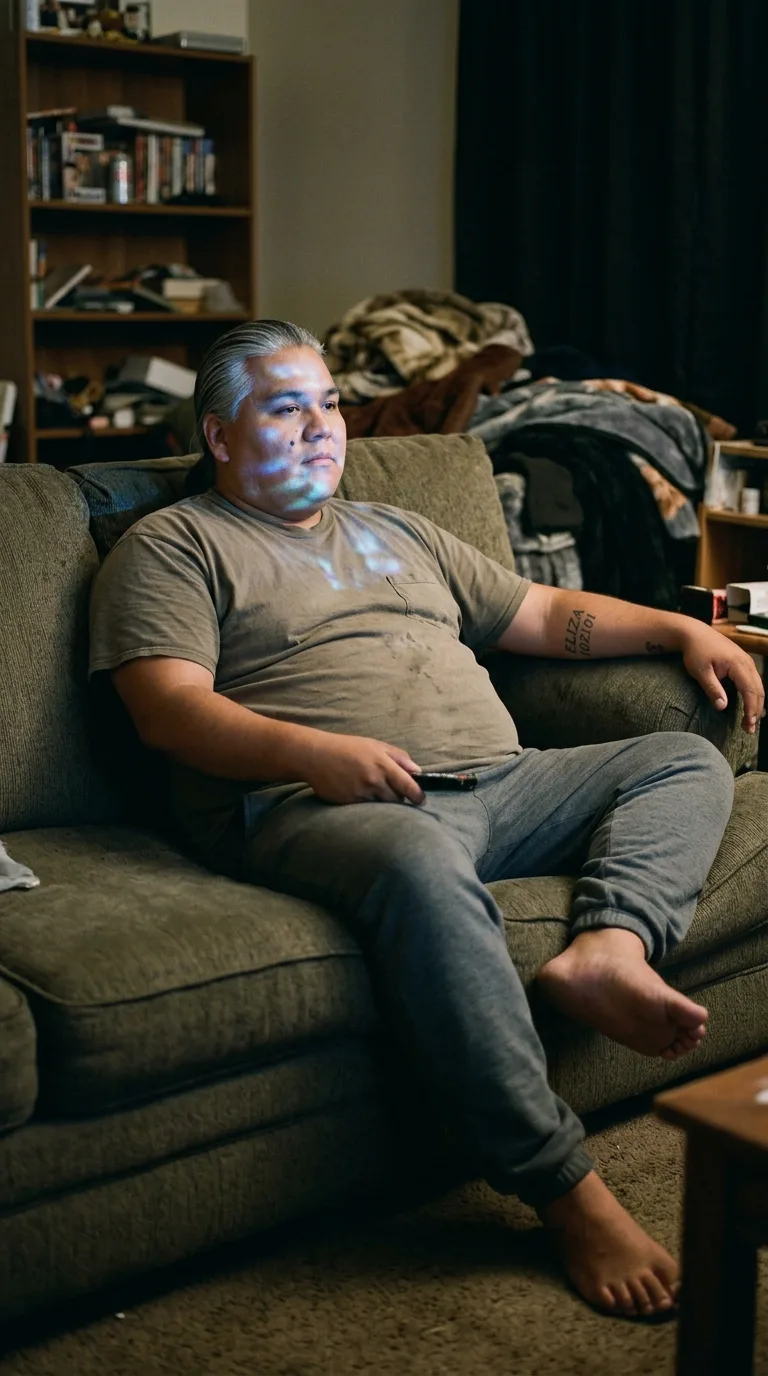
Rarest thing about him: Gray / silver — epic, 1 in 67
Season 0seed 2077404012 · engine v10
Character card
lineage 2NZHHJ
His body-swap story
@colin.hasbrook, wearing Cody Fontenot, rolled the wheel on and woke up as Dustin Little Eagle, spent 3 minutes in him, then spun the wheel and woke up as Wilbur Standingdeer
The Fontenot body is sweating through its shirt in the shop bathroom, and that's the thing that decides it. Cody Fontenot's dad bod, nineteen years of it, standing at a lunch-break mirror on a Monday in New Orleans, heat coming up off the concrete floor two flights down, hazel eyes bloodshot from a machine shop's dust. Less than a minute you've worn him and already you know: this one's small, and it's loud, and the AC unit rattles like it's dying, and there's a foreman who's going to want to know where you went. You didn't come back to the wheel because Cody did anything wrong. You came back because thirty-eight men taught you that the wanting always comes back, usually inside an hour, and there's no version of this life where you sit still in a body just because it's the one you're already wearing. You take out your phone in the stall, thumb open the bookmark, and spin.
The television cuts to a bright frame — some ad, blue-white — and in that half second you are sitting up straight in a body that was slouched a moment ago, spine unfolding like it's been coiled and let go, and the remote is set down on the arm of a couch that is not the couch you knew. Heavy arms. A hat that isn't there anymore, must be somewhere else in this room, off duty. Gray-silver hair against the back of your neck, longer than you're used to feeling. The room is dim, curtains drawn against an afternoon that doesn't belong to the hour your last body kept. You watch the rest of the ad without laughing at the punchline the way he did the first time it aired, months ago, and would have laughed again now if you hadn't arrived in the middle of his smile and stopped it there, unfinished.
His shirt is a soft gray tee gone thin at the collar, and it gives you the first flash the second your shoulders settle back into the cushion: him pulling it over his head this morning in a room with a window unit rattling on low, sun coming low and green through the blinds because the pines outside his place hold the light and let it go slow. Sleeve first, then the other, the fabric snug across a chest that has always run heavy and always will, no matter what he does about it, and he stopped trying to do anything about it two winters ago. The couch under you is the same couch from a hundred afternoons, and it gives you the shape of his days off — nights, more like, because the trail crew rotates him onto the early patrol some weeks and the graveyard fire-watch others, and today is one of the others, so two in the afternoon is his midnight, curtains drawn on purpose, TV a small blue country in a dark room he built for sleeping in reverse.
The remote, still faintly warm from his palm, hands you the habit of it — thumb finding the volume rocker without looking, the particular tilt he holds it at because an old ranger taught him to always keep a hand free. His hands know a lot without being told: how to read a trail sign into shape with a cordless drill, how to coil a rope one-handed, how to hold a radio mic just off his mouth so the wind doesn't clip his words when he calls it in from the footbridge over the creek, brown water sliding under cable and green shade dropping cool across his shoulders like a hand. His knees ache a little sitting this long, heavy man's knees, and there is a permanent low simmer of hunger in his stomach that food never quite answers, but his back is strong in the particular way that comes from years hauling gear uphill, and his leg — his leg is already going, bouncing against the cushion, doing it before he'd have noticed and doing it now without you asking.
The forearm gives you the deepest one. Script letters and a date, dark against brown skin, and the fabric of the sleeve brushing it wakes the whole afternoon he got it: a tattoo parlor two towns over, the smell of it, and Eliza's laugh somewhere behind him in the memory though she isn't the one it names — no, it names someone else, someone smaller, a name he doesn't let himself think all the way through even alone in the dark, and you don't either, you just feel the shape of the grief go through his chest like weather and pass. Eliza is a different ache, older, softer at the edges now: her voice on a trail two summers back, her hand almost taking his and not quite, the two of them standing at a switchback pretending the view was the reason they'd stopped walking. The one who got away doesn't leave a mark you can point to. She just left the room a little colder every time he comes back into it alone, and he comes back into it alone most nights, TV on, lights off, nobody home to ask him to turn it up.
You look down. His hands, wide and blunt-fingered, rest on his own thighs like he's checking they're still there. You turn the right one over slow, watching the mole-shadowed face you now wear reflected faint in the dark television glass between ads, gray hair catching the light, and something in you — not him, never him again — settles into the weight of this stranger like sinking into water that's already warm.
"Guess I'm up early," you say to the empty room, and the leg keeps bouncing, and you don't know yet how long you'll let it.