Douglas Prentice
Fictional. Generated by AI — not a real person, and no likeness of one is intended.
60, bus driver in Western Kansas · rolled by @colin.hasbrook · card — no film
History
who has worn him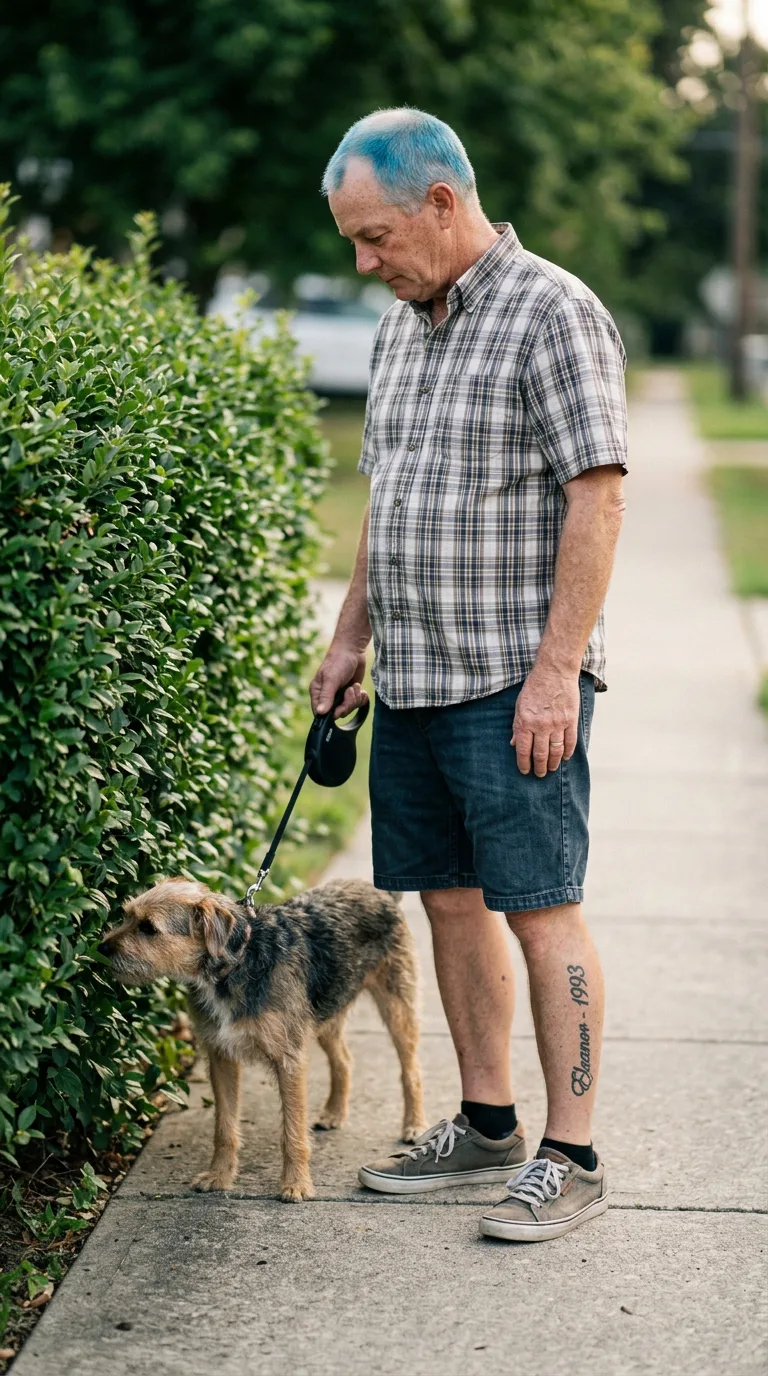
Rarest thing about him: Fashion color — legendary, 1 in 238
Season 0seed 504408555 · engine v10
Character card
lineage 2NZHHJ
His body-swap story
@colin.hasbrook, wearing Colin Wardwell, rolled the wheel on and woke up as Douglas Prentice, spent under a minute in him, then spun the wheel and woke up as Gary Petrosky
The condo smells like paint that hasn't cured yet, and Colin Wardwell's hand — your hand, for sixteen more minutes — is shaking a little as it hovers over the mouse. Colin is twenty-two and skinny fat and sold two houses this quarter and his mother still calls to ask if he's eating. He has a unibrow he has never once considered doing anything about. He is standing in his own kitchen in the dark because he doesn't want to see himself doing this again, and the light from the laptop is the only light on. You feel his stomach the way you always feel the stomach of whoever you're wearing right before — hollow, humming, already halfway gone. It isn't boredom exactly. It's that Colin's life, now that you've had a taste of five hundred other lives, sits on you like a coat that was never yours, cut for a man you keep forgetting to be. The wheel is already loading. You don't decide so much as arrive at the fact that you already clicked.
The hedge is still swaying from where the dog's shoulder pushed into it. That's the first thing — not sight, not thought, but the small give of a leash going loose in a hand that has stopped walking. The evening here is heavier than the one you left, gold going to bruise-purple at the rim of a sky stacked with weather, wheat stubble breathing heat back up through a pair of sneakers you didn't lace yourself. A dog looks up. Ears back. It knows before you do, the way dogs always seem to. Your hand — his hand — winds the leash twice around itself without being told to, and a body that is five inches shorter and thirty years older than the one you had a second ago takes its first step forward like it's done it ten thousand times, because it has, and you are only borrowing the memory of the motion, not the years underneath it.
The dog has to trot to catch up. That's the detail that gets you: an animal relearning a stride mid-block.
Then the shirt. Plaid, thin from washing, sticking a little at the shoulder blades with the day's heat, and it comes with a whole morning riding in on the fabric: Douglas standing in front of the dresser mirror at 5:40 a.m., buttoning it one-handed while the coffee maker gargled in the kitchen, Rhonda still asleep, the bedroom smelling like her lotion and like the box of hair dye he keeps meaning to throw out because she doesn't like it, tells him he looks like a parrot, and he keeps doing it anyway because his daughter Missy dared him three years ago at her college graduation and something about being sixty and still doing a dare cracked something open in him he liked the taste of. He remembers — you remember, wearing him — pulling the shorts on over the tattoo without looking at it, the way you stop looking at a thing you see every day, though today of all days it comes back anyway: 1993, a bar off I-70, a woman named Eleanor who left before Rhonda ever existed, who he loved with the reckless, structureless love of being twenty-nine and thought he'd marry until she didn't want Kansas or him in it. He got the tattoo after, drunk and grieving, and never took her name off his leg even after three kids with somebody else, even after Rhonda found it on their honeymoon and just said, quietly, "okay," and never brought it up again. It aches sometimes, not the ink — the fact of it. He is a man who still goes to church every Sunday he isn't hungover on his own head, migraines that come like weather fronts, aura first, the world going bright and wrong at the edges, and he's learned to read the sky for them the way he reads it for hail. He hasn't had a drink in eleven years. Hasn't had a cigarette in nineteen. He has three kids and one of them doesn't call and he doesn't let himself think too hard about why. He drives Route 6 into town and back, five days, forty-one riders on a good run, and the bus is the only place his head goes all the way quiet.
The leash handle is worn smooth where his thumb rides it every evening at exactly this hour, dog and man both grateful for the last cool hour before the thunderhead breaks. The debt is in there too, folded into the muscle of his jaw when he thinks about it: eighty-some thousand dollars of it, medical from Rhonda's hip and a loan against the house that never should have happened, a number he does math against at two in the morning and never wins. He doesn't tell her how bad. He tells God instead, most nights, kneeling by a bed that creaks.
Your hand — his hand — comes up in front of your face without your telling it to. Freckled, spotted, a plain gold band on the ring finger catching the last of the yellow light. You turn it over once, like you're checking it's real, and somewhere behind the hedge the storm finally exhales, a low roll of thunder that the dog ignores completely, veteran of a hundred of these.
"Well," you say, in his voice, which is lower than you expected and a little rough at the edges, "guess we better get on home before it opens up."
You don't know yet how long the sky's going to let you stand in it.