Donald Mazzarella
Fictional. Generated by AI — not a real person, and no likeness of one is intended.
35, machine operator in Philadelphia · rolled by @arjun.devadas · card — no film
History
who has worn him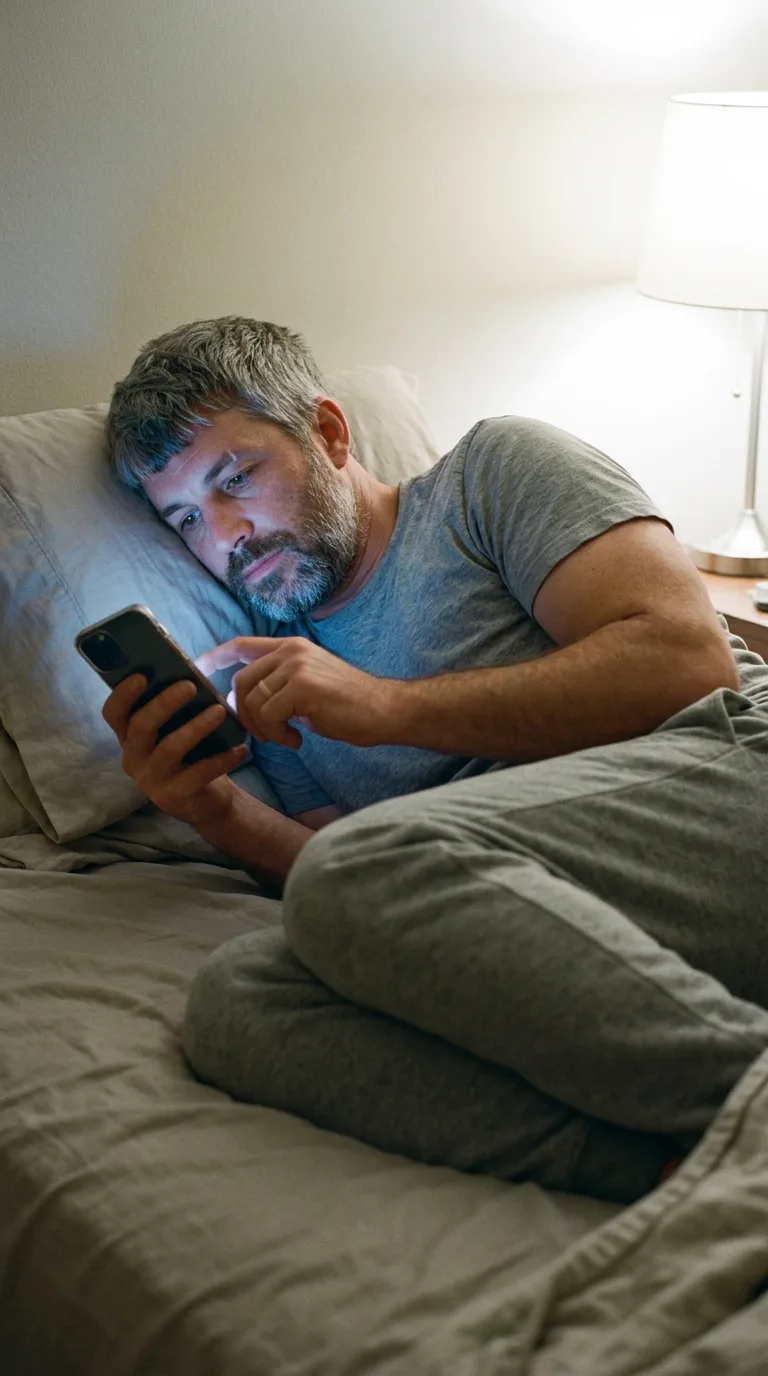
Rarest thing about him: Clicks a pen — common, 1 in 17
Season 1seed 1184541554 · engine v11
Character card
lineage OZ80W3
His body-swap story
@arjun.devadas, wearing Kenji Okabe, rolled the wheel on and woke up as Donald Mazzarella, spent 3 minutes in him, then spun the wheel and woke up as Arjun Devadas
Three minutes is not enough to hate a body, but it is enough to resent one. You are standing — he was standing — in a turbine nacelle forty meters up, wind turbine technician, 25, Seattle, and the climb up had already put a thin ache behind both knees that does not belong to anyone's idea of 25. The harness bites. The freckles on these forearms mean nothing to you. You have had this one for three minutes and you already know the whole shape of him: careful, young, afraid of heights in a way he has trained himself out of showing. There is nothing wrong with him. That is the problem. You spun once and landed in a life with no texture left to find, and three minutes is exactly how long it takes to know that and reach into your pocket for the phone you are already holding, because some habits cross over no matter whose hand is doing it, and the wheel's app is still open from last time, patient, glowing, asking if you're sure.
You are sure.
The thumb moves before the rest of you has agreed to anything, and the turbine, the harness, the wind, Kenji Okabe entire — all of it goes out like a dropped call.
And then: dark. Not the dark of eyes closed, the dark of a room at night, blue-lit from six inches away, and a thumb — thicker now, a ring-shaped paleness crossing the base of it — already moving across glass, faster than whoever had it going, steadier, flicking through three stalled minutes of someone else's doomscroll like debris. The weight under you is heavier, wider, older. A shoulder you didn't ask for presses into a mattress that gives different than the last one did. Somewhere behind a sternum that isn't yours yet, a heart starts keeping a pace you didn't set.
The shirt is not on him — it's a T-shirt, worn thin at the collar, and that's the first thing that comes through, soft gray cotton against a chest with more hair on it than the last one had, and under that: a Tuesday, him pulling this exact shirt over his head after a shower, steam still on the bathroom mirror, him thinking *laundry, gotta do laundry*, nothing more than that, a nothing-thought from a nothing-morning, and it arrives anyway, whole and small and his.
The phone is the loudest thing he's touching. It comes through like a bell. Three kids — a photo as the lock screen, two girls and a boy, the boy missing a tooth in the picture, the girls in matching soccer jerseys from a team he drives them to on Saturdays he doesn't always get anymore. A custody calendar color-coded in an app he hates and checks four times a day. A text thread with *Dana* that he has reread so many times he can feel, without reading it, exactly where the regret sits in it — not her leaving, something he said after, something that can't be unsent. Her name isn't Dana to you. It's just the shape his chest makes when he thinks it.
The bed under him: his, newer than the marriage, bought alone from a showroom he doesn't remember choosing, in a rowhouse with marble steps gone soft and hollow from eighty years of other people's feet before his. He rents the top two floors. He is thirty-five and he has been divorced for two years and some part of him still reaches across a bed at night before he remembers there's no one to reach for, though tonight he hadn't — tonight he'd just been lying on his side with the phone close to his face because sleep wasn't coming and the overnight shift had turned his clock backwards years ago, line running plastic out hot and ribboned while everyone he knows is horizontal and dreaming, so that even on a Sunday, middle of the night, he is wide awake out of sheer habit, body still vibrating faintly with the memory of the extrusion line's hum.
The ring finger gives the clearest thing of all — not a memory but an absence, a paler band of skin that his thumb finds without being told to, rubbing it the way it's rubbed it ten thousand times since the band came off, and behind that: a wedding, modest, her in ivory with her mother crying harder than she did, him sure of everything that day in a way he has not been sure of anything since. And behind that, more recent and sharper-edged, someone else — not Dana, not the wife, a woman he saw for eight months after, who liked his hands and the sound the line made when he described it and who is gone now too, for reasons that still don't fully make sense to him, reasons he turns over at two in the morning instead of sleeping.
A pen he isn't holding anywhere near him ghosts a click against two fingers anyway, phantom, the hand remembering a habit it has nowhere to spend at this hour.
You stop scrolling. You let the phone drop to the mattress, screen-down, the room going honestly dark for the first time.
You lift the hand — his hand — into the blue dying light and turn it over, slow, like it might tell you something the inside of him already has.
"Okay," you say, to no one, to the dark, to the shape of three kids asleep somewhere else in this city, "let's see what you've got."
Somewhere behind that, unspoken, already there: how long. Not tonight's question. Every night's.