Devin Marsh
Fictional. Generated by AI — not a real person, and no likeness of one is intended.
18, wrestling coach in Philadelphia · rolled by @marco.villagrana · card — no film
History
who has worn him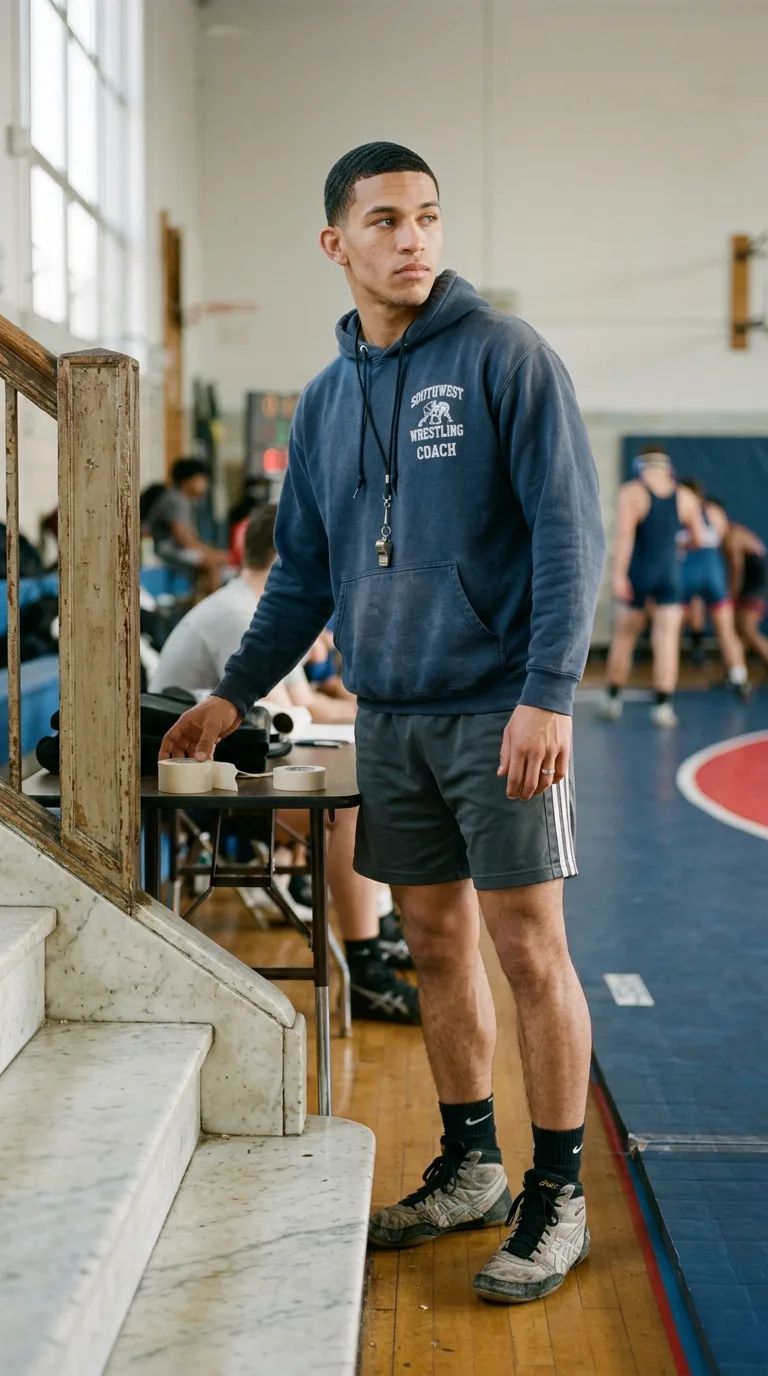
Rarest thing about him: A tic — a hard blink, a throat clear — epic, 1 in 144
Season 0seed 818719728 · engine v10
Character card
lineage LJL8SV
His body-swap story
@marco.villagrana, wearing Kyle Ostrander, rolled the wheel on and woke up as Devin Marsh, spent 20 hours in him, then spun the wheel and woke up as Randall Metzger
You are Kyle Ostrander for six minutes and you already hate it a little — the freckles, the average shoulders, the felt of the blackjack table under fingers that deal too slow, muscle memory not yours yet, a Tuesday-night pit boss hovering behind you like a man who smells something. Kyle's apartment, when you thought of it earlier tonight, was empty in a way that had nothing to do with square footage. Six minutes ago you were Marco Villagrana, and for ten minutes before that you had a camera in your hands and a a rented house in Los Feliz and hazel eyes and a boss who called at 11 p.m. about invoices like the day hadn't ended and would never end. You left Marco because ten minutes was long enough to understand exactly why he hated that phone call, and there's a petty, clean pleasure in it now, sitting behind Kyle's tired blue eyes on a casino floor in Miami — you're not going back to being yelled at. You're going to be the one who used to do the yelling. You open the site on your phone under the table, between hands, and you spin.
The wheel turns and the felt is gone and there is marble under your sneaker, cool and worn smooth in a hollow no shoe made in one lifetime, and a strip of athletic tape between your fingers, half torn, and your hand does something wrong with it — folds it backward, catches, corrects — and then does it right, and then does it right nine more times in a row like it's being watched, because it is. A whistle weight swings once against your chest on its cord and goes still. Somewhere behind you a gym is full of the particular roar-and-slap of bodies on a mat, and the light coming through the tall windows is late-day gold going gray, a Tuesday evening in a school building that smells like rubber and old radiator heat.
You are 5'3" and it registers first as absence — Marco's low center of gravity is gone, Kyle's averageness is gone, and what's here instead is compact and coiled, a body that has spent eighteen years learning how to be strong in a small frame instead of apologizing for it. Your hands are wrapped around the tape roll and they know it, the way they know the underside of the training table's edge, the exact give of the vinyl, without you asking them to. A hard blink comes up out of nowhere and clears nothing, and your throat does a small dry click of a clear, and both feel like breathing, not like you.
The hoodie is what opens first — Southwest Wrestling Coach across the chest in cracked white letters, and putting it on this morning comes back whole: the smell of the dryer sheet, the sleeve catching for a second on the wedding band the way it always does, a small daily annoyance that isn't annoying, it's just Tuesday, it's just a life. Behind that: a wedding, small, a backyard, somebody's aunt crying happy-drunk into a paper plate of cake. A wife's laugh from another room this same morning, half-heard through a bathroom door, toothbrush still in your mouth. None of it is dramatic. All of it is warm in the unremarkable way mornings are warm when nobody's fighting.
The gym floor comes up through your shoes next — Asics scuffed pale at the toe, laces double-knotted the way you learned to knot them at fourteen so they'd survive a match, and under that the memory of being fourteen yourself on this exact mat, a different coach's hand cuffing the back of your neck, not unkind. You were good. You are still good, just not big, never big, and the whole shape of your coaching voice — quick, sharp, more bark than lecture, because you learned wrestling from men who talked like that and it worked — comes up through your own throat before you use it. The scoreboard buzzer from a meet three weeks ago. A kid named DeShawn who finally hit the switch you'd drilled into him forty times and looked over at you mid-match, grinning, before he even finished the move. That one is good enough that you sit inside it a second longer than you need to.
The sleep apnea machine's hum comes back through nothing you're touching, just the room's late light reminding you of a hundred other late lights, the mask on the nightstand, your wife's hand finding your shoulder in the dark without either of you fully waking, a small married mercy repeated so many times it's stopped being a thing either of you mentions.
The whistle is cold against your sternum. Two rolls of tape, one half-used, sit under your palm on the folding table, and the memory that comes with them is thin and daily — hundreds of ankles, hundreds of wrists, the particular tear-sound of tape you could probably do in the dark. Your body: eighteen, tight through the shoulders in the specific way of a wrestler's build, quads that ache low and permanent from a life on a mat, hands rough at the fingertips from grip work, nothing broken, nothing that hurts you haven't already made peace with. It is, plainly, a good body. Better than Kyle's. Better, if you're honest, than Marco's ever was.
You turn the tape roll over once in your hand like you've never seen a hand do that before, and you have not — not this one. You look up from it, past the folding table, out at the mat where two boys are still grappling like nothing in the room has changed, because for them it hasn't.
"Run it again," you say, and your voice comes out sharper and younger than you expected, and you like the sound of it too much to wonder yet how long you'll get to keep it.