Desmond Achebe-Wynn
Fictional. Generated by AI — not a real person, and no likeness of one is intended.
36, chief executive in New York · rolled by @connor.waskiewicz · card — no film
History
who has worn him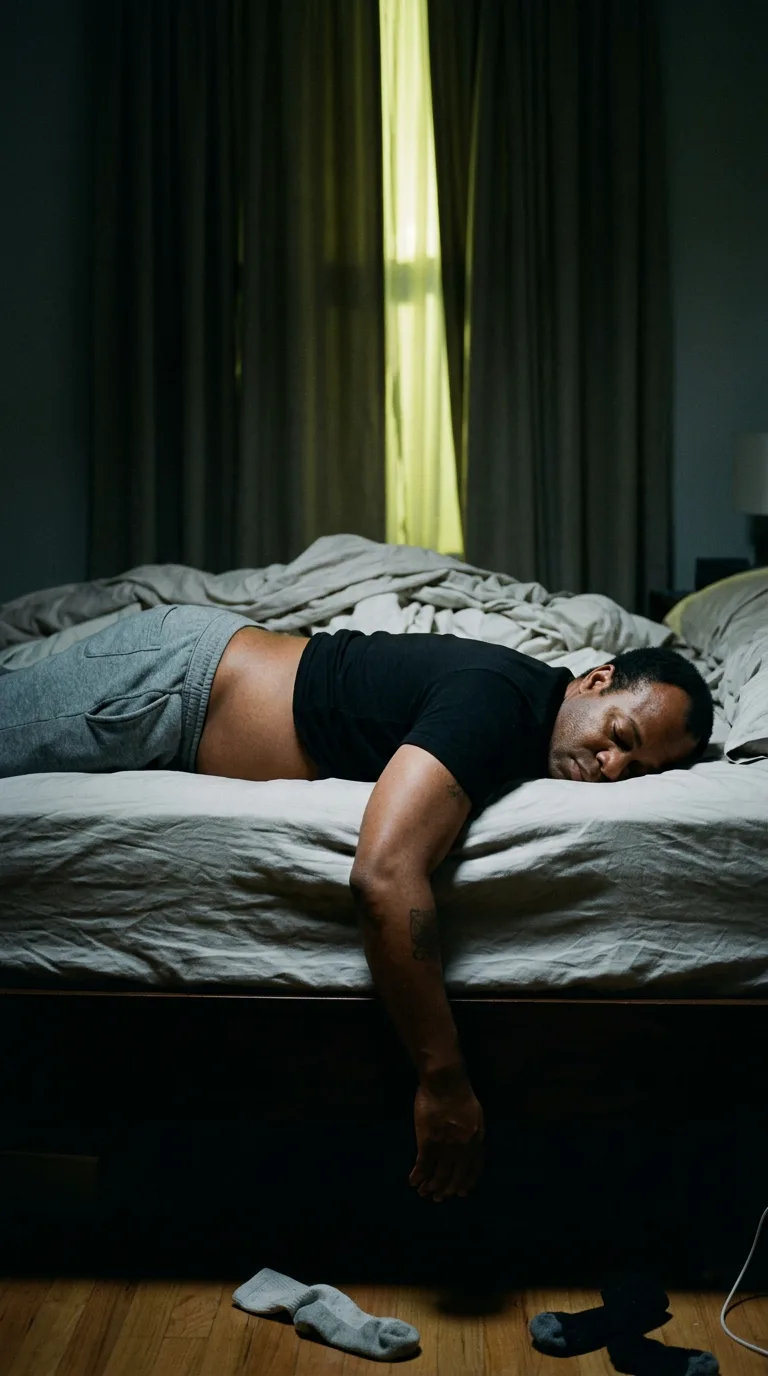
Rarest thing about him: Half sleeve — common, 1 in 32
Season 1seed 442119316 · engine v11
Character card
lineage 2NZHHJ
His body-swap story
@connor.waskiewicz, wearing Caleb Dunnigan, rolled the wheel on and woke up as Desmond Achebe-Wynn, spent under a minute in him, then spun the wheel and woke up as Thomas Brennan
You are standing in Caleb Dunnigan's kitchen in Denver, in the dead middle of the night, and the refrigerator is the only thing awake. Two minutes. That is how long you have been twenty-three, freckled, easy in the knees. His body works fine. It is the phone in his hand that does not: the page with the wheel, the thumb already over the button.
Nothing is wrong with him. That is the trouble. Twelve spins ago you were a mechanic in Philadelphia, fifty-seven, with grease worked into the creases of his knuckles, and for less than a minute you stood in his garage and felt what his friend had left on his workbench: a spare key, a card, a name written in a hand you now know. You did not stay. You have not stopped thinking about the friend. So you press.
The arrival is a weight. Face-down, mouth dry, the mattress pushing back against your ribs. Your breathing, ragged a second ago, goes even in a single breath. One arm hangs off the bed into cold air, and you draw it up. The body rolls onto its back, your hands fold on your chest, and you lie like a man laid out. He has never once slept like this. You can feel that in the muscles, which resist.
Then the sheets. Cotton, wrinkled, warm on one side where a woman was. Memory comes through the fabric: her heel against his shin, an argument about a school form, the apology he made by making toast. Two children down the hall. A small one coughs in her sleep, and his whole chest turns toward the sound before you do.
The gray sweatpants: a drawstring he knots wrong every time. The black shirt rides up on his belly, and under your palm is the soft round of him, the dad-bod weight, thirty-six years of good dinners. The shirt gives you the morning he put it on, sleeve by sleeve, the left arm first, Tuesday, a board meeting after, the vest hanging ready on the door like a promise.
Then the tattoo, under your thumb on the right arm. A small, badly done thing, a thing he got at nineteen and covers with sleeves. The shame comes up warm and private. You were never meant to find it.
He has not touched a drink in years, and he decided it. You know it from the hunger in his mouth, which is for a cigarette, a pack a day of it, the craving sitting in his fingers like a second pulse. Somewhere under the nicotine is the friend, the one in Philadelphia. His name comes to you through the pillow he held at two in the morning, phone in the other hand, on a night when he needed someone to answer.
You open your eyes in the streetlight through the curtain gap. You lift your hand and turn it over. It is his, broad and brown and steady, and you are not.
"Hello, Desmond," you say, and the voice is low and strange.
The question comes back as it always does, quiet as the wheel: how long. Until the wanting returns, and you cannot say when that is.