Derek Cho
Fictional. Generated by AI — not a real person, and no likeness of one is intended.
23, soldier in Toronto · rolled by @marco.villagrana · card — no film
History
who has worn him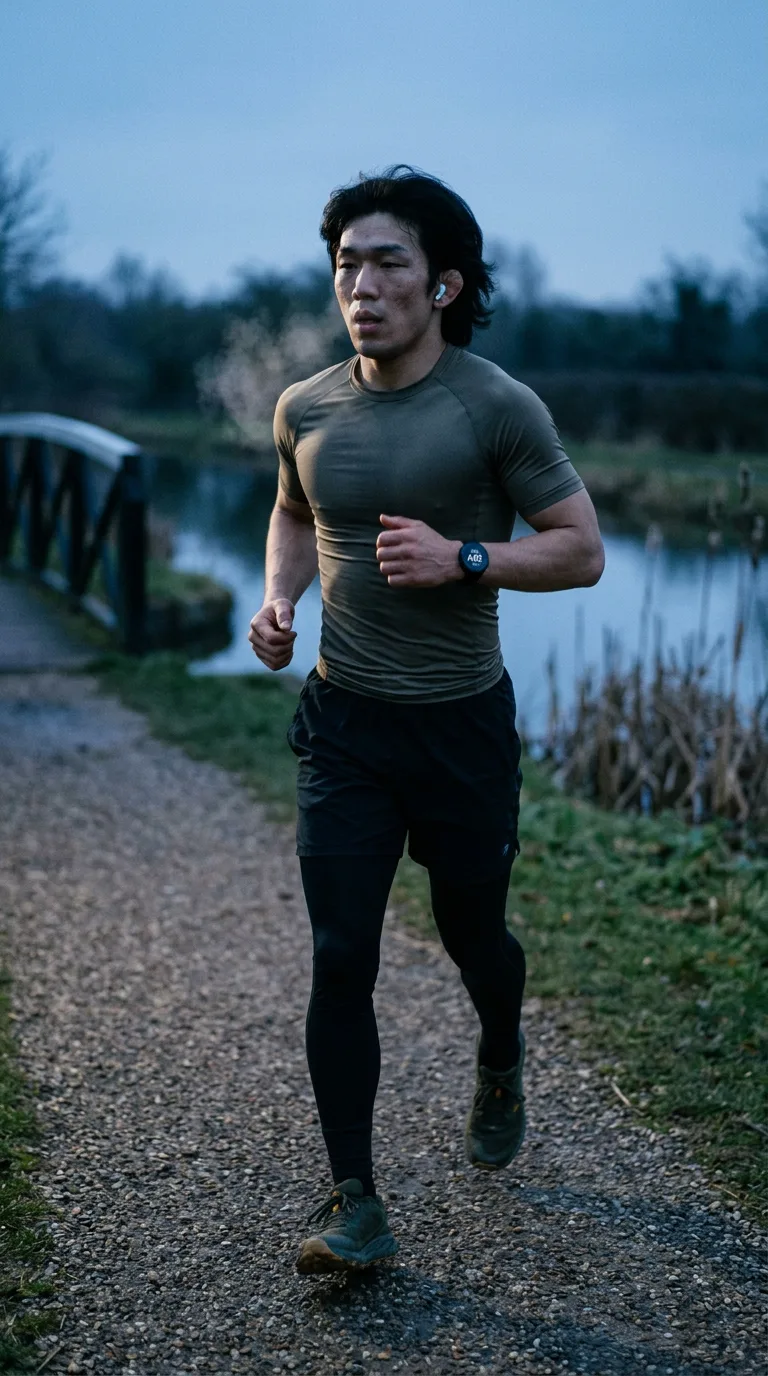
Rarest thing about him: HIV, undetectable on treatment — epic, 1 in 186
Season 0seed 437874966 · engine v10
Character card
lineage LJL8SV
His body-swap story
@marco.villagrana, wearing Marcus Ondelay, rolled the wheel on and woke up as Derek Cho, spent 4 minutes in him, then spun the wheel and woke up as Reginald Odom
—
Marcus Ondelay's kitchen smells like burnt toast and the particular staleness of a Sunday that started too early. You have had this body four minutes and already you know its habits without wanting to: the lazy eye drifting when tired, the way the fridge door sticks. Somewhere in the apartment a phone is buzzing with texts from people who need Marcus, who trust Marcus, who think Marcus is going to show up for them today. That's the trouble with him. He's twenty-two-hour-a-day *needed*. You didn't spin the wheel to be needed. You spun it to disappear into somebody for a while and feel the weight of a life that isn't yours to carry afterward. Four minutes in and the phone is already a leash. You set it face-down, walk to the counter where the site is open on a borrowed laptop, and you don't think about it any longer than that.
The wheel spins the way it always spins — no drama, just a wobble and a stop — and the middle of your day in El Paso, sun flat and white through venetian blinds, folds into the middle of somebody's afternoon eleven hundred miles and one time zone north.
You arrive mid-stride.
Not falling — the body catches itself, the way a body that trains for a living always catches itself, weight dropping onto the other foot before the brain has caught up to what happened to the first one. Cold slaps your throat on the inhale. Grey light, low and flat, canal water on your left throwing back a sky that hasn't decided yet whether it's dawn. Breath is fogging in front of you in a rhythm that isn't yours yet but that your lungs already know how to keep. A watch on the wrist buzzes — mile four, a split with no memory behind it — and small fine hairs of frost sit on the guardrail passing at your hip. You are 5'6" and dense with it, shoulders packed tighter than you're used to occupying, and there's a low ache in the side of your head that isn't pain exactly. Structural. Permanent-feeling. Like the ear has its own weather.
His earbuds are still feeding a podcast into skull that isn't listening. The shirt is doing what a wet-through shirt does at this temperature, which is stop pretending to warm anything.
And then — because you are still moving, because his foot is hitting gravel and his palm brushing against his own hip where the shorts have a drawstring worn smooth — it starts arriving.
The drawstring gives you basic training in Petawawa, the cold that was a different cold, an instructor's voice going hoarse at 5 a.m., Derek Cho at nineteen deciding this was going to be the thing that fixed him, the structure, the purpose, the version of himself his mother could tell people about without flinching. The watch face gives you four hundred mornings just like this one — the canal path becoming a kind of church, mile splits as confession, the quiet turning over of a mind that drinks too much and knows it and runs anyway, like the miles might outrun the mornings after. The earbud cord against his neck gives you a bar on Queen Street eight months ago, a stool, three fingers of rye going down like nothing, a text sent to a woman named Priya that he doesn't remember composing and regretted reading in the morning — not because it was cruel, because it was needy, and needy isn't a thing he lets himself be except when he's like that.
The cauliflower ear — you feel for it without meaning to, a habit his own hand has, checking it's still there — gives you a mat in a gym in Barrhaven, seventeen years old, a headlock held too long by a bigger kid, the slow bloom of it over weeks after, how his mother cried a little when she saw it and he told her it meant he was tough now, which felt true then and feels almost true still.
The dog tags aren't on him — this is a run, not a shift — but the ghost-weight of where they usually sit gives you the barracks anyway: the smell of it, boot polish and instant coffee, a locker with a photo taped inside the door — Priya laughing at something off-camera, sunglasses pushed up into her hair, a trip to Wasaga Beach two summers back. He loves her plainly, uncomplicatedly, in the specific way of a man who has decided not to examine why she's still around when he drinks the way he drinks. She knows about the virus. She stayed. That fact sits in his chest like something he still isn't sure he deserves, four years into treatment, the pills a small blue ritual each night he's never once let himself forget.
The waistband of the shorts, worn from thousands of mornings, gives you this morning specifically: the alarm at 5:12, the cold floor, pulling the compression shirt on sleeve first the way he always does, checking the watch charge, finding a toothpick in yesterday's jacket pocket out of habit though he has none in his mouth now, patting for it and coming up empty, a small flicker of missing something. Then out the door into air that bit at the wet ends of his hair, into a stride he's run ten thousand times, that his hips and calves and lungs know without consulting him at all — 5'6" of compact, overtrained muscle, one ear that will never sit right again, a body that is strong in the specific, narrow way of something built for a purpose and mostly used for it.
The rhythm of running itself is a memory too, maybe the oldest one in the legs: how it clears him, how it's the only forty minutes of the week he isn't thinking about Priya's face when she found the pill organizer, or the CO's voice, or whether he's going to be the guy who's fine until he isn't.
Your feet — his feet — hit the gravel one more time, and you let the pace carry you those last few strides into stillness at the rail, breath ragged, hands coming up in front of you the way a runner's hands do when the run is over and there's nothing left to do with them.
You look at them. Not soft. Not El Paso's hands. Knuckles a little raw from cold, a paleness under the nails you didn't have an hour ago in a different body entirely. You turn them over once, like checking they're real.
"Four minutes," you say out loud, to the canal, to nobody, watching your breath go up white into a sky that still hasn't decided what time of day it wants to be, "and already I miss the last guy."