David Kowalczyk
Fictional. Generated by AI — not a real person, and no likeness of one is intended.
41, electrician in New York · rolled by @marco.villagrana · card — no film
History
who has worn him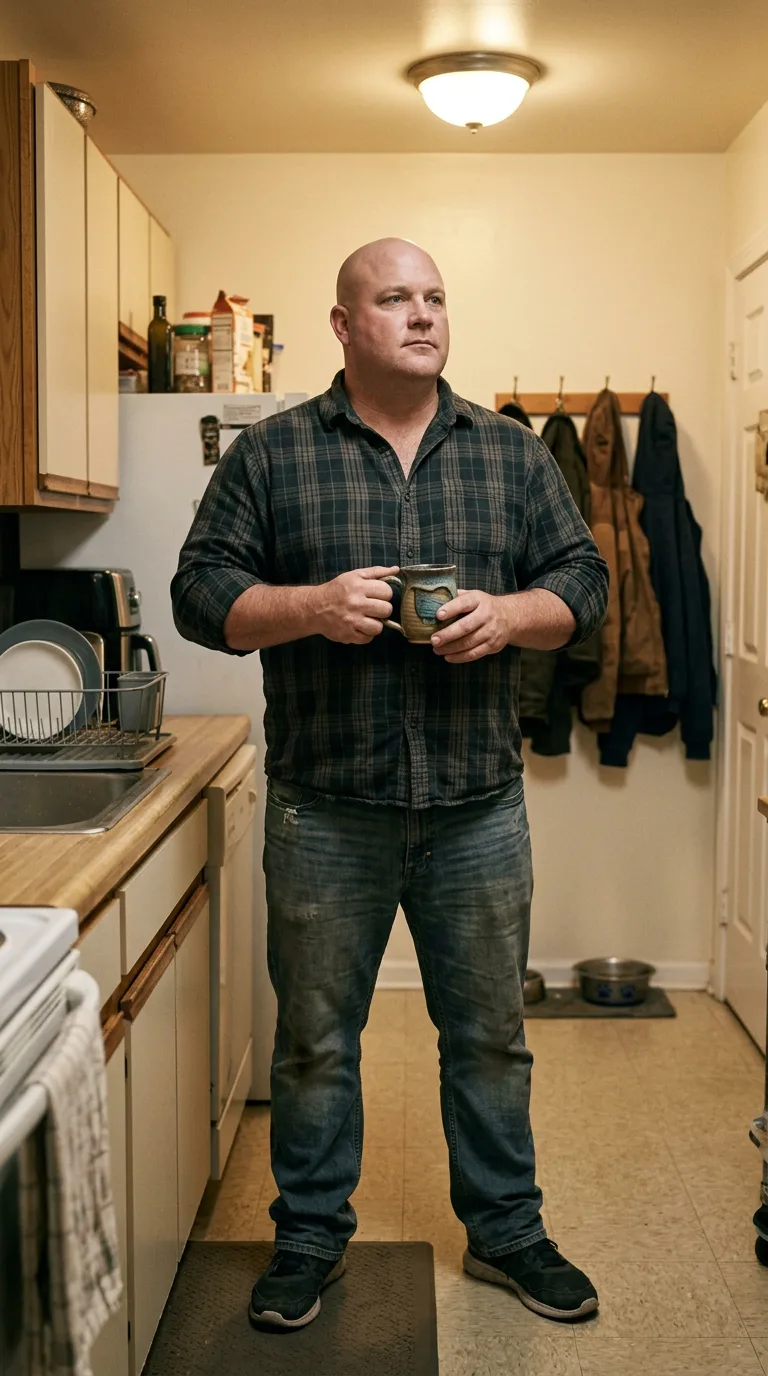
Rarest thing about him: Alone in a house that is not his — rare, 1 in 143
Season 0seed 196865731 · engine v10
Character card
lineage LJL8SV
His body-swap story
@marco.villagrana, wearing Andrés Solórzano, rolled the wheel on and woke up as David Kowalczyk, spent 4 minutes in him, then spun the wheel and woke up as Alejandro Cepeda
You are Andrés, three minutes old, and already bored of him.
That's the truth of it, sitting on the edge of somebody's break-room chair in Miami with the afternoon coming through the blinds in stripes. Skinny wrists. Gray hair that isn't yours, silver at the temple, catching light like it's proud of itself. You spun and got a waiter, thirty-six years scraped thin over restaurant shifts, and you sat down in him already knowing you wouldn't stay. Ninety-nine men before him and this is what the wheel does when you let it decide — it hands you a life with no weight in it, an apron folded on a hook, a tip jar with four dollars in it. There is nothing here to feel. You did not spin again for revenge or hunger or curiosity this time. You spun again because three minutes in a body like this is a kind of silence you can't stand, and the site is right there, the wheel glowing on the phone screen you don't own, and paying for it is easier than sitting still. You pay. You spin. The wheel turns your afternoon into somebody else's evening.
—
The mug is warm in both hands and then it isn't your hands.
You set it down — *his* hands set it down, thick-fingered, a callus riding the base of each one — into a ring already pressed into the counter's varnish, like the mug has lived there its whole life and only now come home. Weight drops onto you all at once: shoulders, gut, the particular give of a body that carries itself forward from the belly. Ceiling light overhead, warm and yellow. Coats on hooks by the door. A steel bowl, empty, waiting for a dog that is not yours and never will be. You did not decide to reach for the spoon in the third drawer. The hand already knew it was there.
—
The shirt is what opens first — flannel, soft from washing, a little tight across the shoulders where it always has been since the chemo weight came back different than it left. Plaid, green and black, third button gone loose in its hole because David never fixes that kind of thing. Sleeve by sleeve it comes back to you the way it came to him this morning, standing in his own bedroom two boroughs from here, pulling it over his head with the particular caution of a man checking, out of habit, whether his ribs still feel like his ribs. They do. They have for fourteen months. He checks anyway. Some habits outlive the reason for them.
His hands know this kitchen's drawer even though his eyes have never seen it, because David Kowalczyk has spent twenty years of Saturdays exactly like this one: doing somebody a favor, letting himself into a house with a key from under a flowerpot, feeding a dog for a guy from the union who's stuck in Poughkeepsie for his mother's hip replacement. The mug isn't his. The kitchen isn't his. He knows it anyway — knows which cabinet the dog food's in, knows the light switch in the hall sticks unless you push it up before you push it down, knows this because he is the kind of man neighbors call, has always been that man, long before the diagnosis made him briefly, uselessly generous with his remaining time and then just as briefly, uselessly aware he might not have run out of it after all.
The body under the shirt: forty-one and heavier than it used to be, muscle silted over with fat the way a river silts over a channel, still moving underneath. Bald head lit warm by the ceiling fixture. Green eyes that have looked at a CT scan and then looked away and then, six months later, looked at a clean one and cried in a hospital parking lot alone, because there was no one else's name to call. Calluses on both palms thick enough to grip live current a half-second longer than a smart man should. A knee that complains on the stairs. Hands that have run conduit through a hundred ceilings, that know a wire nut by feel in the dark, that took a beer out of this same brand of hand twelve years ago and put it down for good and never picked one back up, because he decided, once, calmly, the way he decides most things, and did not revisit it.
There is no wife in him, no ex whose name catches. There's a woman from the support group he sees sometimes for coffee, not that, just coffee, and a sister in Staten Island who calls every Sunday whether he answers or not. There's the sound of his own boots on scaffolding. There's the smell of this stranger's kitchen — coffee grounds, wet dog, dish soap — and under that, fainter, cigarettes he quit nine years before the diagnosis, a smell his body still sometimes invents on stressful days out of nothing at all.
He walks the hallway now, flicking switches ahead of himself out of that same old courtesy — leave a house lit better than you found it — and every socket he passes his hand near, his fingers twitch faint and involuntary toward the wall, wanting to test it, wanting to know if it's grounded right. Nobody's asked him to. He'd check anyway.
—
You stop in the hallway, under a light he just turned on for no one.
You look down at the hand — his hand, wide, scarred faint white across two knuckles from a nicked wire years back, nothing dramatic, just wear — and you turn it over slowly, like you could read something in the callus if you looked long enough.
"Okay," you say, out loud, to the empty house, in a voice that isn't the one you were using three minutes ago in Miami. "Okay."
You don't know yet how long you'll want this one. You never do until the wanting leaves.