Andrés Solórzano
Fictional. Generated by AI — not a real person, and no likeness of one is intended.
36, waiter in Miami · rolled by @marco.villagrana · card — no film
History
who has worn him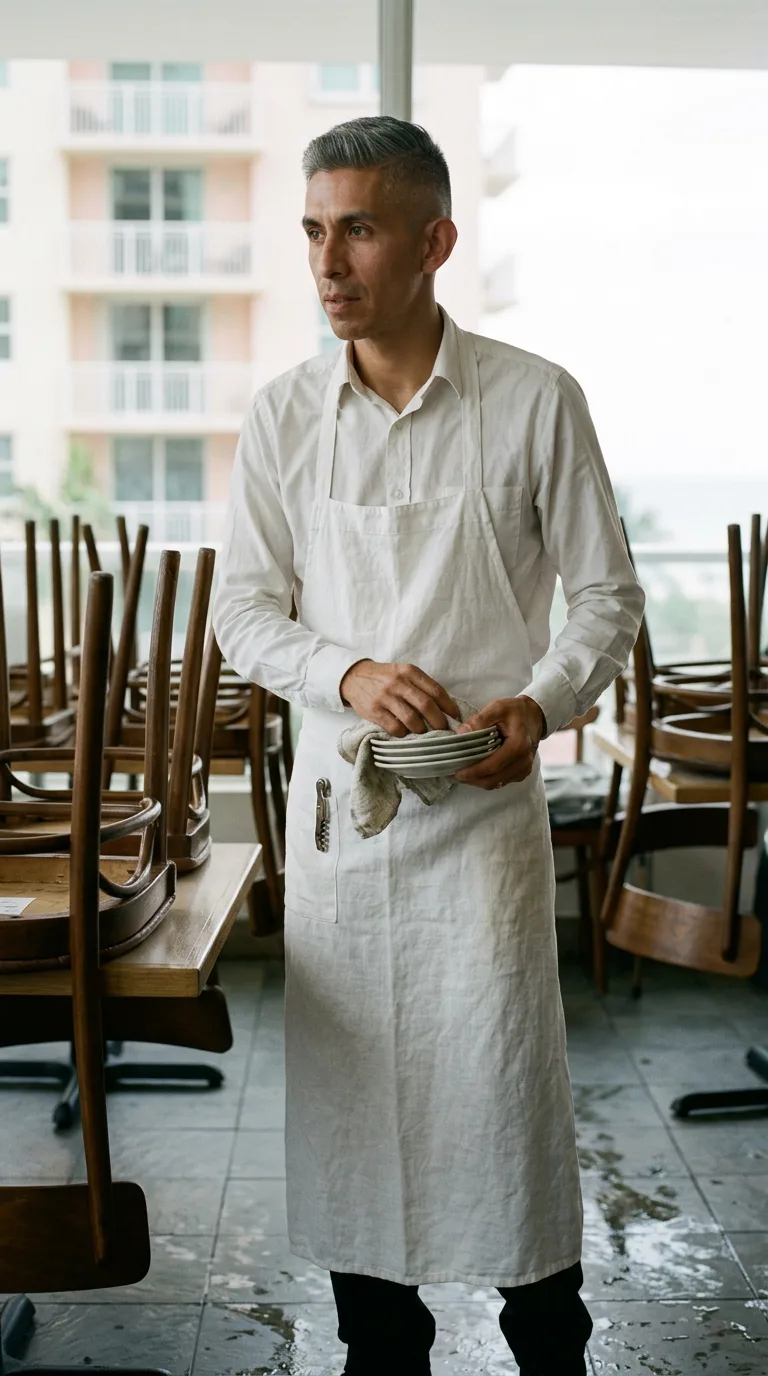
Rarest thing about him: Muslim — epic, 1 in 56
Season 0seed 1471336226 · engine v10
Character card
lineage LJL8SV
His body-swap story
@marco.villagrana, wearing Kenji Watabe, rolled the wheel on and woke up as Andrés Solórzano, spent 4 minutes in him, then spun the wheel and woke up as David Kowalczyk
The Detroit apartment smells like chlorine off his own skin, and you hate it, suddenly and completely, the way you have started hating the tail end of every single one of them. Kenji Watabe's knees ache from three minutes of standing at his own kitchen counter. Forty-five years old, a dad bod gone soft at the middle, black hair you never chose, a water treatment operator's tired shoulders. You only just arrived in him and already you are bored of him, the specific boredom of a man who tested his water samples for thirty-one years and will test them for thirty-one more, a life with no edge on it anywhere. Three minutes was long enough. You open the laptop still warm from whoever sat here last, and the wheel is already loaded, spinning colors under your — his — thick fingers, and you tell yourself this is the last one today, and you do not believe yourself, and you press it anyway.
The plates are cold through the dish towel and your hand — his hand — is already closing on them before you are anyone at all. Four small plates, rims wet, stacked wrong by one degree, and the correction happens on its own: fingers spreading a half-inch wider, weight shifting to the balls of the feet, before you have caught up to being here. You are thinner than you were a half-second ago, lighter all through the chest, and there is gray in the hair at your temples that you did not have and did not ask for. Somewhere behind your sternum something pulls, low and familiar, an old ache that is not yours yet and is already yours.
The apron strap is against the back of your neck and it gives you the morning: him standing in front of a mirror in an apartment with a pastel balcony and the ocean going white with haze past the rail, looping this same strap over his own head, adjusting it one-handed while the other hand held a piece of toast his youngest had already bitten into and abandoned on the counter. Three kids, or more — you feel the number without a face to put on it yet, feel it as noise in another room, a cartoon too loud, someone crying about a shoe. The shirt sleeve against your forearm gives you the rest of the dressing: buttons done by feel, cuffs folded twice because that's how his mother taught him, gum already going in his mouth before he left the bathroom, a fresh piece, because his mouth wants a cigarette at seven a.m. every single day of the six years since he quit and gum is the only thing that has ever answered that want.
The plates themselves give you the restaurant — years of it, the corkscrew clipped to your apron pocket swinging when you turn, the particular grain of this floor tile slicked with rain coming through the open wall of windows, the ocean-glare making everyone squint at two tables that don't exist yet because it is barely past opening. Your back gives you the rest, unprompted, ten years of trays and the low permanent burn low in the spine that never fully leaves, that you have learned to stand around rather than through. Your feet, planted on wet tile, give you standing here at 2 a.m. some other nights, this same floor lit orange, the last table gone home, hands moving through close-out on nobody's orders but muscle's.
The wedding band is small and plain and cold against the towel and it gives you her — not a face, not yet, just her voice from another room this morning, tired and warm at once, telling one of the kids to leave their father alone, he's got to go, and him laughing around the gum in his mouth, already halfway out the door. Mosque on Fridays when the schedule allows it, which it mostly doesn't, and the small guilt he carries about that, folded away like a napkin he means to use. No drink, ever, not once, not at anyone's wedding, not at his own. The ex who isn't there because there isn't one — just her, fifteen years of just her, and the specific tired peace of a marriage that stopped needing drama a long time ago.
You are thin under this apron, thinner than the body you left in the kitchen in Detroit, and thirty-six feels different in the knees than forty-five did, sharper, more particular, this ache sits higher, right at the base of the spine, a waiter's ache and not an old man's. The plates are still cold in your hand. You have not moved. Somewhere past the window the haze is starting to lift off the water.
You look down at your own hand — his hand, ringed, and thinner than you expected even having just felt it — and turn it over once, watching the light catch differently than it did in the kitchen three minutes and one whole city ago. Then you lift your eyes to the empty dining room like it's a camera, chewing without meaning to, and you say, out loud, to nobody, "Okay. Bien. Otra vez."