David Ahn
Fictional. Generated by AI — not a real person, and no likeness of one is intended.
34, operations manager in Philadelphia · rolled by @marco.villagrana · card — no film
History
who has worn him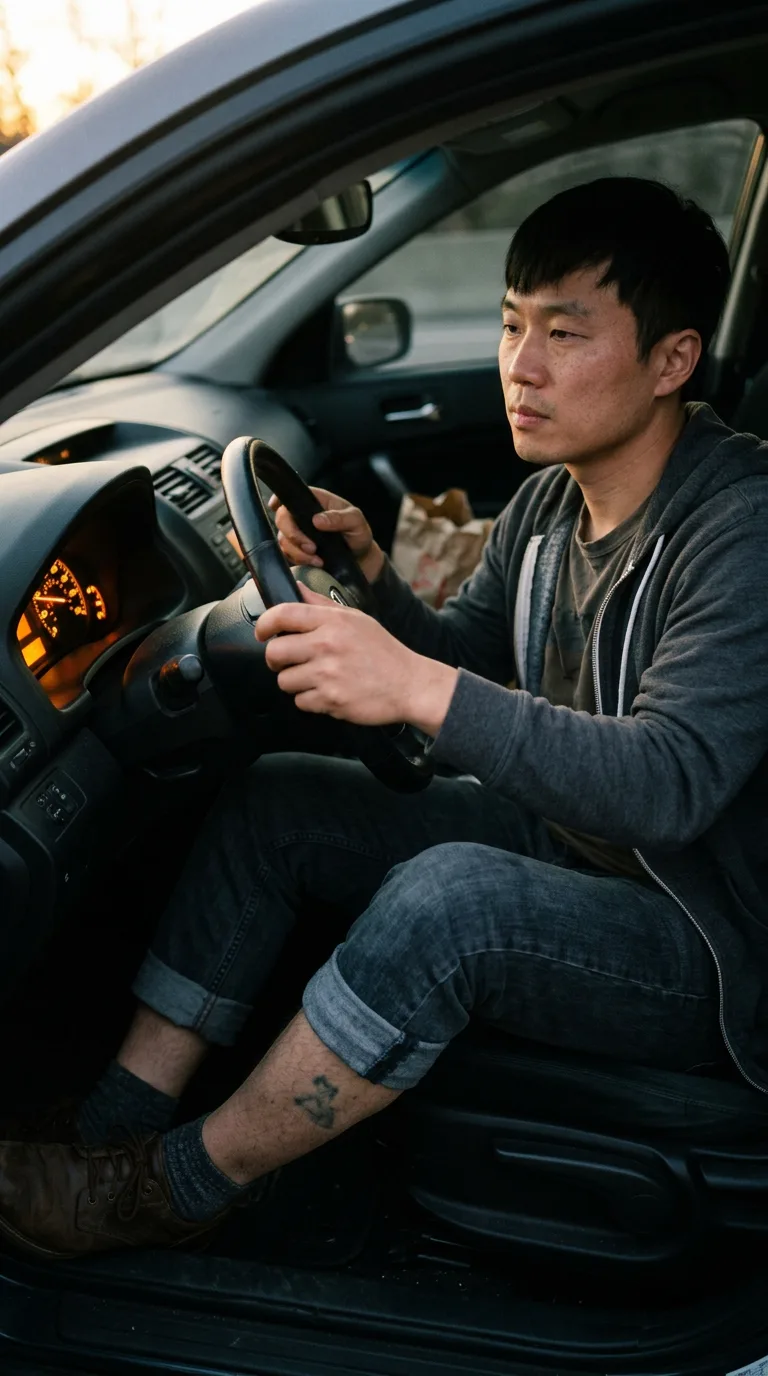
Rarest thing about him: Leg — common, 1 in 54
Season 1seed 627047131 · engine v11
Character card
lineage LJL8SV
His body-swap story
@marco.villagrana, wearing Trevor Lindqvist, rolled the wheel on and woke up as David Ahn, spent 4 minutes in him, then spun the wheel and woke up as Brett Solomon
Trevor Lindqvist's barracks room smells like gun oil and energy drink, and you have been sitting on the edge of his bunk for twenty-three hours and twenty-five minutes not wanting to be him anymore. It isn't the room. It isn't even the body, which is young and easy and does what you tell it. It's that you spent the whole day being looked at like you were still twenty-one and stupid, a first sergeant riding you about a checklist, and somewhere in the middle of that you remembered you don't have to take it. You have never had to take anything. There's a wheel for that. You open the laptop, and vessel.cards loads the way it always loads, patient, and you think: not boredom, not exactly — more like an itch behind Trevor's sternum that his own life can't reach. You spin.
The highway is dark and then it isn't a highway, it's a windshield and a dash glowing amber and two hands at ten and two that are not the hands you had a second ago — smaller, softer, a stranger's hands — and the car is already drifting, already correcting, one smooth pull back into the lane like muscle memory older than you are. You feel his foot ease off the gas without your telling it to. The signal clicks on, green arrow flashing for an exit ramp that means nothing to you, and you let your — his — hands come down off the wheel and resettle lower, ten and four, the grip loosening the way a man's grip loosens three miles from a bed he's slept in a thousand times. Somewhere behind you a paper bag of takeout shifts on the passenger seat, and the smell of it — sesame oil, something fried — reaches you a half second before anything else does.
That smell is the first key. It opens onto a Tuesday, some Tuesday, any Tuesday: him picking up the same order from the same counter on Passyunk because the owner knows his face and doesn't make him repeat it, and the small, unremarkable comfort of being known that little bit. You didn't ask for that memory. It just came, riding in on fried garlic and sesame, and it isn't yours, it's his, warm and small and already fading like a radio station losing signal.
The steering wheel gives you more. Ten and two, hands at rest — and under your palms you feel how long these hands have known this exact wheel, this exact commute, the on-ramp by the scrapyard, the merge everyone in this city does wrong. Ops manager hands. You feel the mezzanine walkway before you feel anything else about the job — steel grating underfoot, forty feet above a floor of conveyor belts and pallet jacks and the particular roar distribution centers have instead of quiet, and him up there twice a shift with a clipboard, watching the flow like it's a thing he's proud of even though nobody thanks him for it. A promotion four years back that his mother, on the phone, treated like it was nothing, because in her arithmetic nothing beats a nephew who's a doctor, and something in his chest tightened and stayed tightened a little, permanently, the way a rope frays instead of snapping.
The clothes come next, because the clothes are always next — the gray zip hoodie is soft with age against skin that's clean-shaven, average, thirty-four and unbothered by any particular ache, a body that runs on schedule, sleeps enough, eats too much takeout and knows it. This morning — no, not this morning, some morning, they blur — pulling the hoodie over a T-shirt already worn thin at the collar, jeans cuffed twice because he never remembers to hem them, the same brown boots he's had resoled once already. Getting dressed for him has never been a decision. It's a small kindness he does himself and doesn't examine.
Then his ankle, where it rests against the door panel, gives you the worst of it and the most honest: a tattoo, small, badly done, a compass rose that a friend's cousin inked in someone's kitchen the year he turned twenty-four, everyone laughing, a little drunk on someone else's cheap wine because he himself never drinks, watching the needle go in wrong and knowing it was wrong even as it happened and being too embarrassed to say so. He's regretted it in the mirror maybe four hundred times since. He's never once gotten it removed, out of something between stubbornness and a private, superstitious feeling that erasing it would be erasing that whole dumb, warm night, the last one before that friend moved to Seattle and they stopped really talking. Buddhist enough to believe you don't get to edit what already happened. Just enough to let the ugly little compass stay where it pointed nowhere useful, on purpose.
You feel the wanting under all of it now — a whole life's worth of ordinary appetite, quiet and undramatic: nobody waiting up for him, no ex who left a mark, no one he's rushing home to except maybe a couch and a show he's five episodes behind on. A little money put by that he doesn't spend and doesn't talk about. A body that has never had a cigarette or a drink and doesn't miss either. It should feel like nothing. It feels, from inside it, like enough.
You look down. His hands, your hands now, are back at the wheel, ten and two, dash light pooling gold across the knuckles, and you turn one over slowly to look at the palm like it might have your old name written on it somewhere.
"Okay," you say, out loud, to the empty car, in a voice that isn't Trevor's and isn't yours either — it's David's, and it comes out steadier than you expected. "Okay."
The signal is still ticking for the wrong exit. You don't turn it off yet.