Brett Solomon
Fictional. Generated by AI — not a real person, and no likeness of one is intended.
29, software engineer in Detroit · rolled by @marco.villagrana · card — no film
History
who has worn him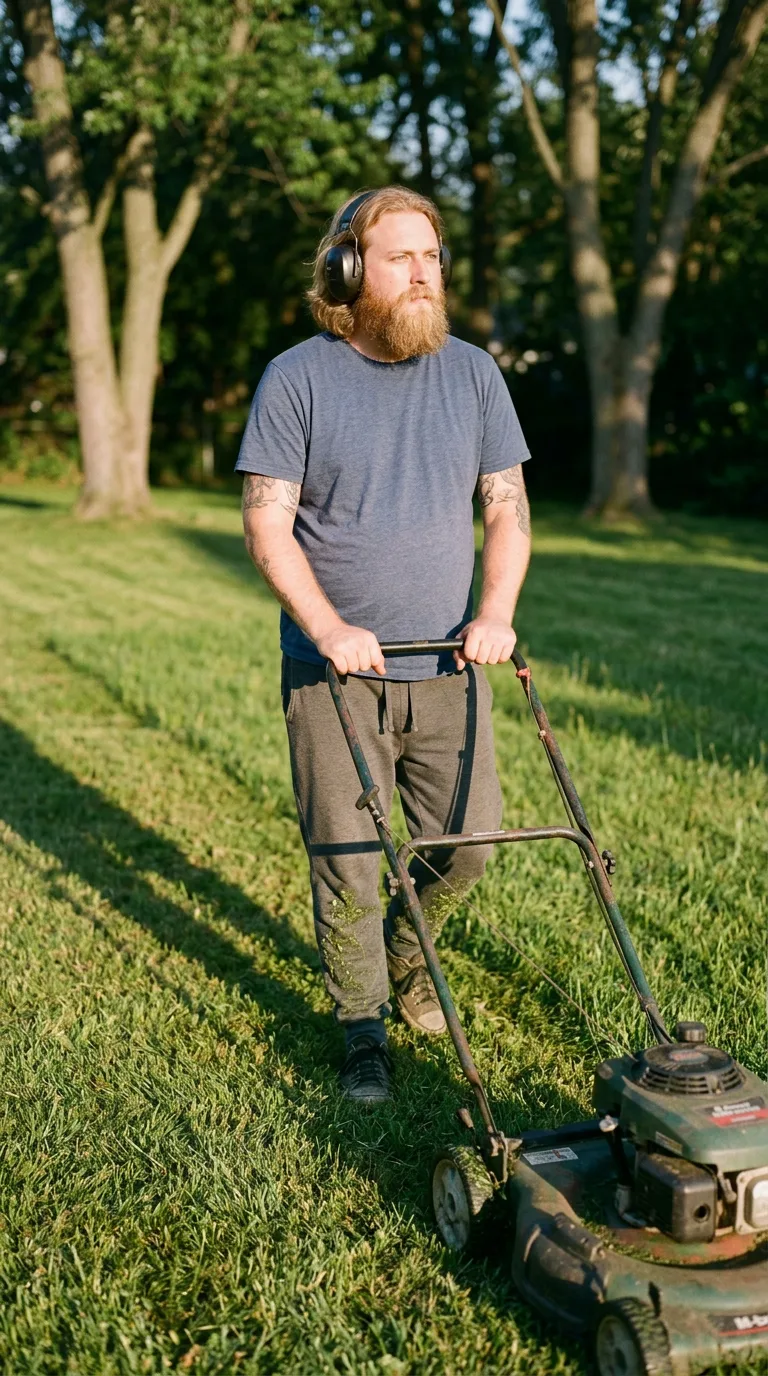
Rarest thing about him: Long beard — common, 1 in 76
Season 1seed 1618202909 · engine v11
Character card
lineage LJL8SV
His body-swap story
@marco.villagrana, wearing David Ahn, rolled the wheel on and woke up as Brett Solomon, spent 4 minutes in him, then spun the wheel and woke up as Ramón Achebal
—
You are David Ahn for three minutes, and three minutes is long enough to know it isn't going to work. Philadelphia's early evening light comes flat through the blinds of an apartment you didn't choose, onto furniture you didn't pick, and you stand there in his ironed shirt still smelling faintly of someone else's detergent, and the operations manager's phone buzzes on the counter with a message from a woman named Grace who wants to know about dinner, and you feel nothing about her at all. That's the tell. Not boredom exactly — you've been bored in bodies before and stayed anyway. This is closer to hunger circling back around to itself. You paid for David Ahn's whole life and got a man who reconciles shipping invoices and likes her fine and you already know, standing in his kitchen, that you are going to open the laptop on the counter and go back to the wheel, because three minutes was enough to prove this one won't fill anything up. You set the phone down without answering it. That's the last thing David Ahn's hands do on their own.
The mower's engine drops a note under you, coughs, catches again, and you are behind the bar of it with grass clippings stinging warm against two shins that are not the ones you had a second ago. Thicker legs. More weight riding forward through the hips. The earmuff that had slipped off the left ear is still swinging on its band, and the hand nearest it — broad, sunburned across the knuckles, a green smear of chlorophyll under one thumbnail — comes up on its own, unhurried, and settles it back over the ear like it does this every evening, because it does. The next pass of the mower runs dead straight. Behind you, all the earlier rows wobble like something drawn by a nervous hand. You are taller in a way that isn't about height — wider, planted, a gut riding easy over the drawstring of gray sweatpants gone dark at the shins with wet cuttings. The sun is doing something gold and low through the trees that Philadelphia's sky, three minutes ago, wasn't doing at all. Somewhere it is later here than it was there, though nothing announces that; the light just is what it is, and it is good light, early evening in a season that still has warmth left in it.
The bar under your palms is old aluminum, foam grip worn to the shape of a hand that has pushed this exact mower down this exact yard for six summers, and the memory comes up through your palms before it comes up anywhere else: buying it used off a neighbor for sixty dollars the second month after closing on the house, the neighbor saying *it's got some life in it*, and it did, it does, it starts on the third pull nine times out of ten and dies once a season out of spite. Grass clippings are wet-green and cut-sweet in your nose, cut with gasoline and cut with the specific mineral smell of Michigan clay under too-thin topsoil, and your jaw is already working — gum, spearmint, going soft and flavorless between molars, a motion so old it isn't a decision, just weather.
The shirt against your back gives you the morning it went on: gray hoodie left unzipped over it on purpose because it wasn't cold yet, just gray-skied the way Detroit is gray-skied on the good days too, and pulling the blue shirt over his head had been the third shirt he tried, the first two smelling like they needed a wash he didn't feel like doing, and he'd stood in the bathroom mirror a second too long not looking at his stomach so much as just seeing it, the way you see weather. Twenty-nine and a dad bod and no kids to show for the dad part, just four years at a standing desk and takeout because cooking for one felt like a chore invented to make him feel the one-ness of it. Two monitors, cold coffee going skinned-over by ten, code that made sense to him in a way almost nothing else lately did. He is good at the job. He does not love the job. He loves, in a smaller and more complicated way than he'd admit to anyone, that the job pays enough that money is one of the few rooms in his life with no furniture crowded into it — nothing to trip on there, which is its own kind of loneliness now that you're standing in the middle of it.
There is a girlfriend, Renee, and the memory of her comes in softer, through the drawstring his fingers keep absently checking is still tied — she is easy and kind and neither of you has said the word *love* yet in nine months, and some nights he lies next to her running a kind of ledger he's ashamed of, comparing the quiet of this to a noise he used to have. That noise had a name — Casey — three years gone now, married to somebody else in Chicago, and there is a version of an argument that still runs sometimes behind his eyes late at night, unfinished, the one that ended it, and he never got to say the thing he'd have said if he'd been braver at twenty-six. Casey is the room in this house he never really moved his furniture out of. Renee doesn't know she's living around it. You feel it now the way you feel the gum, unbidden — a small ache with a shape to it, worn smooth from handling.
His hands know this mower's pull cord, know how to keep the bar from bucking on the rough patch by the fence, know the particular tension of the push where the yard humps up near the old maple stump. His knees ache faintly, always, a low twenty-nine-year-old ache that's really a thirty-five-year-old ache arrived early on a frame that sits too much. His shoulders are strong in the low, unglamorous way of a man who mows his own half-acre out of some stubbornness about not paying a service, even though five hundred thousand dollars sits patient in an index fund and could pay for lawn care every week for the rest of his life without him noticing the withdrawal. He has never smoked anything, never wanted to, doesn't drink, has never once needed a reason to say no to a beer at a barbecue, and the gum going warm and spent in his back molars is the entire architecture of his vices.
You look down at the hand still on the bar. Not the practiced motion this time — you make it look, the way he never would, at the sunburn line, the chlorophyll stain, the gum-callused set of the jaw reflected in nothing you can see but feel. The mower idles rough under your palm, waiting.
"Nice night," you say, to no one, in his voice, and it comes out easy, a little surprised at its own easiness, and you don't know yet if that's the last thing he'll ever say about the weather or the first of a thousand more, and neither do you.