Darnell Whitcomb
Fictional. Generated by AI — not a real person, and no likeness of one is intended.
41, lifeguard in Small-town Ohio · rolled by @colin.hasbrook · card — no film
History
who has worn him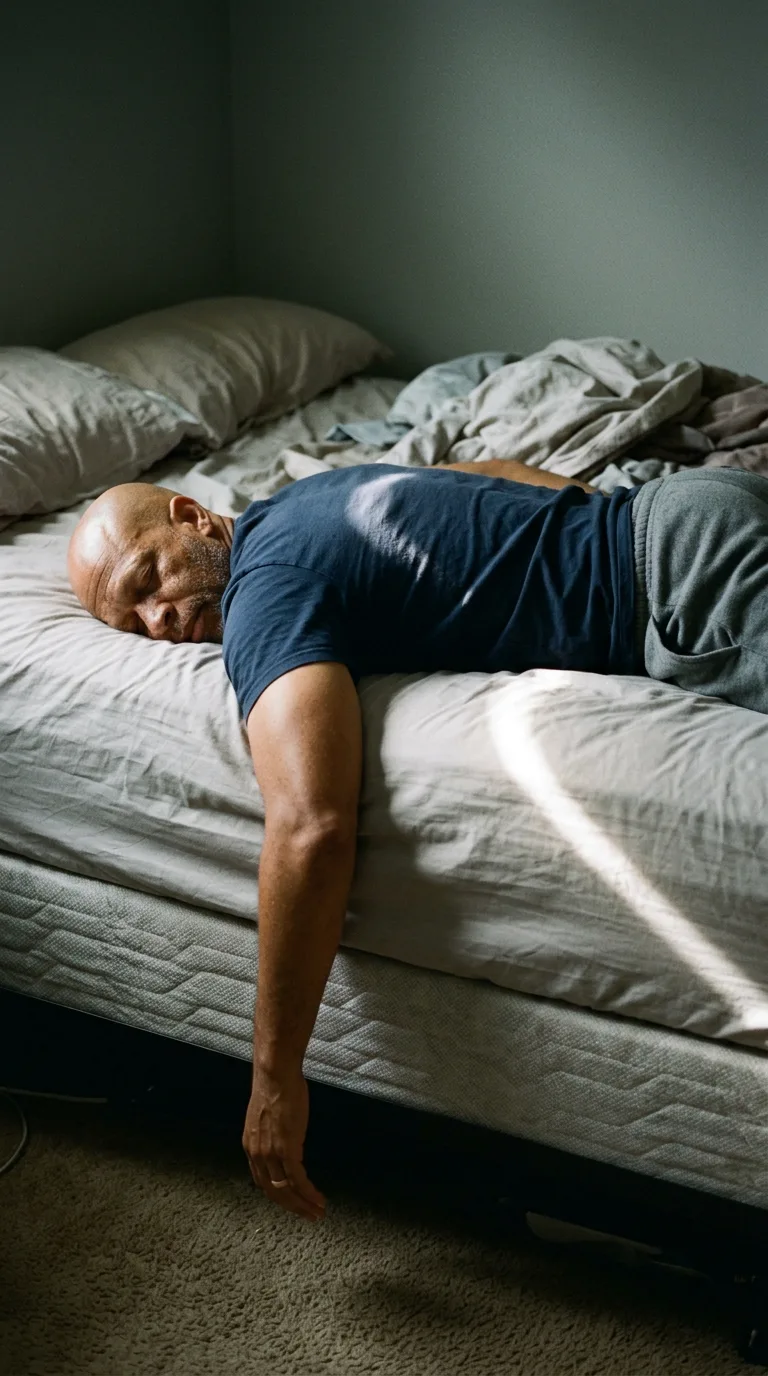
Rarest thing about him: Muslim — rare, 1 in 21
Season 0seed 1359189344 · engine v10
Character card
lineage 2NZHHJ
His body-swap story
@colin.hasbrook, wearing Manny Corvello, rolled the wheel on and woke up as Darnell Whitcomb, spent under a minute in him, then spun the wheel and woke up as Bryce Halloran
The paint smell never leaves this body's hands, no matter how long since the last job. That's the first thing you notice tonight, standing in the Atlanta kitchen at eleven at night, gray hair damp at the temple, knees aching the particular ache of a man who has spent thirty years on ladders. You are 55 in this skin, five-three, a body built low and wide and strong, and you have liked it fine. You liked the wife who left casseroles at the neighbor's door for you last winter, liked the grandkids who call this man Papi. But you have been him less than a minute — sixty seconds of a whole life you only half remember owning — and already the itch is back. It isn't boredom exactly. It's that the wheel is sitting open on the laptop screen, glowing, and you never once in 393 spins made yourself stop before the itch got answered. You tell yourself it's just to see. You put your still-tacky fingers on the trackpad and spin.
The stoplight-town air doesn't exist yet, not for you, but the room does: dim, a seam of streetlight cut sideways across the sheets, and a body that was, one breath ago, someone else's problem entirely. You come into him mid-exhale, face down, one arm slung off the mattress into the dark like it had given up on being part of him. The next breath is yours and it goes even, deliberate, and the arm lifts itself without your really deciding it should, folding up onto his chest with the other, hands stacked there like a man laid out for a viewing. He never slept like that. You don't know that yet. You only know the sheets are cheap cotton gone soft from washing, and that his back complains the second his spine settles flat — a low, old, familiar complaint, the kind a body stops mentioning after enough years.
The shirt is the first thing that talks to you. Navy, worn thin at the collar, and touching it brings a flash: him pulling it over his head that morning — his morning, hours behind this one — sun already hard on Route 9, the diner's OPEN sign dark and dusty in its window the way it's been dark for three years. Sleeve by sleeve, the memory unspools: he'd stood in this same room buttoning nothing because there was nothing to button, just the shirt, then the red trunks over it for his shift, whistle lanyard looped twice around his knuckles before it went over his head, a habit from a thousand mornings. The lanyard's plastic clip is worn smooth where his thumb rubs it while he watches the water. That's Marcus — no, not Marcus, that's someone else's life bleeding in — this one's name comes up through the mattress itself, through the tan line his ring finger still wears like an apology: Darnell. Darnell Whitcomb, thirty-two years in this town, seven of them on this particular stand, watching the same stretch of a public pool that used to be a man-made lake before the county drained half of it for algae.
The wedding band is gone but the groove it left isn't, and touching that bare stripe of skin brings the marriage all at once, too much at once — Aaliyah's laugh in a kitchen that smelled like turmeric and rice, three kids stacked on a couch watching something too loud, the fight that wasn't really about money but became about money, the year he stopped drinking because she asked him to and kept not-drinking after she left because it had stopped being about her by then. He prays fajr most mornings before the sun's even thought about the lake, knees slower to fold than they used to be, and it is the one part of the day nobody at the pool ever sees. Under your palms — his palms — you feel what his body knows without asking: the whistle's weight on the cord, the exact tension in a rescue tube's strap, the way his knees crack going down the lifeguard chair ladder, four thousand times done so it isn't a thought anymore, just a body moving through a shape it trusts.
His back aches in the specific architecture of a man who has climbed a metal chair for two decades — low, right side, worse when it's about to storm. His fingers, resting now on his sternum in this posture he's never once chosen, twitch faintly: not fear, just habit, the drumming he does against the chair's armrest; against the diner counter when it was still open; against the steering wheel waiting for kids who don't call as much since the divorce. Freckles map his nose and cheeks like something inherited, and somewhere in the memory-flood is his mother's hand touching them when he was young enough to still let her.
You lie there a moment longer in his folded hands, in his ache, in the whole quiet unremarkable weight of him — a decent man, tired in the ordinary way, worth more sitting in a bank than he'll ever spend, who has not touched a drink in six years and never smoked and prays when no one's looking and has three kids who love him and an ex-wife who, if you're honest, still sometimes crosses his mind before he falls asleep.
You lift your borrowed hands off your chest and look at them in the dark — his hands, blunt-fingered, a paler seam where a ring used to sit — turning them over slow, like you could read something in the freckled backs of them.
"Not you tonight," you say to the empty room, low, almost apologetic, and you don't know yet if you mean it as a decision or a confession.