Danny Osaki
Fictional. Generated by AI — not a real person, and no likeness of one is intended.
27, glazier in Pittsburgh · rolled by @colin.hasbrook · card — no film
History
who has worn him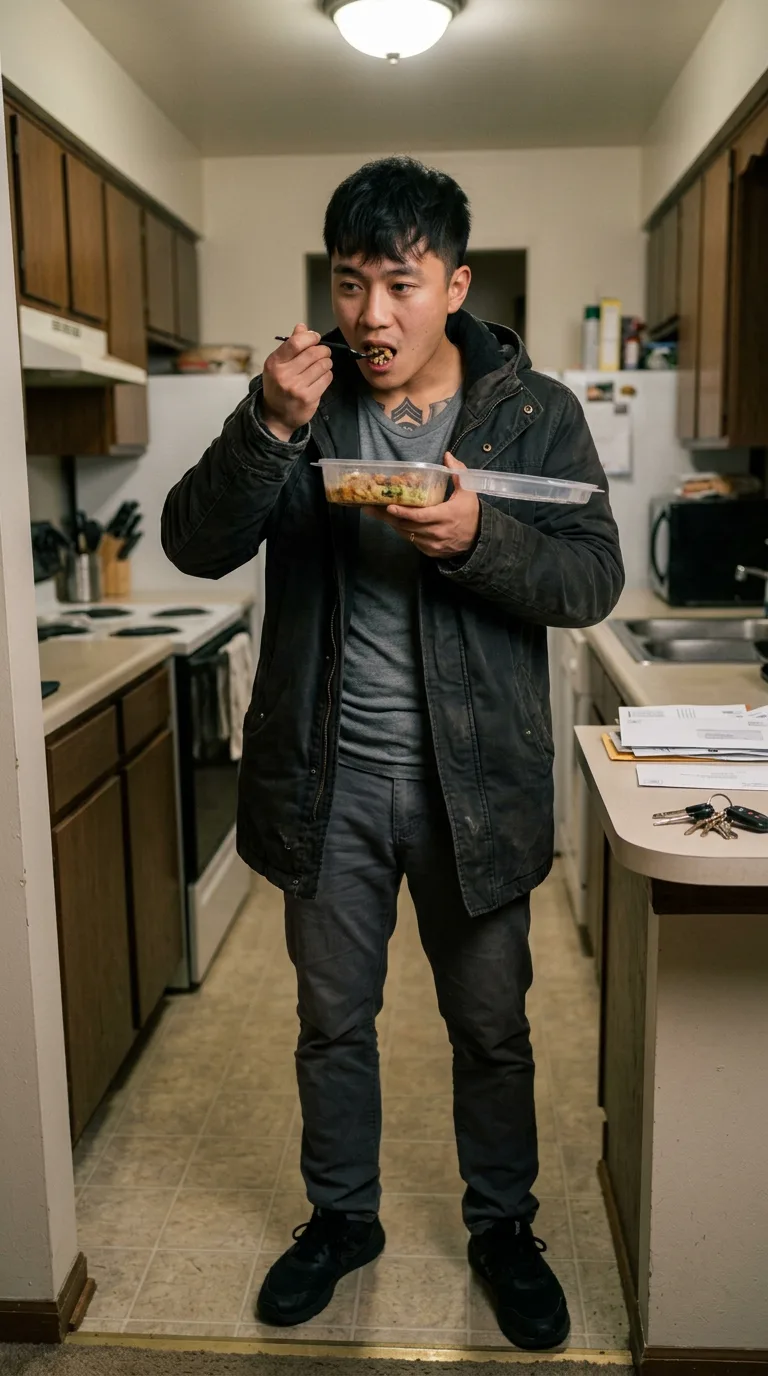
Rarest thing about him: One, chest — epic, 1 in 64
Season 0seed 1405019270 · engine v10
Character card
lineage 2NZHHJ
His body-swap story
@colin.hasbrook, wearing Danny Okamura, rolled the wheel on and woke up as Danny Osaki, spent 3 minutes in him, then spun the wheel and woke up as Kyle Pruett
You are standing in a Houston chimney, or rather beside one, forty-five years old and smelling of soot that never fully washes out of a nose that broke wrong twenty years ago and healed wronger. It is the middle of the day. The client's kid is watching you from the kitchen doorway with the specific boredom of someone who has been told to keep an eye on the strange man on the ladder, and you are so tired of this body's knees, this body's small failing eyesight, the ache that sits behind your sternum for no reason a doctor has ever named. You have been him less than a minute, by the wheel's count, and that is the whole problem — you spun into him last time already knowing you would not stay. Forty-eight is a number you are almost proud of and almost ashamed of. You wipe your hand on your coveralls, take out your phone with the fingers that are not yours, and open vessel.cards while the kid watches, and you spin because you always spin, because the wanting came back before the soot did.
The wheel does what it does. There is no seam, no falling, no travel. There is a fork, halfway to a mouth, and then there is you holding it instead.
You are 5'7" now, which is a smaller thing to be than you were a second ago, and the light in this kitchen is going that particular late-afternoon amber that means the day outside the window is nearly finished, though somehow you know without being told that where you just were it had not even reached noon. The fork is loaded with something cold — rice, going stiff — and your arm, thinner than the last one, brings it the rest of the way up out of habit that isn't yours yet, and you eat it, because the body knows what to do with a fork even when you don't know what to do with the body. You set it down. You shrug the coat off your shoulders — it's heavy, canvas, streaked pale with something dried and white down one sleeve — and you sit at the little table by the window because your knees, new knees, want to, and you keep eating in even mouthfuls, looking at nothing in the black glass where your own reflection should be and isn't recognizable yet.
The coat is the first thing. It comes back through your hands as you fold it over the chair — a job from that morning, glass in for a coffee shop on a street with a hill so steep the ladder truck had to park sideways, the ache of holding a hundred and eighty pounds of tempered pane on a suction lifter with two other guys and a wind coming off the river that wanted the whole sheet like a sail. The satisfaction of setting it, dead level, into a frame that had been empty and boarded for a month. The paint fleck on the sleeve is from a window he did in the spring for a Vietnamese bakery, and getting that job had felt like something, like the neighborhood trusted him now, and it had made him grin the whole drive home.
The shirt against your back gives you the morning: gray tee first, then the long-sleeve pulled on over it because May in Pittsburgh doesn't trust itself, cotton snagging a second on the fringe of his hair before it settles, and beneath the collar his fingers had touched the tattoo without thinking — chevrons, his brother-in-law's rank, inked the week the man shipped out and never fully came back the same, and Danny had gotten it not for himself but so there'd be one person in the family who wore it visibly, who didn't just keep it folded in a drawer. His wife had traced it once with her thumb in bed and said nothing, and that had been enough.
The ring is the deepest one. Left hand, plain band, and through it comes a wedding in a rented hall with folding chairs and too much rice thrown by an uncle who didn't understand the difference between weddings and funerals, and her laugh across the room at something unrelated to him, and three years since of small kitchens and rent that's always a little too much and a couch they bought used that they still love. No children, and some nights that sits between them heavier than others, but not tonight, not in this flash — tonight there is just her voice from another room he cannot yet place, and the sound of her moving somewhere close, unaware.
The floor under his sneakers gives him the walk home, the public stairs between two backyards with the wet leaves gone slick and dark, a shortcut he's taken four hundred times, counting steps without meaning to, the way his body has learned this whole neighborhood by feel: which storefront pane cracked and paid for the new deadbolt, which client tips, which one calls the union rep for fun. None of it is dramatic. None of it needs to be. It's just a life someone built out of glass and small routes home, five foot seven of it, average and unhurt and quietly whole, incense probably burning low somewhere on a shelf he hasn't looked at yet, a man who quit drinking so long ago he doesn't remember deciding to.
The container is empty. You set the fork down inside it, softly, the way he always does, and look down at your hand on the plastic rim — thinner fingers, a callus at the base of the thumb that isn't from any chimney, the ring catching the kitchen light.
You turn the hand over once, like checking it's real, and lift your eyes to the dark window where his face should be looking back and instead it's yours now, whoever that is tonight.
"Forty-eight," you say to the glass, and you don't know yet if that's a number you're proud of.