Daniel Fujita
Fictional. Generated by AI — not a real person, and no likeness of one is intended.
32, waiter in Pittsburgh · rolled by @marco.villagrana · card — no film
History
who has worn him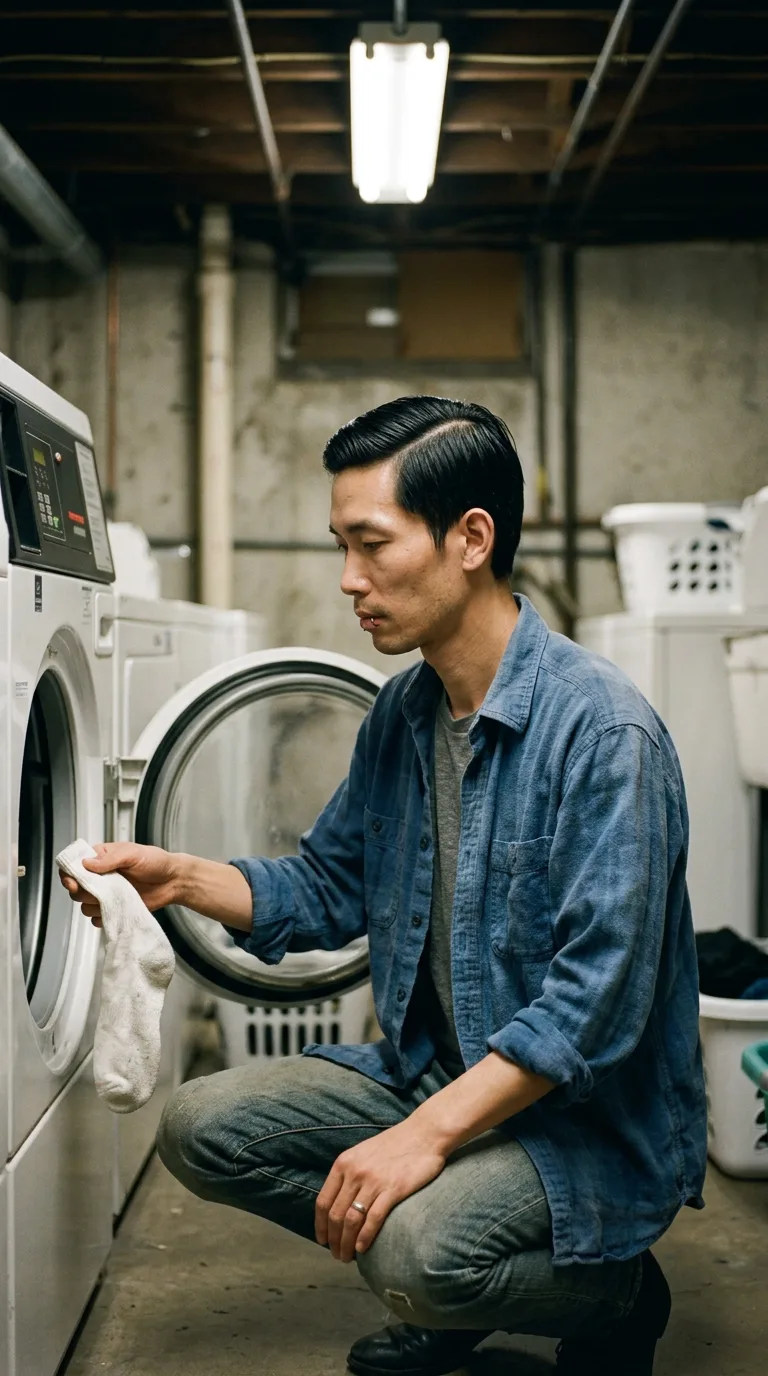
Rarest thing about him: Lip — legendary, 1 in 139
Season 0seed 613327603 · engine v10
Character card
lineage LJL8SV
His body-swap story
@marco.villagrana, wearing Jaylen Osei, rolled the wheel on and woke up as Daniel Fujita, spent 4 minutes in him, then spun the wheel and woke up as Isaías Marrufo
You are Jaylen, standing in his kitchen, and the problem is the four minutes.
You spun into him an hour ago — nineteen, quick on his feet, freckles across a nose that has never been broken, the kind of body that could run into a burning building and mean it. You had thought: this one you'd keep. You had thought: this one you'd actually *live in*, not just wear through a card and a highlight reel. You made a sandwich with his hands. You looked at his reflection in the microwave door and felt something almost like want. Then you stood there for the rest of the hour with nothing to do, because his shift doesn't start until morning and his phone is full of people who love a boy who isn't in there anymore, and the good body, it turns out, is not the same thing as the good four minutes. You are already bored inside something enviable. That is the thing nobody warns you about at ninety-one spins: boredom does not respect what a man is worth.
So you open the laptop. Vessel.cards loads the way it always does, patient, gray, the wheel already spinning lazily on its own like it's been waiting. You do not think about it as a decision. You think about it as scratching something.
You spin.
You are crouched. Fluorescent light, humming, too close overhead. Concrete under your knees through denim. A sock, damp-warm, in your right hand, and a dryer drum still turning its last few rotations in front of your face, ticking a button against the metal. Your body is narrower than it was a second ago, lighter in the shoulders, the balance of it different — less spring in the legs, more give in the lower back. A lip ring clicks faintly against your teeth when your jaw moves. You pull the sock free and drop it into the basket at your hip without deciding to; the body already knows the motion, and your hand is just riding along on it.
The dryer buzzer goes off, tinny and final, and you pull the rest of the load out warm and heavy and it starts — not memory arriving all at once but arriving through your fingers, the way the facts said it would.
The warmth of the load: married four years, this exact basement, a landlord who never sends anyone about the light fixture. You fold on autopilot, corners squaring themselves, a shirt's sleeves crossing over its chest in one motion — Daniel does this a hundred nights a year, closing side stations, snapping tablecloths, and his hands do the folding without him, the way they turn his wedding band without him, a habit from somewhere under thinking. Upstairs the drawer is full of eight shirts crumpled into rope-shapes, hers, not his — she never folds, he always has, this is one of the small quiet unfairnesses of the marriage that he has decided not to mind out loud.
Your own shirt — his shirt, blue, soft with washing — gives you the morning he put it on: sleeve, sleeve, the top three buttons left open because the collar sits wrong closed, a glance in a bathroom mirror at a face he has stopped really looking at, the migraine starting behind the left eye already, small, a coin of pressure, the kind he has learned to work through a whole shift with because six tables don't care. He'd had two cigarettes on the back step before his shift, watching the neighbor's stairs go dark with wet leaves, and thought about her — not his wife, the other one, the one from before, whose name still sits in his phone under a joke only the two of them ever got — and put the phone face-down and gone inside because that thought costs him nothing to have and everything to keep having.
The apron, hanging by the dryer where he left it last night to dry a coffee stain: the restaurant comes up whole, chairs upside down on tables at closing, vinegar-water in a bucket, a manager who likes him fine and doesn't know his last name is Fujita and not something easier. Eleven years of tables. He is good at it in the specific tired way of someone who has made peace with being good at something that costs him nothing extra to be great at.
The floor under your knees: skinny legs, thirty-two years in them, no injuries worth naming, just the ordinary ache of standing a double. Nicotine wants a cigarette right now, mildly, the way it always does after any small task finishes. The migraine is a half-day gone but leaves a used feeling behind the eye, like the room after everyone's left it.
You look down. Basket of warm laundry, his hand still curled from the last sock, wedding band bright under the fluorescent tube.
You turn the hand over once, slowly, the way he does without thinking, and you don't stop yourself, because it isn't your habit yet, it's his, riding up through the fingers like the rest of him.
You look up into the light and say, to no one, to the empty laundry room, "Whose turn was it."