Dale Whitehorse
Fictional. Generated by AI — not a real person, and no likeness of one is intended.
39, chief executive in Small-town Ohio · rolled by @bryce.kellerman · card — no film
History
who has worn him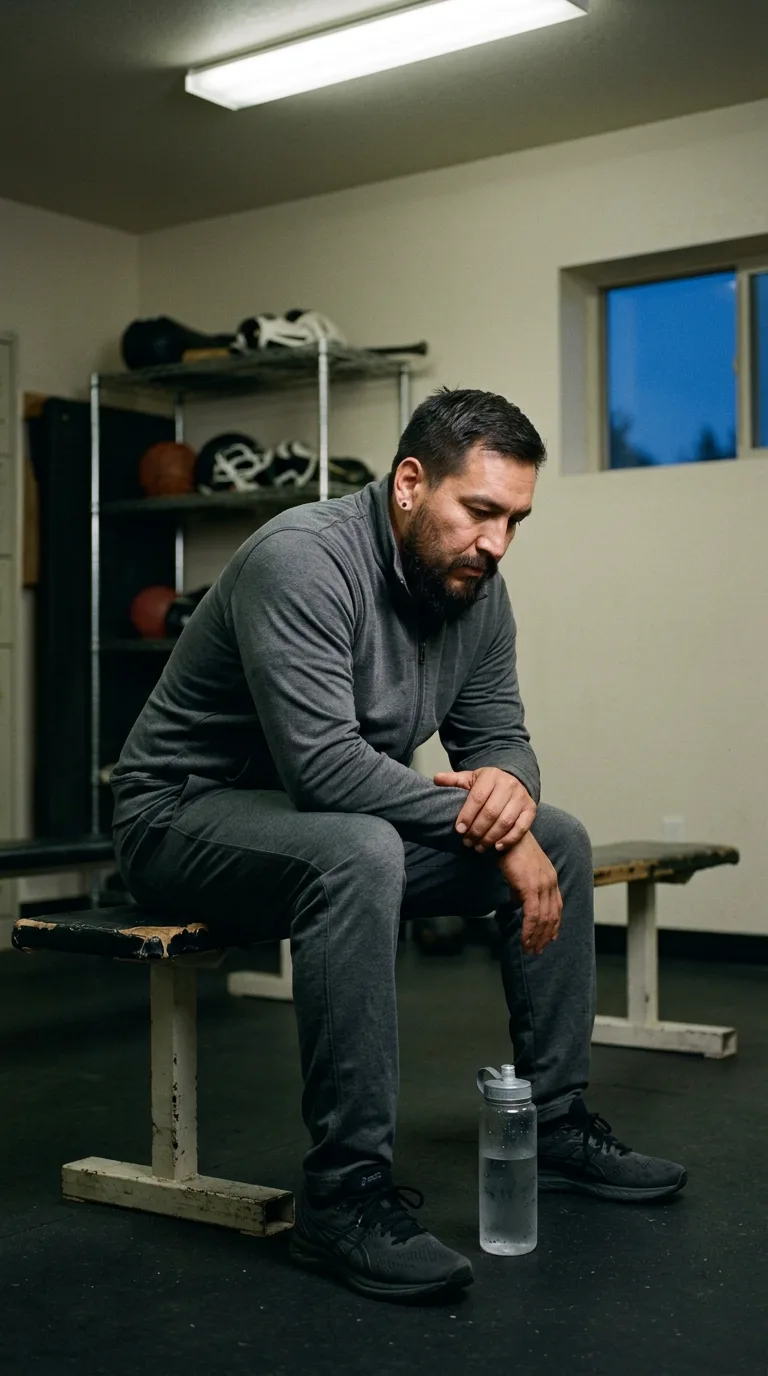
Rarest thing about him: Native American — common, 1 in 41
Season 1seed 2143984018 · engine v11
Character card
lineage 9IC4OB
His body-swap story
@bryce.kellerman, wearing Cody Vantreese, rolled the wheel on and woke up as Dale Whitehorse, spent 13 minutes in him, then spun the wheel and woke up as Marco Villanueva
Cody Vantreese's hands smell like fabric softener and cut grass even now, hours off the clock, and that's the thing you notice first, sitting on the edge of somebody else's unmade bed in the Sunset fog-light coming gray through the blinds. Twenty-one years old, athletic, blue eyes, a body that does everything you ask it without complaint, and you are bored out of your mind inside it. You have had him an hour and fifty-one minutes and you already know the whole shape of him: the ex he texts and doesn't send, the truck payment, the soreness in the left shoulder from a summer job. There's nothing left to find. You spun fifty-five times to feel something and this one came up a rerun of a feeling you've already had. So you open the laptop still logged into vessel.cards from whoever used this room before you cared, and you don't think about it as a decision so much as a hand going back to a bag of chips. You spin because the wheel is there and Cody Vantreese's Monday evening is not.
It lands on a gym you've never stood in, mid-motion.
The bar is in your hands — two inches wider than a grip you didn't choose — and the weight of it is enormous and precise, a language your shoulders already know though you have never lifted a day in your life. Air goes out through your teeth in the last controlled hiss of somebody else's rep and then it's yours, chest full, the fourth rep grinding up slow with the kind of control that has nothing to do with strain. You are standing under a squat rack in fluorescent light with a body forty years further along than the one you left, wider, heavier, a beard against your collarbone you can feel without seeing. You do not gasp. You do not stagger. The rep finishes and the bar goes back into the rack with a sound like a period at the end of a sentence, and you sit, forearms on your knees, and a water bottle sweats on the concrete by your foot exactly where it's supposed to be.
The sweatshirt is what opens first — gray, zipped to mid-chest, damp under the arms — and it gives you a morning: him standing in a closet that is bigger than most bedrooms, deciding against three suits before pulling this off a low shelf because tonight is a workout, not a boardroom, and even chief executives get one hour that belongs to nobody's calendar but their own. Dale Whitehorse, thirty-nine years old, and the shirt remembers his forearms going into the sleeves the way a man does a thing ten thousand times — quick, unthinking, sleeve-cuff-sleeve-cuff — and underneath that flash comes a bigger one: a corner office at dusk, glass wall, a whole small city of light laid out below him that isn't New York or Chicago but somewhere modest and Ohio-shaped, and him standing at that window some other evening with his tie loose, thinking about the woman who got away seven years ago and three kids he loves without embarrassment and a fourth conversation he still hasn't had with any of them about why he never remarried. Catholic guilt sits in him like furniture, permanent, load-bearing, not oppressive — just there, the way a beam is there.
The bench under you is scarred wood, decades of forearms and elbows worn into it, and it gives you the town: one stoplight, a diner that closed in March and nobody's reopened, a gym that used to be somebody's garage before three men with more money than sense fixed the roof and put a squat rack in it because the nearest real gym is forty minutes away. Dale comes here at the end of every day it doesn't kill him not to, because the office chair is starting to feel like a coffin with a view, and this — iron, breath, the particular ache of a body thirty-nine years old and still strong — is the only forty minutes that belongs to him and not the company. His hands, when you look down at them between reps, have nails bitten close, ragged at two corners, a habit he's ashamed of and has never once stopped — boardroom hands doing a childhood thing under the table when the numbers are bad. Studs sit small and silver in both earlobes, put there twenty years ago on a dare from somebody whose name you don't have yet.
The water bottle is next, condensation slicking your palm, and it gives you Rogelio — not this body's memory, yours, worn through eleven spins and three days ago from the other side of it. You were Rogelio Nava for less than a minute, a landscaper in Anchorage with gray in his stubble and a dad bod and a phone in his pocket that, in that minute, buzzed with a text from a man named Dale asking if he was still coming out for the visit in June. You felt, for that minute, the specific warm ache of a friendship twenty years deep — the kind that survives distance and time zones and a whole continent of difference because it was built before either man had money or a title or anything to protect. Now you're on the other end of that text, in that man's actual hands, and something in you that isn't quite guilt and isn't quite delight recognizes the shape of the joke: you have stood on both sides of this friendship in the same week, and neither one of them will ever know you were the visitor both times.
Your legs know the next set is coming. Your body wants it, actually wants it, the way Cody's never did — this is a man who lifts because it's the only forty minutes nobody can bill against, and some of that hunger is still live in the muscle even with you steering.
You look down at your own hands — his hands, nails bitten short, a thin white scar of chalk dust in the creases, the studs catching gym light when you turn your head. You turn them over once, like they might not be real, like the wideness of the palm and the black hair on the back of the wrist is a costume you could still take off.
"Okay," you say, out loud, to the empty gym, to the rack, to nobody. "One more set."