Rogelio Nava
Fictional. Generated by AI — not a real person, and no likeness of one is intended.
48, landscaper in Anchorage · rolled by @bryce.kellerman · card — no film
History
who has worn him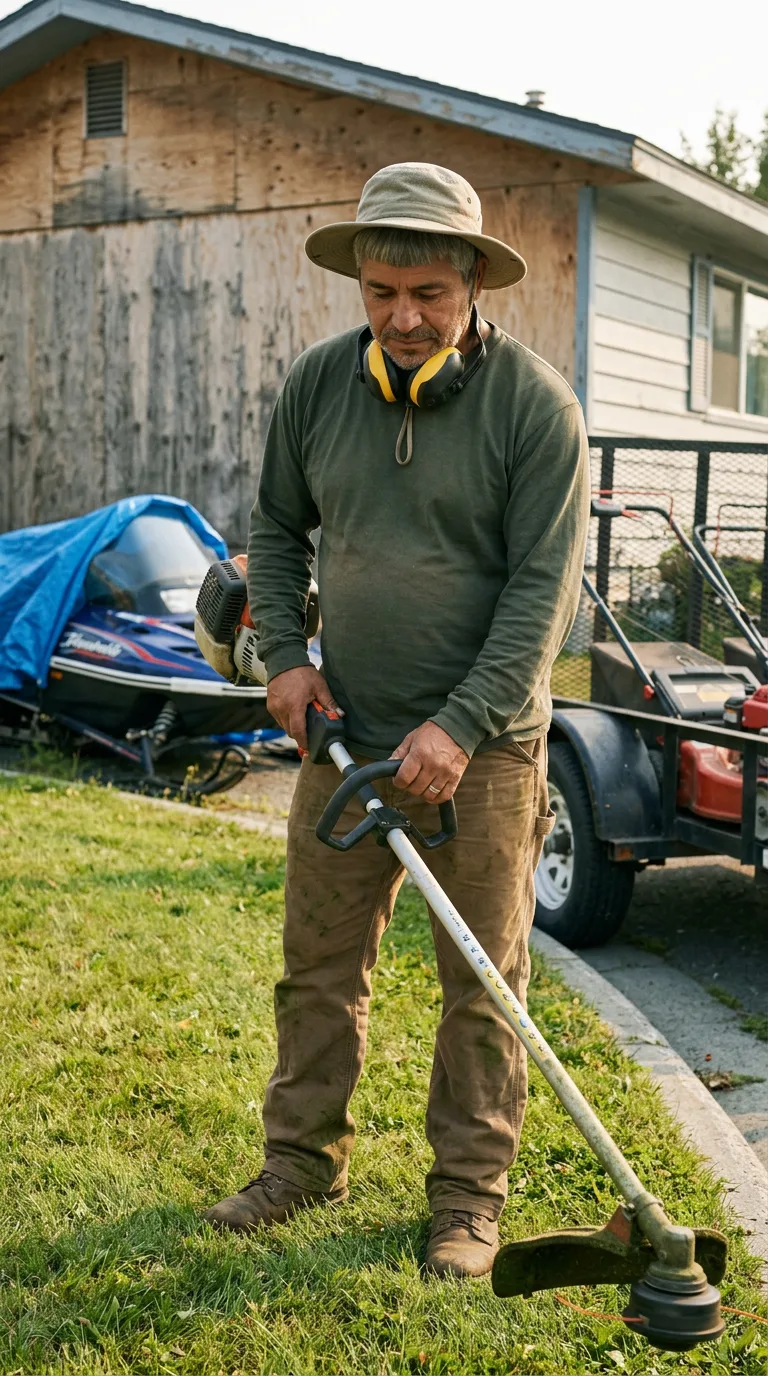
Rarest thing about him: Flips a lighter — common, 1 in 37
Season 1seed 1618550165 · engine v11
Character card
lineage 9IC4OB
His body-swap story
@bryce.kellerman, wearing Roy Combess, rolled the wheel on and woke up as Rogelio Nava, spent under a minute in him, then spun the wheel and woke up as Neil Kowalik
Roy Combess's store office smells like carpet cleaner and burnt coffee, and it has smelled that way for five minutes, and that is long enough. You sit behind his gray metal desk in his skinny body with its shaved head and its once-broken nose bent slightly left, and you flip his phone over on the blotter, once, twice, a habit that isn't even yours yet and already bores you. Somewhere down the hall a stock associate is asking about a schedule. You do not care. Roy has been open for five minutes and already you can feel the shape of his whole life pressing in at the edges — the store, the ex-wife's lawyer, the knee that clicks on stairs — and it is Friday evening in Eastern Kentucky and you want, very specifically, not to be handed any more of it. That's the whole reason, if you're honest, which you are not required to be. You open the laptop. The wheel is already loaded, spinning lazy and slow in the corner of the screen like it's been waiting on you. You pay. You spin.
The weed-eater kicks once in your hands — no, in his hands, gray-haired forearms flexing under a stained green sleeve — and something happens like a hiccup in a sentence you've been saying your whole life: the head of the trimmer catches wrong on a clump of grass, jerks, and you feel the whole motion redo itself a half-beat slower, deliberate, checked. Then again. Then nine more times, each pass through the grass examined like it might bite. The engine idles between your palms, warm, buzzing up through two thick gloves you didn't put on. A dog barks three yards over. The light is long and amber and lies flat and gold across a lawn that needs another twenty minutes. Behind you, under a blue tarp, something with skis and a windshield waits for winter. You do not know yet that it is a snowmobile, or that it is his, or that his name is Rogelio.
It comes in through the trimmer first, the vibration traveling up through the aluminum shaft into palms that are not calloused evenly — the right pinky finger a little numb, an old nerve thing from eleven years of this same tool, this same grip. A flash: him at twenty-six, first week on his own crew, cutting a stripe into a lawn crooked as a signature, laughing about it with a foreman who's been dead nine years now. Then the smell of cut grass, green and sharp, and underneath it gasoline, and underneath that the specific ache low in his back that arrives every day around three and never all the way leaves. Dad bod, the wheel would call it if it were the kind of thing that talked; he calls it, in his own head, just his body, forty-eight years wearing it the way you'd wear in a good boot.
The shirt against your back gives you the morning: him pulling this exact long-sleeve over his head in a bathroom that still had the shower running from his wife's turn, the mirror fogged so he shaved half-blind, stubble left rough on purpose because customers don't care and Marisol says she likes it anyway, likes rubbing her palm backward against his jaw when he gets home too tired to shower first. The hat comes next, its brim memory — sweat-salted canvas, the specific tug of settling it low against glare that never really goes away this far north even when the sun sits low and orange like it does right now, like it's about to for hours yet, this being Alaska, this being a summer evening pretending to be noon. He bought the hat at a hardware store the year his oldest started high school. He can't remember the year exactly. He remembers his daughter's face when she got her license, though, clear as anything, and the four kids arranged themselves behind that memory like they'd been standing in line for it — three at least, maybe more depending which version of the story he tells at Christmas, all of them loud, all of them his.
The ring on the left hand is small and dull and it opens the widest door of all: Marisol at twenty-two on a beach he can't place the name of anymore, and Marisol now, forty-six, laughing at something on the phone in the kitchen while he's out here working; and behind her, further back, half-erased and never fully gone, another woman — Denise, a name that still catches faintly like a hook in cloth, someone he almost married once in a different state in a different life, someone whose leaving he still turns over sometimes on nights he can't sleep, not with longing exactly, more like checking a scar to see if it still hurts. It does, a little. Not enough to matter. He never told Marisol her name.
The trailer hitch cold under your palm when you brace against it gives you the trucks, three of them over the years, the business built slow out of one mower and a hand-lettered sign; the boots on your feet, broken in exactly to the shape of feet that have stood on ten thousand lawns, ache faintly at the arch, an old honest ache. Somewhere in all of it, unbidden, a lighter — not lit, not here, but the ghost of the motion, thumb finding a wheel that isn't in your pocket right now, an old habit his hands do on their own when a job runs quiet, though he never smoked, never really wanted to, just liked the flick and catch of it, liked having something to do with his hands besides work.
You stop the trimmer. The grass around your boots lies down flat and even, cut cleaner than it needed to be, checked ten times over for a job his hands could do asleep.
You look down at them — his hands, broad and sun-spotted, green pollen ground into the creases, the gold ring loose enough to spin if you wanted — and you turn the right one over slowly, like you're checking it for a seam.
Then you lift your eyes to where the phone would be if anyone were filming, though nobody is, and you say, quiet, mostly to the lawn and the tarp and the amber light: "Okay. Who are you."