Curtis Redmond
Fictional. Generated by AI — not a real person, and no likeness of one is intended.
57, retired in Pittsburgh · rolled by @colin.hasbrook · card — no film
History
who has worn him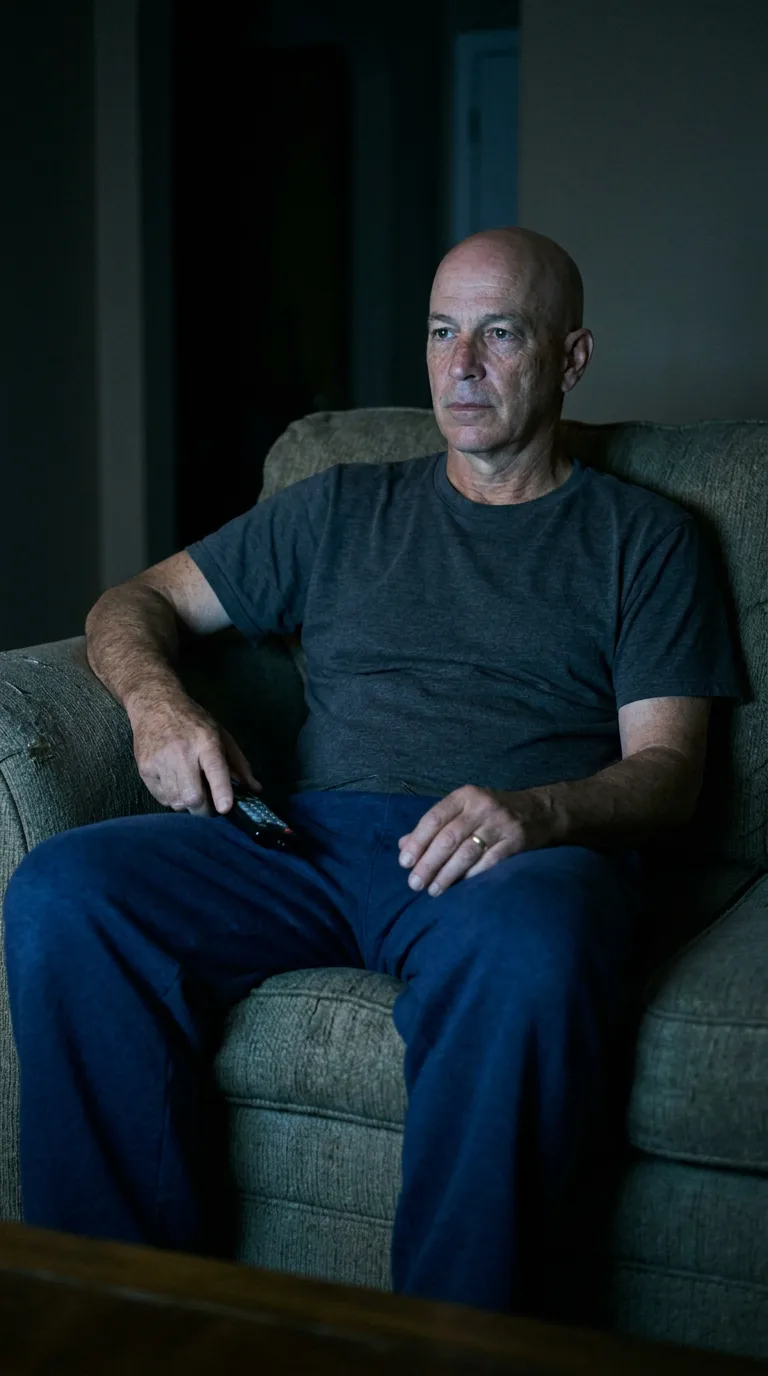
Rarest thing about him: Widowed — rare, 1 in 25
Season 0seed 1554655443 · engine v10
Character card
lineage 2NZHHJ
His body-swap story
@colin.hasbrook, wearing Ahmed Nassar, rolled the wheel on and woke up as Curtis Redmond, spent under a minute in him, then spun the wheel and woke up as Gary Selkirk
You have been Ahmed Nassar for forty seconds and already you hate the knee.
Not the man — you don't hate the man, you never do, that's not how this works — but the knee, his left one, the one that clicks when he shifts his weight off the stool, standing here in the bay at the shop on a Monday morning with a torque wrench still warm in his grip. Someone else's whole life is folded into that click, some old injury from some Egypt he hasn't seen in thirty years, and it is not your injury, it was never going to be your injury, and you are so tired of arriving into damage that belongs to somebody else's decades. Sixty-five years packed into five-foot-eight of skinny fat, gray hair under a shop light, and a mechanic's Monday stretching out in front of you the same as it stretched out in front of him before you took it. You spun for this less than a minute ago. It already isn't enough. It is never enough, and that's the whole shape of you now, isn't it — five hundred and eighty-two men behind you and every one of them a room you walked through without stopping.
You set the wrench down. Somewhere under the bench, your phone — his phone — is still logged into the site, because you never log out, why would you, and you take it out with his ropy forearm and his liver-spotted hand and you go back to vessel.cards standing in his own garage like a man checking a score.
You spin.
—
Light changes before weight does. That's always the order — the television throws a bright frame across a dark room a half second before you are the one sitting in it, spine straightening on its own, some reflex of his that isn't a decision so much as a body catching itself. The remote is already loose in a hand that is not the hand you had ten seconds ago — heavier through the palm, shorter fingers, a wedding band snug at the base of the ring finger where it has clearly not moved in years. Bald head warm under a lamp that isn't on. A couch that gives more than the stool did. You are sitting up straight in the dark and something on the screen is doing the thing that made this man laugh a minute ago, before you were the one behind his eyes, and you don't laugh. You just watch it happen to somebody else's face.
The remote is warm where his thumb rested on it. That's the first door.
—
It comes in through the plastic of the remote before anything else: a hand pressing the same three buttons in the same order every night for longer than either of you have language for, an old habit worn into muscle the way water wears a channel into stone — up two, over, select — and behind it, faint, a woman's voice saying *you're going to break that thing, Curtis*, fond and long gone, and the ache that comes with it isn't yours, it arrives already labeled, already fifty-seven years old and grieving something eleven years settled into scar tissue. Denise. The name comes with the weight of the whole marriage riding on it, thirty-one years, a woman who called him Curtis like his own mother did when he'd done something worth noticing, and there is nothing to do with that except let it move through and out, the way all of it does now.
The couch under you gives him next — the cushion's particular sag, the one you sink into every night because the good chair is Denise's chair and nobody sits in Denise's chair, not the kids when they visit, not him, it just sits there empty by the window catching morning light nobody's using. Two kids, grown, good jobs, calling on Sundays, worried about him in the specific low-grade way children worry about a widowed father who is too fine, thank you, he is fine, he tells them, and mostly he is.
The t-shirt against your back gives you this morning — not this present ten seconds, but the one behind it, hours of it compressed into a breath: waking early the way retirement never quite let him stop doing, a body that still sets its own alarm out of forty years at the mill even though the mill's been gone longer than some of your grandchildren, if you had grandchildren, if this were your body's arithmetic and not his. Pulling the gray shirt over his head in a bedroom with the shades still down, the fabric loose across a belly that's softened some but not badly, a back that complains getting out of bed and stops complaining by the time coffee's made. Sweatpants next, worn soft at the knee, no particular reason to dress better than this — there's nowhere he has to be, that's the whole point of the last several years, mornings that belong to nobody's schedule but his own. His hands know the motion without him watching them: waistband up, shirt down, the wedding band catching for half a second on cotton the way it always does and always has since the day Denise put it on him in a church that doesn't exist anymore, torn down for condos, which he finds funny in a way he's never told anyone.
The freckles come through last, and strangest — not through touch but through the television light lying across his nose and cheeks the way morning light does on the porch, the place he actually likes best, coffee going lukewarm in a mug shaped by his own grip, looking down over the public stairs that cut between the yards on his street, wet leaves gone dark and shining on the concrete even when it hasn't rained in days, some trick of the shade back there. He sits down here most mornings instead of the porch only when the weather turns, and today is one of those grey in-between Pittsburgh Mondays, and some part of him — some part of *you*, now, sitting in him — had planned to go out to the porch as soon as the coffee finished, before the show caught him and the dark room held him a little longer than he meant it to.
High blood pressure lives in him low and constant, a medication on the counter he is good about taking, a doctor's voice from eighteen months ago saying *watch the salt, Curtis*, unremarkable, managed, one more small tax on a body otherwise carrying its fifty-seven years fairly well. Well off, though you wouldn't know it from the sweatpants — the mill gave him a pension that did right by him, and the house is paid off, and money is one of the few things in this life that has stopped asking anything of him. Straight, widowed, faithful in the old church-every-Sunday way that has mostly become church-most-Sundays, no one waiting on the other end of anything, no woman since Denise and no plan to look, the kids the only people who need him now and they don't need him the way they used to. His fingers, resting on the couch arm, twitch once against the fabric — an old habit, drumming, something they do when he isn't paying them any attention, and you feel the urge arrive before you understand it's his and not yours.
None of the laughing came back. Whatever was funny on the screen a beat ago isn't funny now, hasn't been funny since the light changed, and some absent part of this body seems to notice that quiet the way you'd notice a room after someone's left it.
You look down. His hand — your hand now, for as long as this lasts, which is not a thing either of you gets to know — sits on the couch arm with the wedding band catching the television's flicker, ordinary and gold and worn thin along the bottom where thirty-one years of it rested against countertops and steering wheels and a woman's hand that isn't there anymore to rest against. You turn it over once, like it might weigh something different face down.
Then you lift your eyes to the dark room like it's a lens.
"Denise," you say, to no one, in his voice, "I turned it up too loud again."