Ahmed Nassar
Fictional. Generated by AI — not a real person, and no likeness of one is intended.
65, mechanic in Philadelphia · rolled by @colin.hasbrook · card — no film
History
who has worn him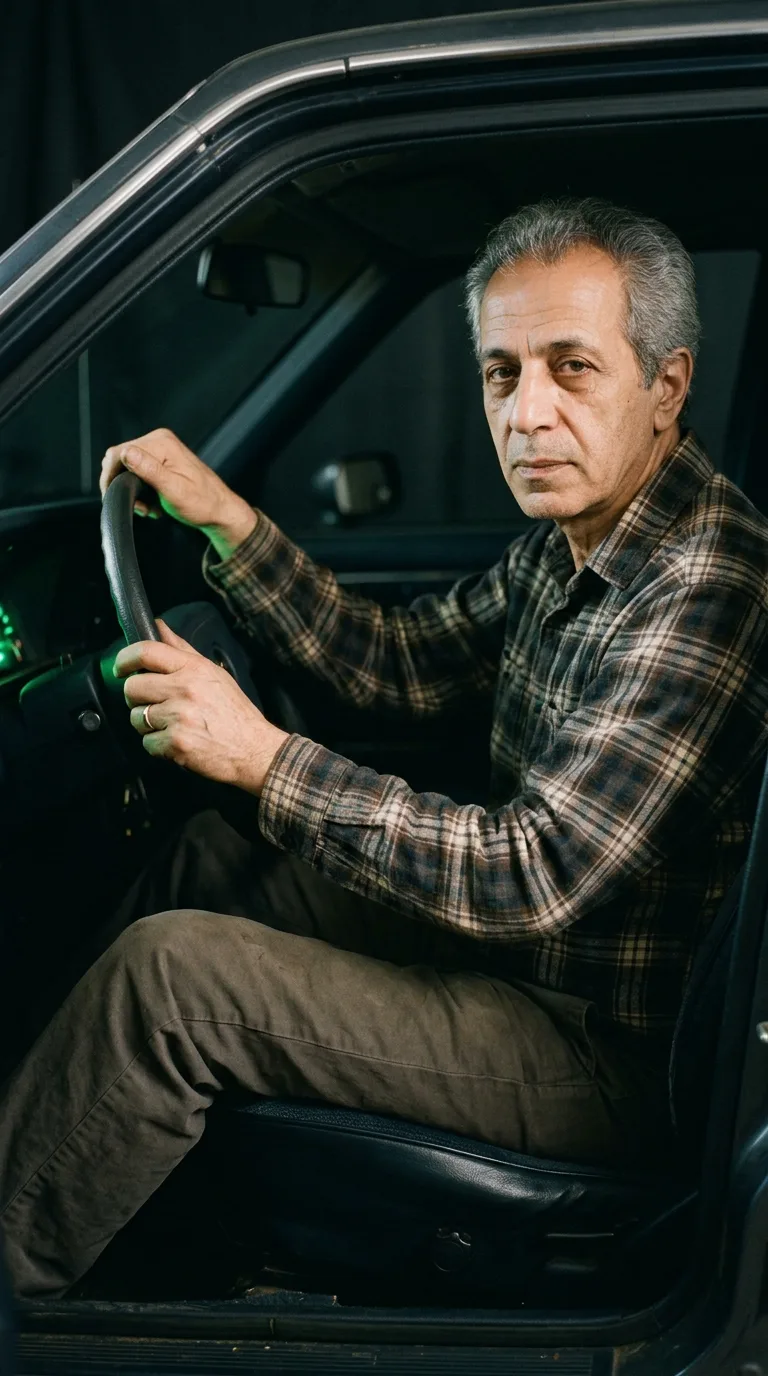
Rarest thing about him: ADHD, diagnosed as an adult — rare, 1 in 101
Season 0seed 1101701861 · engine v10
Character card
lineage 2NZHHJ
His body-swap story
@colin.hasbrook, wearing Dennis Kowalczyk, rolled the wheel on and woke up as Ahmed Nassar, spent under a minute in him, then spun the wheel and woke up as Curtis Redmond
You are standing under a Chevy on a hydraulic lift in Chicago, and Dennis Kowalczyk's knees are already telling you this shift was a mistake. Dimples, dad bod, decent hazel eyes in the mirror this morning — you liked him fine, for about forty seconds, which is how long it takes a body to stop being new. He's been you since eleven-oh-two. Less than a minute, and already the ceiling fan overhead is a slightly wrong shape, the smell of this bay is somebody else's smell, and your palm remembers a wheel that isn't this one. You wipe your — his — hands on a rag that came out of his back pocket by reflex, not choice, and you think: no. Not this one. Not five hundred and eighty-two spins to land in another garage. There's a phone in the front pocket of his coveralls, warm, and you don't even take it out before you're walking to the office, to the site that's always open in a tab, because the itch isn't boredom exactly — it's that you can already tell what the rest of Dennis's Monday is, and you have never once in five hundred and eighty-one men been able to stand knowing that.
You spin.
The wheel doesn't care what time it is here or anywhere, and it hands you a strip of dark highway three miles out from a place you've never seen, hands off the wheel a half-second before hands back on, lower, wider, older. Ahmed Nassar's turn signal is already ticking for an exit that isn't his exit — his foot easing off the gas as if some other driver had been the one holding this line the whole time, which, now, is true. The dash light is green on knuckles that ache a little at the base of the thumb, both of them, a familiar ache that isn't asking to be noticed. Middle of the night, his clock says — though your last body's morning is still sitting strange in your chest, a held breath not let out yet — and Philadelphia comes up gray-orange through the windshield, streetlights doing their long soft blur.
The plaid shirt is against your back first, and it gives you the morning he put it on — no, the evening, because Ahmed Nassar does not work days anymore, hasn't for three years since he sold half his stake in the shop and kept just enough of it to still smell like brake dust when Marwa kisses him hello. He shrugs into this shirt at four in the afternoon the way another man might put on a jacket to go to an office, except the office is a two-bay garage six blocks from the house with the marble steps worn to a shine by eighty years of other people's feet before his. Sleeve, sleeve, the collar folded down by muscle memory alone because his ADHD makes buttons a small daily war and he learned decades ago to solve it once, right, and not think about it again. The rag is not in this shirt — the rag lives in the coveralls he changes into at the shop — but the memory of a thousand rags comes anyway, oil-black, balled in a back pocket, the specific give of good cotton against callus.
The wedding band on the left hand is the loudest thing in the car. Thirty-one years, though the ring itself is only twenty-six of them — the first one he lost in a transmission housing in 1999 and laughed about for a week, Marwa pretending to be furious, both of them knowing she wasn't. Two kids raised in this city on a mechanic's ledger and a good eye for which customers to trust on payment — Yusuf who does something with servers now in Austin, calls on Sundays; Dina who married a nice Irish kid named Pat and gave them a granddaughter with Ahmed's exact stubborn chin. There was an ex-wife before Marwa, a marriage that lasted four years and ended without much blood in it, just two people who'd married too young and too fast after his family came over, and he still sends her a card in December because there's no reason not to and some reason to. He quit smoking the week Dina was born and still, twenty-nine years later, sometimes reaches for a shirt pocket that has nothing in it.
The steering wheel under your palms knows how to find the shake in a bad wheel bearing before the diagnostic computer does. This body is not strong — skinny fat, soft through the middle, sixty-five years old with a lower back that announces itself getting up from under a car — but the hands are exact, are certain, have done the same forty motions ten thousand times each. He believes in something, not in the mosque his father wanted, more in the specific quiet of being alone under a car at six a.m. before anyone else is in the shop, a private hour he's never explained to anyone including himself. He is, at this exact moment on his own actual clock, three miles from a house where Marwa is asleep and will not wake when he comes in, because after thirty years she has learned to sleep through his hours the way he has learned to be quiet in them.
You feel all of it land at once, the way it always does — not his, exactly, but close enough to ache — and the turn signal is still ticking, patient, for a road he was never going to take.
You look down at the hand on the wheel, the ring catching a streetlight going by, and you turn the wheel a half turn straight, canceling the signal, easing back onto the road that actually goes home.
"Okay," you say, out loud, to no one, in a voice that isn't yours and is now the only one you have. "Okay, Ahmed."