Curtis Aldenberry
Fictional. Generated by AI — not a real person, and no likeness of one is intended.
35, chief executive in Coastal Maine · rolled by @colin.hasbrook · card — no film
History
who has worn him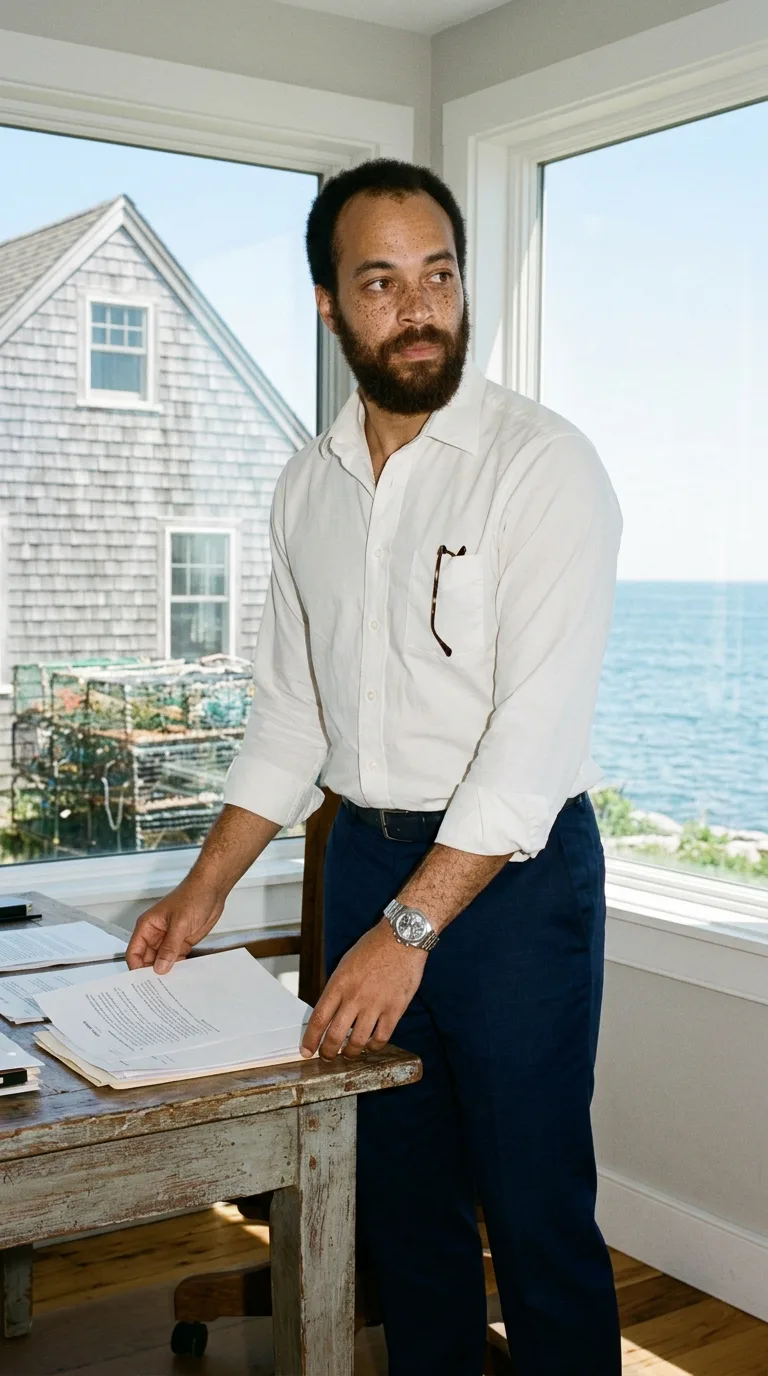
Rarest thing about him: Historically Black Protestant — common, 1 in 25
Season 1seed 1176821038 · engine v11
Character card
lineage 2NZHHJ
His body-swap story
@colin.hasbrook, wearing Idris Malick, rolled the wheel on and woke up as Curtis Aldenberry, spent under a minute in him, then spun the wheel and woke up as Warren Pettibone
The dorm room smells like microwaved ramen and somebody else's cologne, and you are standing at a window you did not choose, in a body that is not yours, for the seven hundred seventy-third time. Idris Malick's hands are on the sill. Blue eyes, blond hair, a beauty mark you keep catching in the reflection like it's a smudge on the glass. Ten minutes in him and already the itch is back — that specific boredom that has nothing to do with the body and everything to do with knowing exactly how the rest of his day goes: a lecture, a nap, a party he'll be tired of within the hour. You have been an athlete, a widower, a boy who cried at his own wedding video, a man who once made you cry too, though you'd never say that to anyone real. Idris is fine. Idris is nothing. You didn't come back for Idris. You came back because there is a particular hour, some mornings, where the wanting arrives before you've even decided anything, and today it arrived early, sat down in this stranger's desk chair, and opened the laptop to vessel.cards without asking your permission at all.
You spin.
The office tilts — no, it doesn't, you tilt, weight dropping half an inch lower than you expected, shoulders wider, a beard scratching against a collar that smells like starch and salt air. Your hand is flat on a table, papers under your fingers, and the hand does something wrong first — knuckles catching the edge of a page, nearly folding it — and then it corrects, slow, deliberate, like a man double-checking a signature he's signed ten thousand times. You feel the correction before you understand it: this body knows this motion better than you know your own name right now, and for one full second it is teaching you by feel while you are still arriving.
The shirt is what opens first. Cotton, soft with age, sleeve loose where it's rolled — and with it comes a Tuesday two winters back, dressing in the dark so as not to wake her, buttons done by feel because the light through the shingles wasn't up yet, coffee already going cold on the dresser. Curtis Aldenberry. The name comes with the shirt like it was stitched into the collar. Thirty-five years old, and the freckles across his nose that everyone comments on and no one ever explains, going back to a mother who had them too, in a photograph he keeps in a drawer he hasn't opened in months.
The belt gives you the boardroom — not this one, an older one, in Portland, the day he signed papers that made him somebody's boss for the first time, twenty-nine years old and terrified in a way he never once let show, hands steady on the table exactly like they are steady now, because that's the trick he taught himself: let the hands lie even when the rest of you is screaming. The watch on the wrist gives you his father's voice, saying something about time being the only thing a Black man in this business gets to own outright, and Curtis wearing the watch every day since without remembering exactly when that stopped being a lesson and started being a habit.
The floorboards under his bare feet give you the house — cold even in summer, sea air finding every gap in the shingles, lobster traps stacked in the dooryard he's been meaning to sell or use for a decade now. The window glass near his hand gives you her — the girlfriend asleep upstairs still, warm weight of a body he chooses every night to lie down next to, and the two kids who are not upstairs, who are two states away with their mother, the ex who still calls sometimes just to hear how tired he sounds, some old tenderness neither of them has bothered to kill all the way. He loves the life he built out of near-misses. He has never once, not in thirty-five years, told anyone how close some of the misses came.
The papers under his fingers give you the shift itself — dusk turning to dark turning, somehow, impossibly, back toward morning light through glass, a contract that needs initialing before a call, a leg already starting its old bounce under the table though there is no chair to bounce it against right now, just weight shifting foot to foot on cold wood. He has been awake since before four. He runs the kind of company where the phone rings whenever a boat off the Gulf of Maine has a problem, and problems don't wait for daylight, so daylight is just whenever it happens to catch him standing.
The cigarettes are in the blazer pocket somewhere behind you, and just touching cloth near them gives you the taste of the first one this morning, out on the back step in bare feet before the coffee, sea fog still sitting low over the water, and the particular quiet of being the only one up in a house full of people he'd die for.
You look down. The freckled hand is still flat on the papers, fingers a stranger's fingers, and you turn it over slowly, palm up, like checking for something that should be written there.
"Didn't feel a thing," you say, out loud, to the empty room and the sea light coming through the glass, and you don't know yet if that's true, or how long you get to find out.